

 Jakob Schwalb-Willmann just started his M.Sc. thesis titled “A deep learning movement prediction model using environmental data to identify movement anomalies”. He will combine animal movement and remote sensing data in order to develop a generic, data-driven DL-based model that predicts movements from movement history alongside environmental covariates in order to detect movement anomalies. He will establish simulated, controlled environments that allow precise adjustments of the model inputs to test the model’s feedbacks and its variability. It can be considered as a precursor study for the model’s deployment on real data and to only experimentally apply it on such due to the given constraints (time and content) of his M.Sc. thesis.

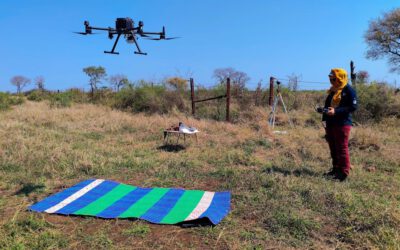
Field campaign for DFG Fire and Savanna project
Our PhD candidate Luisa Pflumm is back in Kruger National Park for her third field campaign. Her PhD focuses on how savanna trees respond to combined fire and drought stress for which she is flying UAVs equipped with multispectral and LiDAR sensors. With this round of...