 Asja Bernd started her MSc on ” A Global Analysis of Grassland Fragmentation” supervised by Neil Burgess (UNEP) and Martin Wegmann. She will use globally available land cover data sets and compute a variety of spatial metrics to derive the fragmentation pattern of grasslands. Methods available in R and GRASS will be applied to allow a semi-automatic global analysis. Asja is a student in the Global Change Ecology MSc program and well trained in journalism as well as natural sciences.

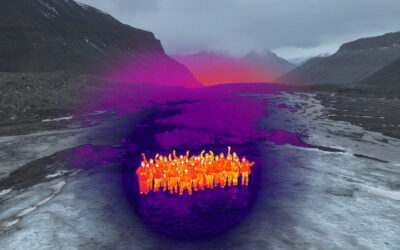
Guest lecture on UAV Remote Sensing of the Cryosphere at UNIS, Svalbard, shows glacier retreat within one year
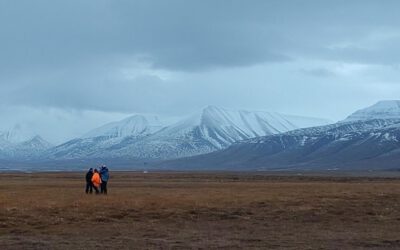
Last week, Sebastian Buchelt and Jakob Schwalb-Willmann traveled to Longyearbyen, Svalbard, for a teaching stay on the high-arctic island hosted by the University Centre in Svalbard (UNIS). Sebastian taught a three-day block course on...