
new publication: Measuring β‐diversity by remote sensing: A challenge for biodiversity monitoring

new publication: Measuring β‐diversity by remote sensing: A challenge for biodiversity monitoring

August 29, 2018

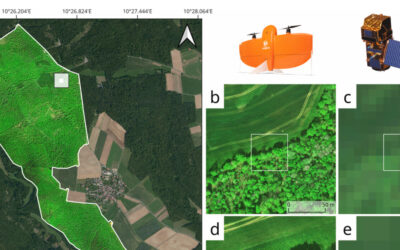
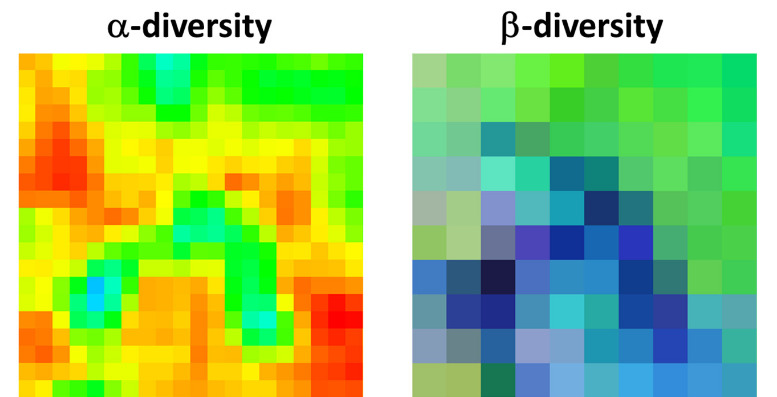
Another article lead by Duccio Rocchini just got published in Methods in Ecology and Evolution titled “Measuring β‐diversity by remote sensing: A challenge for biodiversity monitoring”. From the abstract: “Biodiversity includes multiscalar and multitemporal structures and processes, with different levels of functional organization, from genetic to ecosystemic levels. One of the mostly used methods to infer biodiversity is based on taxonomic approaches and community ecology theories. However, gathering extensive data in the field is difficult due to logistic problems, especially when aiming at modelling biodiversity changes in space and time, which assumes statistically sound sampling schemes. In this context, airborne or satellite remote sensing allows information to be gathered over wide areas in a reasonable time.” read more here

Rocchini D, Luque S, Pettorelli N, et al. Measuring β‐diversity by remote sensing: A challenge for biodiversity monitoring. Methods Ecol Evol. 2018;9:1787–1798. https://doi.org/10.1111/2041-210X.12941

follow us and share it on:

you may also like:

Successful MSc Defense by Christina Krause

Successful MSc Defense by Christina Krause

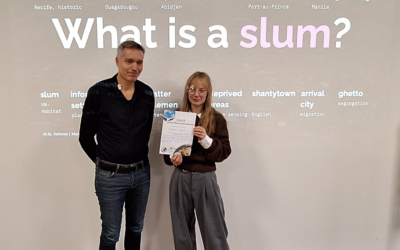
Congratulations to our EAGLE student Christina Krause, who successfully defended her MSc thesis titled "Active Learning and Parameter-Efficient Feature Adaptation for Cross-City Seismic Building Type Transfer Using DINOv2 and Street-Level Imagery" on November 12,...

Successful MSc Defense by Marlene Bauer

Successful MSc Defense by Marlene Bauer

Congratulations to our EAGLE student Marlene Bauer, who successfully defended her MSc thesis titled "Robust and Uncertainty-Aware Informal Settlement Mapping – Cross-City Generalisation Across Diverse Urban Morphologies Using High-Resolution Satellite Imagery in...

Help Us Understand Ticks: Join the MONID HABITRACK Study

Help Us Understand Ticks: Join the MONID HABITRACK Study

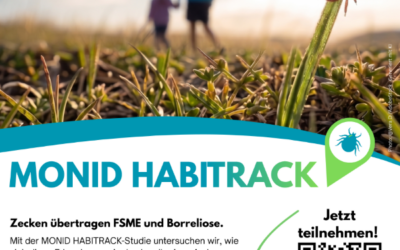
Lyme borreliosis and tick-borne encephalitis (TBE) are the most common tick-borne diseases in Germany, and they are becoming more relevant. Many infections go unnoticed because they cause mild symptoms or none at all. The MONID HABITRACK project, funded by the BMFTR,...

Setting Up for the 2nd EO4CAM Nutzerworkshop

Setting Up for the 2nd EO4CAM Nutzerworkshop

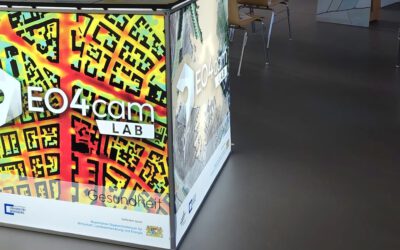
Right now our staff are busy hauling cases, mounting displays and testing every cable for the 2nd EO4CAM Nutzerworkshop, “Erdbeobachtung für die Klimaanpassung, behördliche Akteure in Bayern”. The doors open tomorrow, and the exhibition...

bzgl. Art. 50 Verordnung (EU) 2024/1689 (AI Act):

Überwiegend werden eigene originäre Texte und Bilder des EORC genutzt, jedoch sind einige Inhalte von blog post Texten teilweise mit Hilfe von KI überarbeitet worden und einige Bilder sind ganz mit KI erstellt, die jedoch deutlich keine photorealistische Darstellungen abbilden. Aussnahmen sind KI generierte fernerkundliche Datensätze, die explizit für Forschungszwecke mit KI erstellt wurden, hier wird aber durch den assoziierten Text der wissenschaftliche Grund der KI generierten Bilder erläutert.

Share This