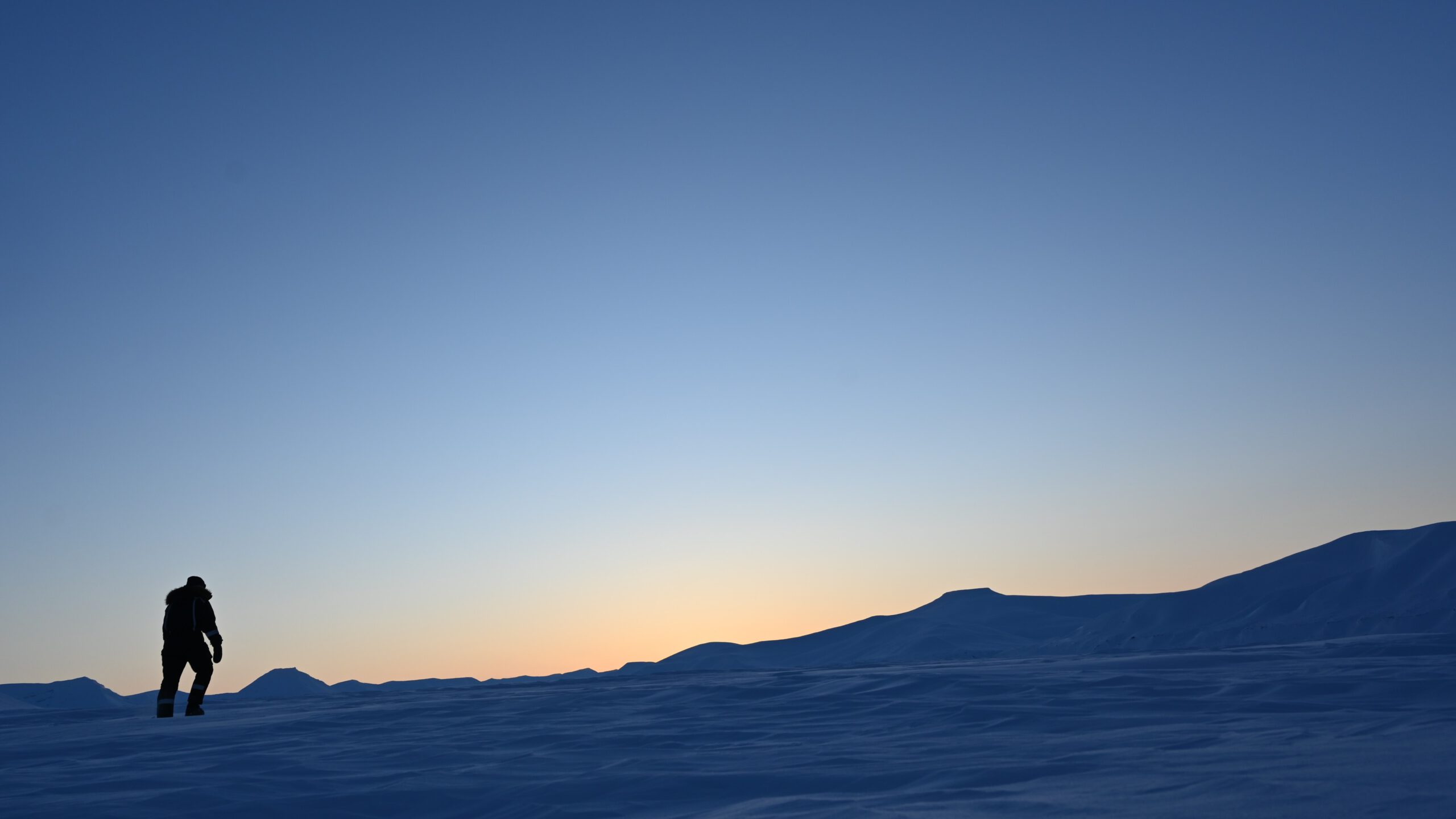

Our colleagues Dr. Mirjana Bevanda and Dr. cand. Jakob Schwalb-Willmann recently conducted another UAS-based fieldwork in the Arctic, focusing on temporal variability of snow and ice property. Utilizing VTOL UAS platforms equipped with LiDAR, multispectral, and thermal sensors, they were able to efficiently cover extensive areas and collect high-resolution data for environmental monitoring.
During the visit, Mirjana also met with current MSc students Ronja and Lena who are stationed on Svalbard for several months to gather time-series UAS data as part of their thesis work. This exchange provided an opportunity for fruitful discussions and technical alignment in the field.
Also some time was spend with our EAGLE students who do their internship for a few months with UNIS and learn how to apply remote sensing within ecological research.
In addition, concrete next steps were defined with colleagues from UNIS, resulting in the outline of joint proposals with the UNIS colleagues Prof. Larissa Beumer and Prof. Simone Lang.