Special Issue on Remote Sensing training

Special Issue on Remote Sensing training

March 22, 2017

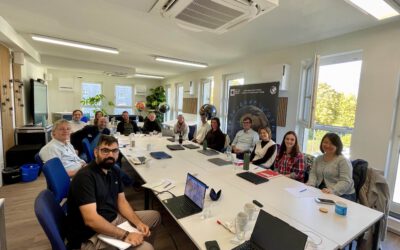
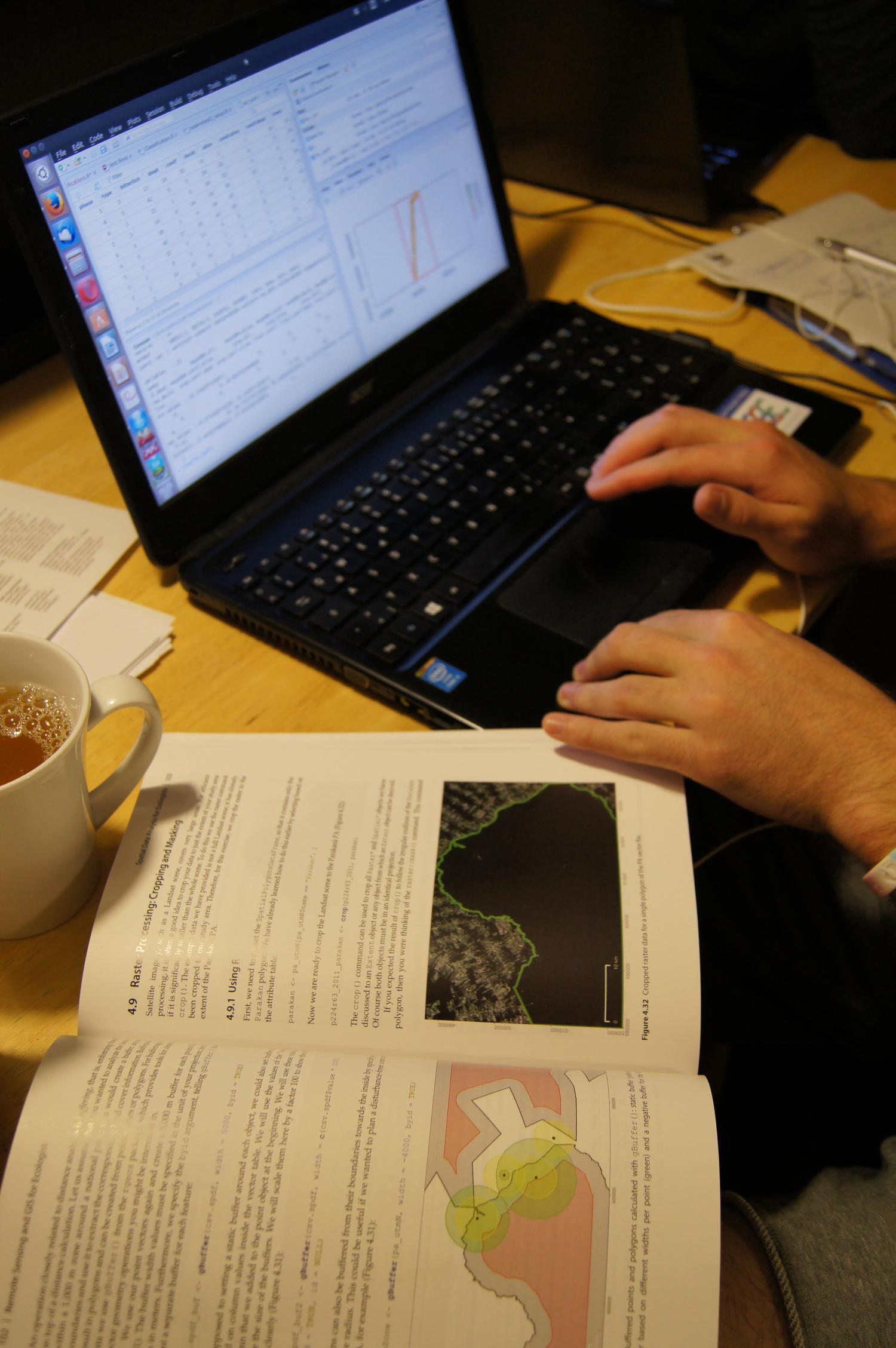
students working on remote sensing for biodiversity in one of Martin Wegmanns courses

The special issue on remote sensing training for ecology and conservation is finally out. From the RSEC blog post: Over recent decades remote sensing (RS) has made valuable contributions to ecology and conservation. However, despite its clear value, the potential of RS has not yet been fully realized, and training in the tools and applications for RS is limited. While collection of and access to data are becoming ever cheaper and easier, limited analytical expertise hinders their wider use. Furthermore, the interdisciplinary nature of the research at the interface between remote sensing, ecology and conservation presents its own challenges. It is essential that we standardise not only the techniques for handling the complex spatial data but also the training required to utilise these techniques to the best advantage.

read more here on the RSEC Journal blog or go directly to the special issue: http://onlinelibrary.wiley.com/doi/10.1002/rse2.2017.3.issue-1/issuetoc



follow us and share it on:

you may also like:

How We Learned to Fly: The Story Behind UAS Research at EORC

How We Learned to Fly: The Story Behind UAS Research at EORC

Every research group that's ever bought a drone has a story about the first one it lost. We're no different. So let's just get that out of the way up front: this is the inside story of how UAS (Unoccupied Aerial System) research grew up at the Earth Observation...

MainPro workshop on TLS and LiDAR UAS

MainPro workshop on TLS and LiDAR UAS

This week, a workshop organized by Sebastian Buchelt within our EFRE project MainPro brought together students, researchers, and interested project partners to explore modern UAV technologies. The workshop took place in vineyards close to Würzburg and gave the...

25 Years of Remote Sensing in Würzburg

25 Years of Remote Sensing in Würzburg

Our chair of remote sensing, Professor Stefan Dech, likes to say "science is rarely a sprint, it's a marathon". And if you look at what's grown out of Würzburg over the last 25 years, you'll see exactly what he means. In 2026 the Julius-Maximilians-Universität...

Starkregen in Bayern: Beobachtungen und Dokumentation zählen

Starkregen in Bayern: Beobachtungen und Dokumentation zählen

Starkregenereignisse treten immer häufiger lokal, kurzfristig und mit hoher Intensität auf. Innerhalb weniger Stunden können sie erhebliche Überschwemmungen und Schäden verursachen. Um solche Ereignisse künftig besser zu verstehen und die wissenschaftliche Grundlage...

Seeing the World in Points: Lidar Course for the EAGLEs

Seeing the World in Points: Lidar Course for the EAGLEs

Lidar has a funny way of sneaking up on you. You think you know what it is, a laser that measures distance, fine, but then someone shows you a point cloud of a forest canopy with individual branches floating in 3D space and suddenly you realize there's a whole...

TV Crew Films EORC at MONID Habitrack Fieldwork

TV Crew Films EORC at MONID Habitrack Fieldwork

A bit of extra excitement at EORC recently: A television crew showed up to film a segment on the MONID Habitrack project financed by the BMFTR, and Dr. Ariane Droin was right in the middle of it, walking them through what Earth...

Share This