
First Summer School on Earth Observation for International Development

First Summer School on Earth Observation for International Development

m

October 7, 2019

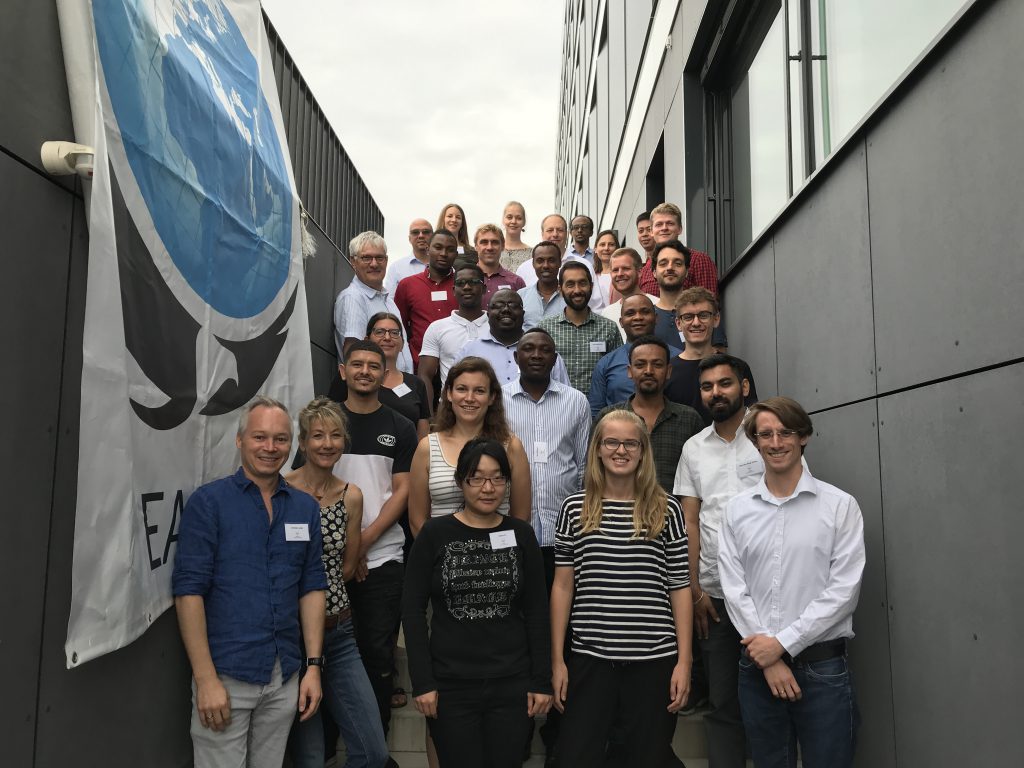
The first summer school on Earth observation for international development took place from 26 – 29 August 2019 at the University of Würzburg. 20 participants from GIZ and cooperating organizations fom Germany, Philippines, Congo, Ethiopia and Namibia visited Würzburg to learn the the full process of designing and implementing satellite-based monitoring approaches in the context of international development tasks.

The summer school aimed to train international technical experts, users and project planners on EO-related topics and innovative approches like:

Satellite missions and sensor types
Data gateways
EO project design
Data integration and preprocessing
Classifciation techniques and value adding
Accuracy and product quality assessment
Long-term implementation for operational monitoring
Operationalization of EO in administration

As a first launch of the training format, ecpecially designed for consultants and planners in the context of international development, the group appreciated a detailed and very personal training course to implement state of play and future EO technologies for environmental monitoring and reporting processes.

The first training was organized in cooperation with DLR-EOC and GIZ. A next training course is in planning for 2020. Please visit us on www.geosens.org to get informed for the next training and registration dates.
follow us and share it on:

you may also like:

Setting Up for the 2nd EO4CAM Nutzerworkshop

Setting Up for the 2nd EO4CAM Nutzerworkshop

Right now our staff are busy hauling cases, mounting displays and testing every cable for the 2nd EO4CAM Nutzerworkshop, “Erdbeobachtung für die Klimaanpassung, behördliche Akteure in Bayern”. The doors open tomorrow, and the exhibition...

A dashboard for multi-UAS thermal data

A dashboard for multi-UAS thermal data

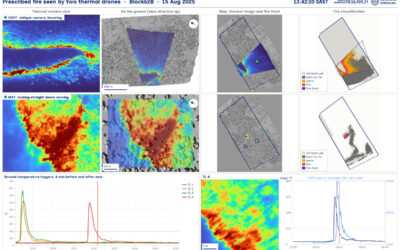
Mapping an active fire with various drones flying in parallel is hard enough. But getting the data processed, evaluated and turned into research datasets is a different story. The publication is on its way, and for now we’d like to share a dashboard by Antonio José...

Have you ever wondered how many trees there are on our campus?

Have you ever wondered how many trees there are on our campus?

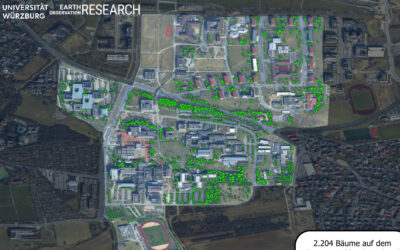
Sometimes a chat during a formal event like the one for the Urban:Pulse funding celebration, results in something totally different. Following a discussion with the vice-president of our University, we promised to look into the research by one of our PhD students...

Earth Observation at the DFG BETAFOR workshop

Earth Observation at the DFG BETAFOR workshop

Jakob Schwalb-Willmann represented our team at the DFG BETAFOR workshop in the Bavarian Forest National Park. The room was full of biologists, which is the whole point of an interdisciplinary project, and our UAS multisensor time series drew a lot of interest from the...

Thermal Drone Data Acquisitions: CalVal project with Informatics

Thermal Drone Data Acquisitions: CalVal project with Informatics

Thermal cameras on drones look very good - visually. They show us temperature of our study objects be it stressed trees, warm patches in a city or active fires. But we do not yet know for sure how far we can trust the temperature values they deliver especially when...

bzgl. Art. 50 Verordnung (EU) 2024/1689 (AI Act):

Überwiegend werden eigene originäre Texte und Bilder des EORC genutzt, jedoch sind einige Inhalte von blog post Texten teilweise mit Hilfe von KI überarbeitet worden und einige Bilder sind ganz mit KI erstellt, die jedoch deutlich keine photorealistische Darstellungen abbilden. Aussnahmen sind KI generierte fernerkundliche Datensätze, die explizit für Forschungszwecke mit KI erstellt wurden, hier wird aber durch den assoziierten Text der wissenschaftliche Grund der KI generierten Bilder erläutert.

Share This