
The Department of Remote Sensing at the Julius-Maximilian-University of Würzburg (JMU), Germany, offers an open research position in full-time (100%) and limited until 31 October 2021 (with a potential prospect of extension). The position may be filled on a part-time basis, provided that job sharing ensures the responsibilities to be performed on a on a full-time basis. Remuneration is based on the TV-L.
The successful applicant will work in an international team and will be predominantly involved in the following tasks within a recently procured third-party funded project:
- Development of methods for spatial data processing,
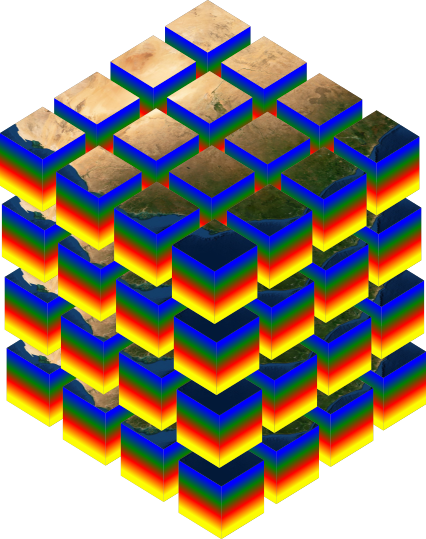
- Development of import and pre-processing routines for the OpenDataCube platform,
- Programming of various remote sensing process chains in the context of land degradation in South Africa,
- Technical implementation of developed processing chains into DataCubes,
- Preparation and provision of training measures in South Africa and Germany, and
- Participation in scientific publications and reports.
The following qualifications are required:
- A university degree in natural sciences in the field of geography, geomatics, or similar, with focus on spatial data analysis,
- Excellent programming skills (Python, R),
- Willingness to work in an international team and project and in travel activities (national/international), very good organizational skills, and high motivation to work independently,
- Very good English language skills both written and oral, and
- Experience in international cooperation and/or research projects, preferably in Africa.
The JMU aims to increase the proportion of women and therefore explicitly encourages qualified women to apply. Disabled persons are given preferential employment if their eligibility, skills and professional performance are essentially equal.
Please send your application documents with reference to the keyword LSFE-DCSA2 – also by e-mail – by 02 August 2020 to
Dr. Michael Thiel, Lehrstuhl für Fernerkundung, Oswald-Külpe-Weg 86, 97074 Würzburg
l-geofernerkundung@uni-wuerzburg.de
Please send copies only. For financial reasons, the application documents cannot be returned and will be destroyed shortly after the end of the selection procedure. If you enclose a stamped envelope, the application documents will be returned to you three months after the end of the selection procedure.