
We have the honor to announce our three Keynote Speakers for the Workshop on “Geolingual Studies (GLS): A New Research Direction” that will take place at the University in Würzburg from the 26th to the 28th of September 2023.
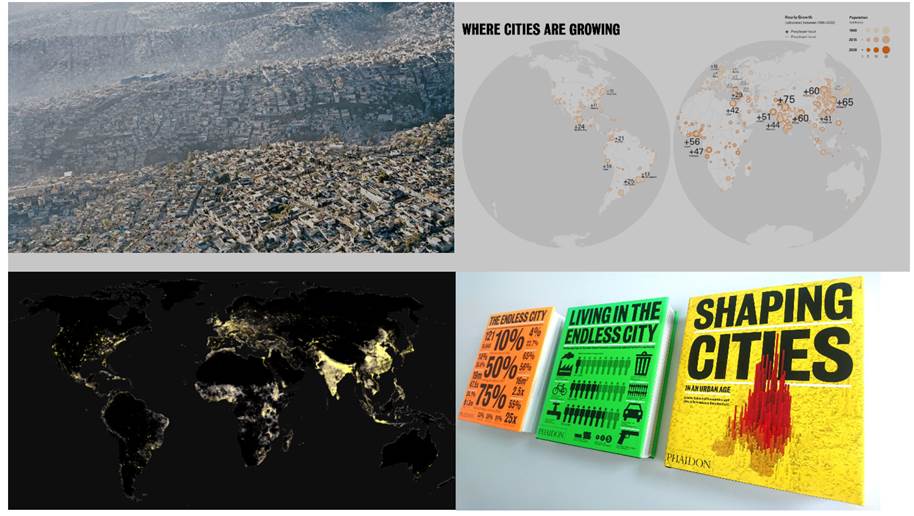
Dr Philipp Rode from the London School of Economics (LSEcities) will give the opening keynote titled Global Urbanisation and Cities in the 2020s: New types of data for working with complexity”. (Tuesday, 26 September, 2.30-4.00pm) Abstract: The world of the 2020s is continuously adding questions about the future rather than providing us with clear patterns of development. This has been particularly evident for the study of global urbanisation and city development for which old certainties are today replaced by diverging anticipation, scenarios and opinions. Until recently, urban growth projections based on extrapolation of recent trends were reliable, the possibility of gradual carbon emission reduction to achieve a safe climate was possible and urban democracy was a project motivating decentralisation reforms and city leadership. Today, global urban narratives are being challenged: the role of the financial sector, the possibility of urban green growth, a cosmopolitan insulation against populism, the trickle down from superstar cities, gentrification without displacement, the purpose of consumer cities and manageable levels of planetary extraction to support city building. This keynote will revisit the old urban certainties and theories. It will present the evidence for the major disruptions, complex emergencies and crisis points which makes urban research in the 2020s such a daunting task. Based on these, it will build the case for new types of urban research and data, capable of unpacking power dynamics, political processes and collective action dynamics which in turn can enable a better understanding of future change in cities and urban territories. The GLS workshop explores new approaches to urban spaces regarding the complex interrelation between physical space, human behaviour, identity shaping, and the perception and evaluation of place.
Dr Peter Zeile from the Karlsruhe Institute of Technology will give a keynote on “People Centric Urban Data – Crowdsourcing, Emotions, Bicycles and more”. (Wednesday, 27 September, 9.00-10.30am)
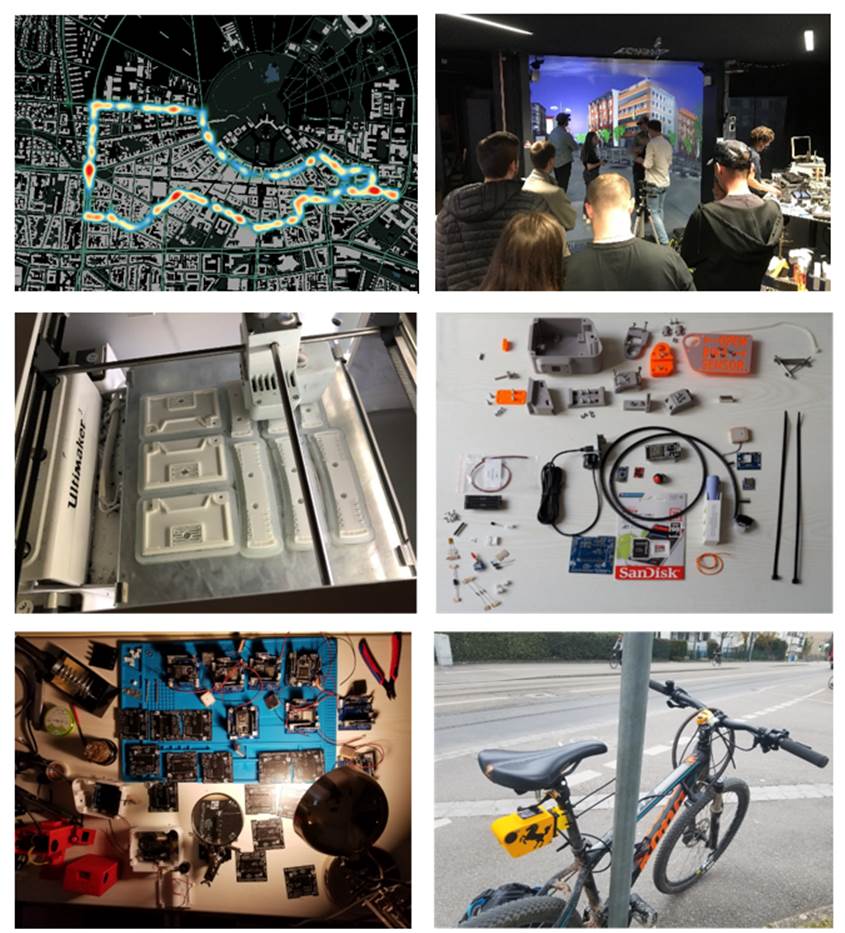
Abstract: Urban planning is always the elimination of a “wicked problem” (Rittel 1973): all factors must be considered and weighted within the framework of the consideration. But how to get data about the residents of the city to assess invisible factors that are difficult to measure by established methods? This talk considers cycling, digital methods and emotions as examples of serious planning tools. Prof Dr Ankhi Mukherjee from the University of Oxford (Wadham College) will provide a keynote titled “Open, Closed, and Interrupted City”. (Wednesday, 27 September, 2.30-4.00pm)
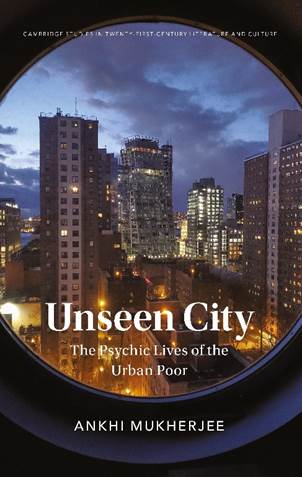
Abstract: In this talk, I propose interruption as a chronotope, with its intrinsic interconnectedness of and spatial relationships. I examine different pathologies of interruption here: that of unfinished, untold stories; truncated lives; the metaphysics of a non-tactilist touch; the clinical interruptions that structure immigrant psychoanalysis. I dwell on two Teju Cole novels which have mental health professionals (psychiatrists-in-training) as their migrant protagonists. In Every Day is for the Thief (2007), set in corrupt, neo-liberal Nigeria, and Open City (2011), set in post-9/11, multiracial New York, the narrators’ autopoeisis takes the form of forensically examining the unlived-out, erased, or buried lives of the city, including the bodies of slaves unmourned in both sides of the Atlantic. I read the dreamscapes and travelogues of these doppelgänger novels to inhabit the stratified spaces of a world city – and its permissive mental underground.
The workshop is free of cost
please register here: geolingualstudies@uni-wuerburg.de
Please also see here: https://www.phil.uni-wuerzburg.de/gls/news/single/news/workshop-announcement-september-26-28-geolingual-studies-gls-a-new-research-direction/
The full workshop programme will be announced soon.