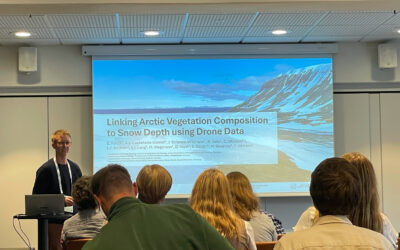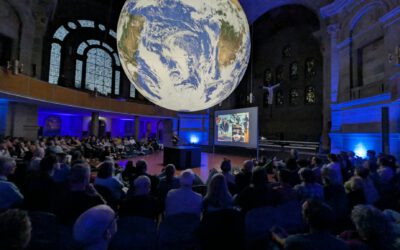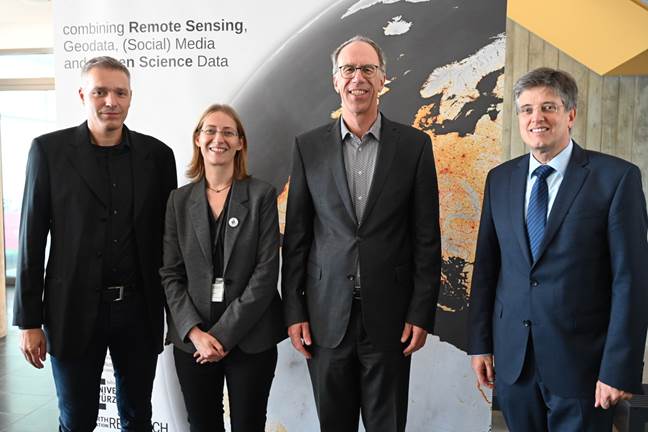

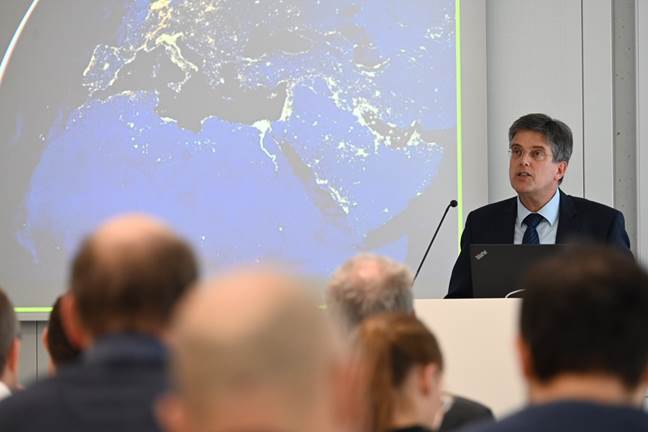
The Geolingual Studies workshop was today opened by the President of the University, Prof. Pauli. In his speech, he emphasized the relevance of the interdisciplinary cooperation – of the Chair of English Linguistics with the Chair of Global Urbanization and Remote Sensing and with the various partners across the globe. The Dean of the Faculty of Philosophy, Prof. Baier, emphasized in his welcome talk that this new research direction, combining heterogeneous data sets and concepts, is highly relevant, especially in these times. And Prof. Seto from Yale University reminded the audience that “socialising the pixel” and “pixelizing the social” were trends that now need to be developed further with data sets and approaches for a deeper understanding of our society.
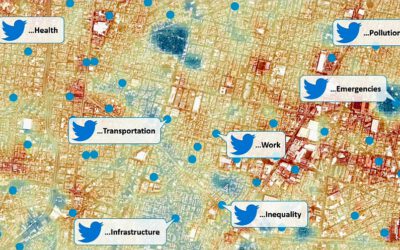
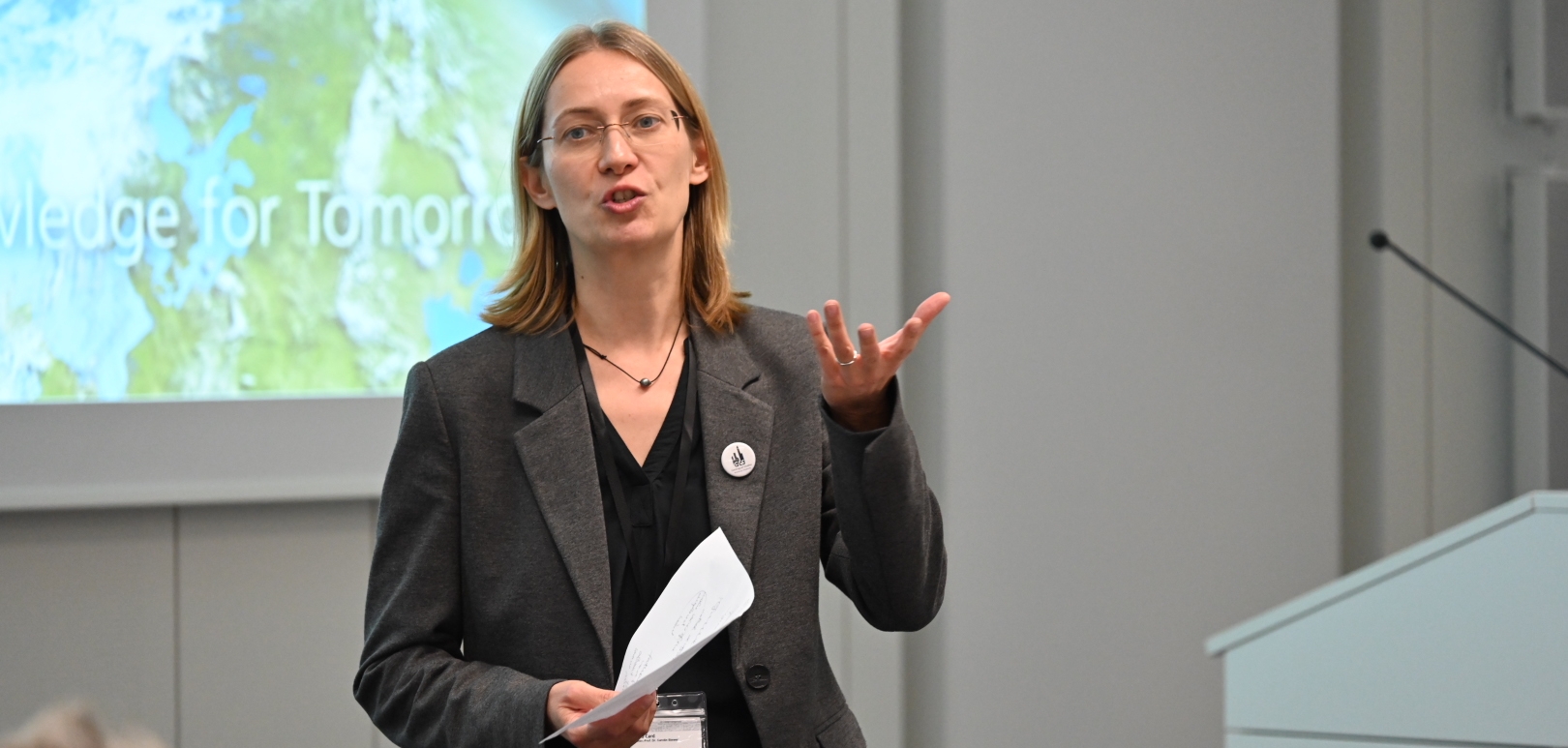
Prof. Biewer then introduced the main idea and the larger vision of Geolingual Studies. In doing so, she demonstrated her previous approach to evaluating texts linguistically. Prof. Taubenböck then went into his previous approach of using remote sensing image data to analyze urbanization in its spatial dimension or structure. Geolingual Studies, as a new research direction at the JMU, has the potential to bring together people’s actions and thoughts in space and time.
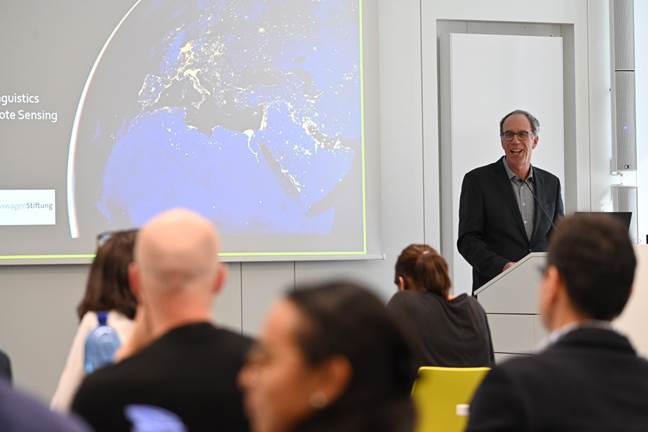
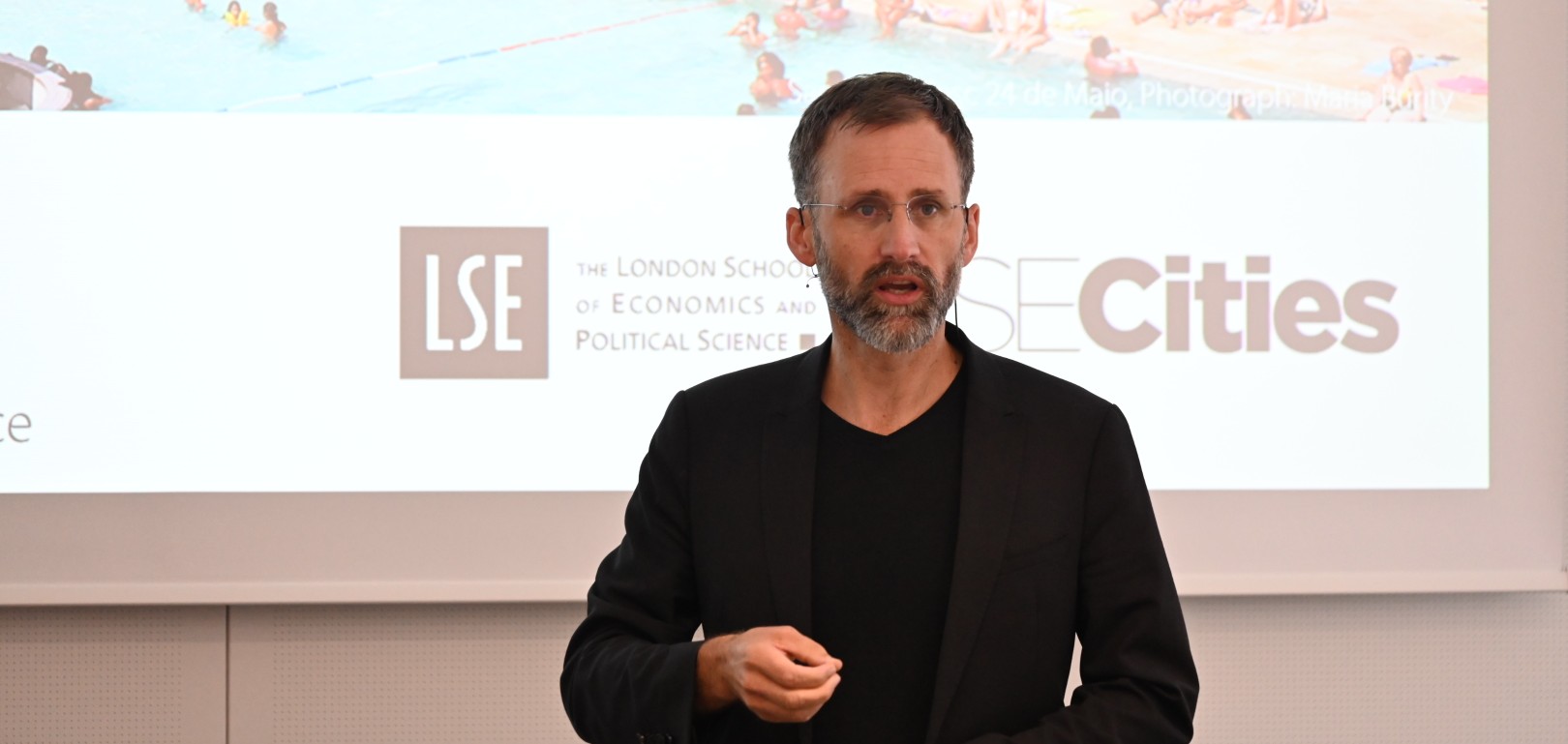
The inspiring opening keynote was held by Dr. Philipp Rode from the London School of Economics (LSE), where he is the Executive Director of LSE Cities and Associate Professor at the School of Public Policy. His keynote was titled: “Global Urbanisation and Cities in the 2020s: New types of data for working with complexity”.
Here is the Abstract to his keynote presentation: The world of the 2020s is continuously adding questions about the future rather than providing us with clear patterns of development. This has been particularly evident for the study of global urbanisation and city development for which old certainties are today replaced by diverging anticipation, scenarios and opinions. Until recently, urban growth projections based on extrapolation of recent trends were reliable, the possibility of gradual carbon emission reduction to achieve a safe climate was possible and urban democracy was a project motivating decentralisation reforms and city leadership. Today, global urban narratives are being challenged: the role of the financial sector, the possibility of urban green growth, a cosmopolitan insulation against populism, the trickle down from superstar cities, gentrification without displacement, the purpose of consumer cities and manageable levels of planetary extraction to support city building. This keynote will revisit the old urban certainties and theories. It will present the evidence for the major disruptions, complex emergencies and crisis points which makes urban research in the 2020s such a daunting task. Based on these, it will build the case for new types of urban research and data, capable of unpacking power dynamics, political processes and collective action dynamics which in turn can enable a better understanding of future change in cities and urban territories.
The workshop is taking place this week from Tuesday to Thursday at the Zentrum für Philologie und Digitalität (ZPD; Emil-Hilb-Weg 23, 97074 Würzburg) of the University of Würzburg. Feel free to join our next two days of presentations. Here is the link to the programm: https://remote-sensing.org/final-program-for-the-workshop-on-geolingual-studies-gls-a-new-research-direction/
Stay tuned for more updates on the workshop