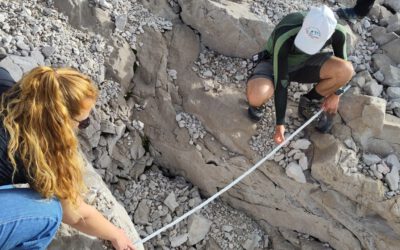

Süddeutsche Zeitung recently covered our Monid Habitrack project, and we’re happy to share it. The article follows the research team at work in the Oberpfalz, where our drones map vegetation and surface temperature while ticks are collected on the ground and tested for pathogens. The project, a collaboration with LMU Munich, Fraunhofer, and other partners, aims to build a new kind of risk map, one that predicts rather than just records where infected ticks are likely to be found.
One early finding stands out: Lyme disease bacteria turn up in nearly every area studied, while TBE-infected ticks tend to cluster in specific spots, often forest edges rather than open clearings.
Please check our blog again for updates on our ongoing BMFTR funded research project and more results of our UAS and space-borne earth observation research.
Read the full article here: https://www..sueddeutsche.de/muenchen/muenchen-zecken-risikogebiete-fsme-borreliose-infektionsgefahr-li.3505939?reduced=true