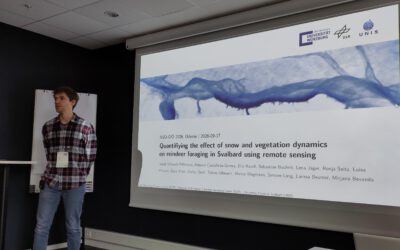
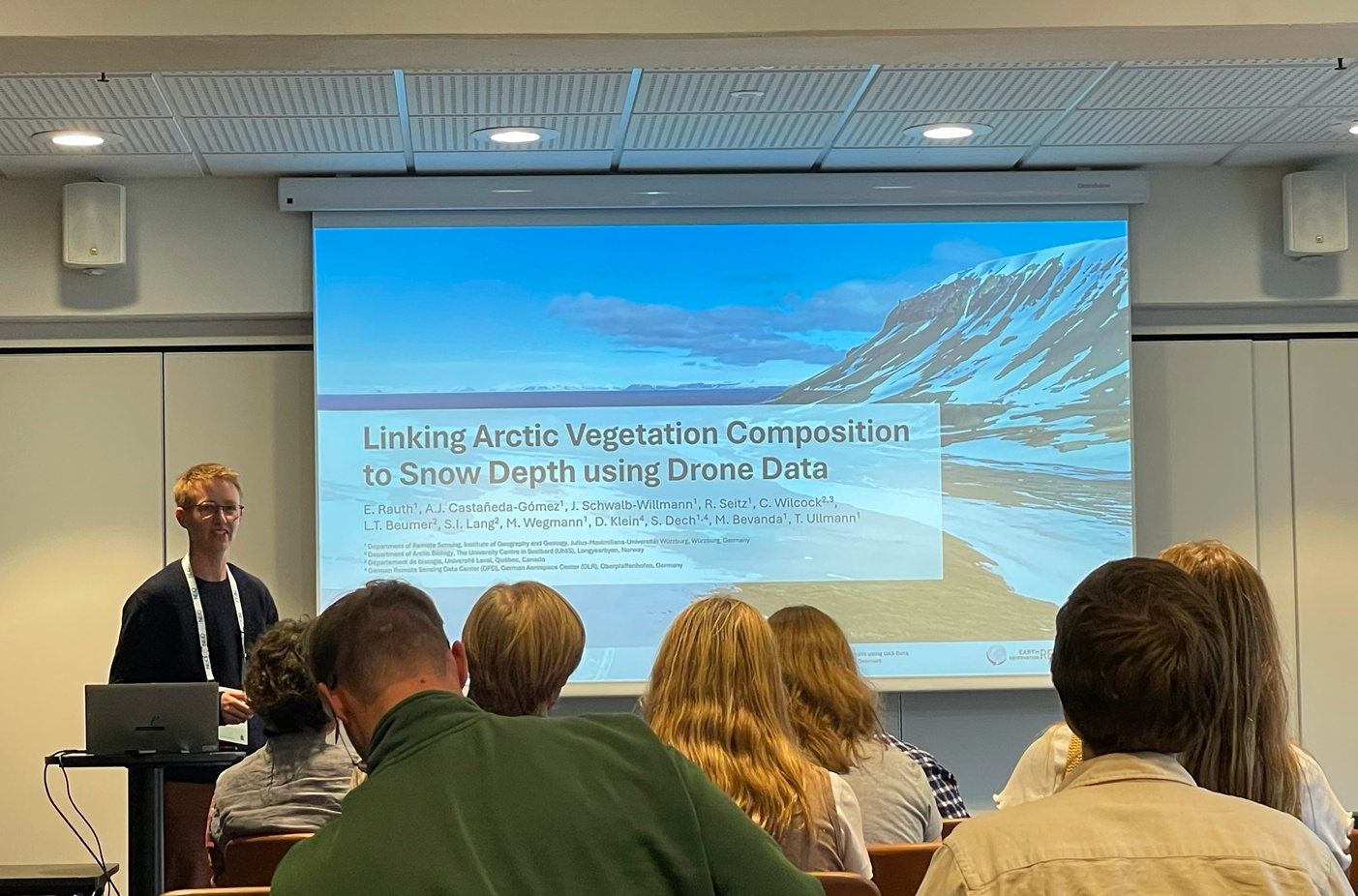

Last week, EORC PhD student Elio Rauth presented research on the effect of UAV-derived snow depth on the spatial distribution of vegetation types on Svalbard at the joint NSO-GfÖ 2026 ecology. The study is part of Elio’s PhD research as part of which he has been collaborating with the University Centre in Svalbard (UNIS).
In his talk, Elio showed how he is using UAV multi-spectral and LiDAR data to differentiate and map 14 types of Arctic vegetation at a spatial resolution of 10 cm/pixel in Bjørndalen, Svalbard. To study the effect of snow depth on vegetation composition, he compared vegetation distribution and snow depth obtained using a LiDAR sensor. The results show that in open plains, snow depth was significantly higher in heath vegetation types than non-vegetated areas. On ridges, snow depth was significantly lower for heath vegetation types than dry moss tundra. In addition, he correlated the topographic characteristics with vegetation distribution and snow depth. Elio’s results show how UAS data can be used to map small-scale interactions between topography, snow, and vegetation in the High Arctic.
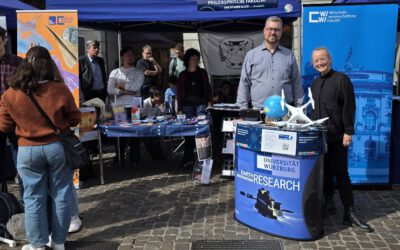
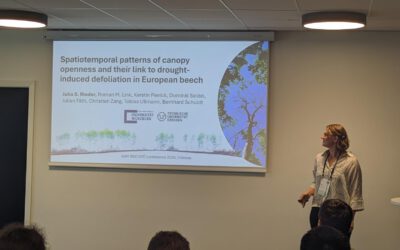
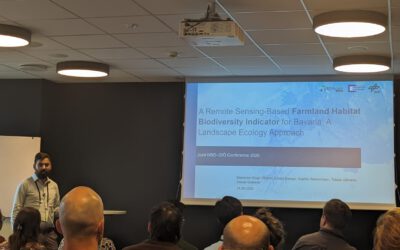
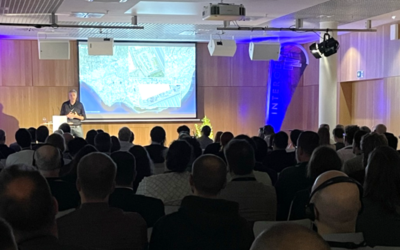
The NSO-GfÖ 2026 ecology conference was jointly organised by the Nordic Society Oikos (NSO), representing the ecological societies of Denmark, Sweden, Norway, Finland, and Iceland, and the Gesellschaft für Ökologie (GfÖ), representing Austria, Switzerland, and Germany. Attended by nearly 1000 participants, it offered a unique opportunity to exchange on various ecological research fields across diverse research regions – including High Arctic ecosystems, plant ecology, and remote sensing for ecology. The University of Würzburg was represented both through the contributions of the EORC as well as members of the Unviersity’s bio centre.