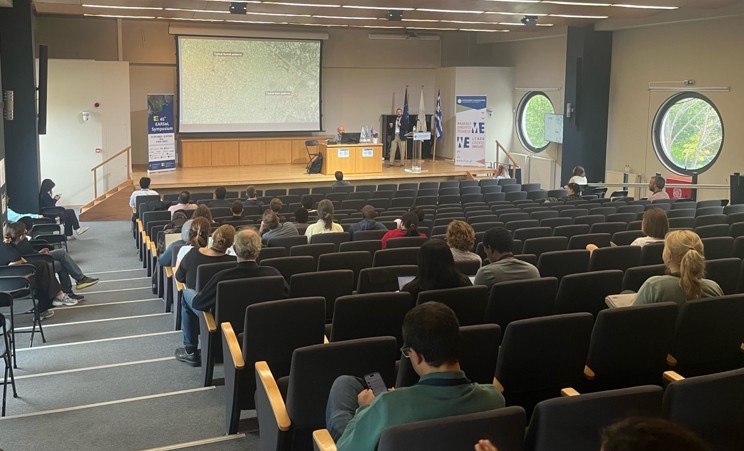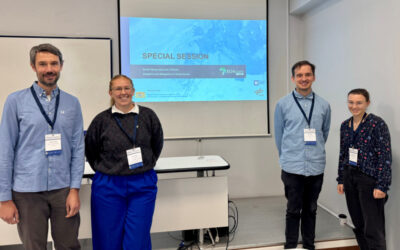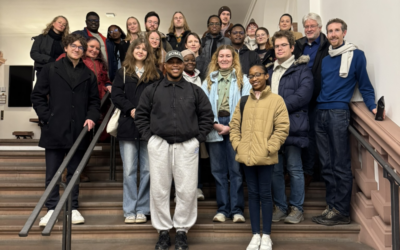

The second day of the 45th EARSeL Symposium in Athens was once again full of contributions from our group, this time with a strong focus on urban and resource-related research in the Global South.
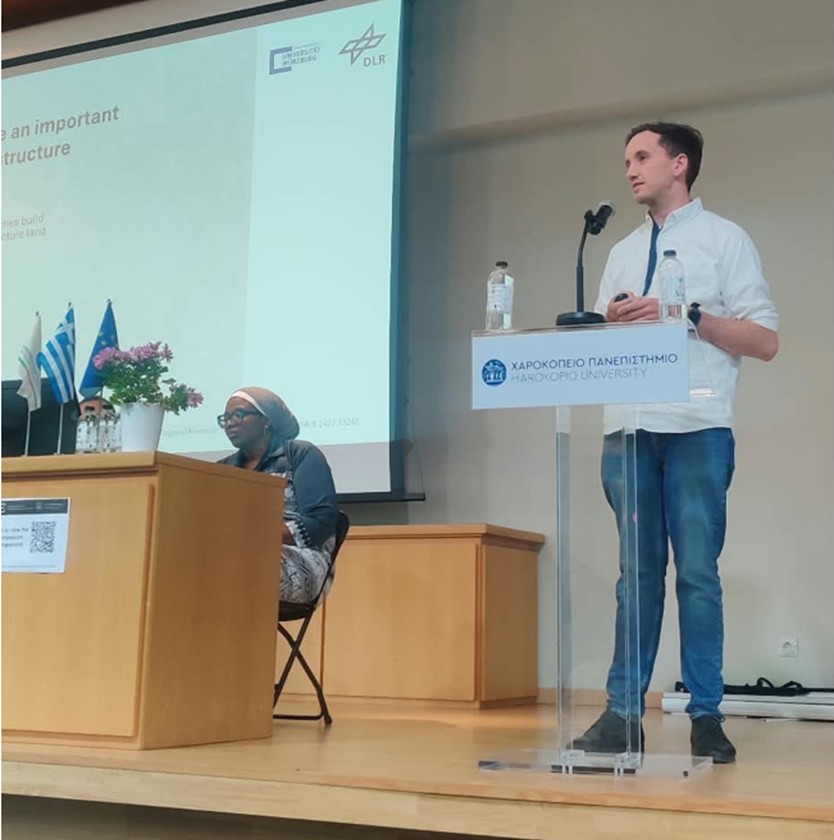
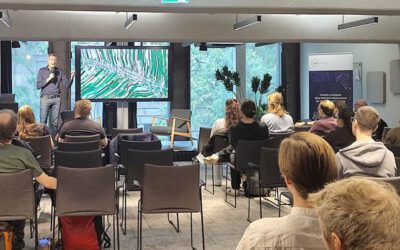
John Friesen chaired three sessions of the Workshop on the Global South. He also gave a talk titled “Assessing the Relationship between Urban Morphology and Places of Worship in Four Sub-Saharan Cities”. The study was conducted together with Hannes Taubenböck (DLR and EORC), Marko Jesske from the Faculty of Theology at Heidelberg University, and Stefanos Georganos from Karlstad University. It is an example of how interdisciplinary collaboration can open up new perspectives on urban structures.
In one of the workshop sessions, Thomas Stark presented “Patterns of Informality: Variability in Slum Morphologies Revealed Through Monte-Carlo Segmentation”. The study adds to his long-standing work on mapping slums with deep learning.
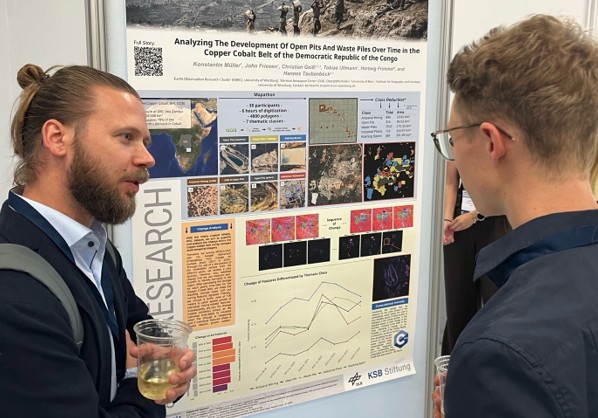
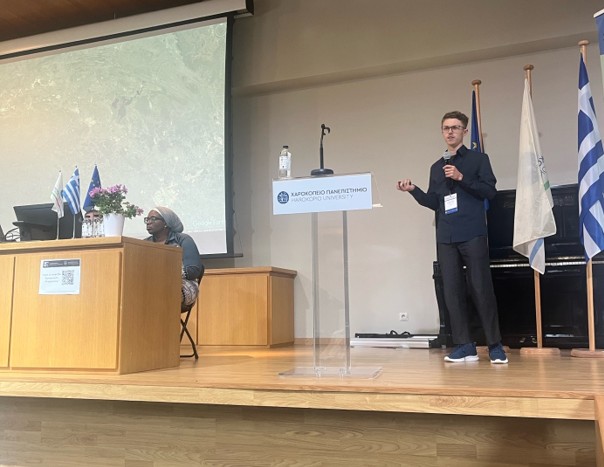
Konstantin Müller presented two studies from his PhD. In his talk “MINES-DRC: Mining Infrastructure and Natural-Resource Extraction Sites in the Democratic Republic of the Congo”, he introduced a dataset created during a mapping marathon organized at EORC. Many students contributed to the dataset and are co-authors of the study, which reflects EORC’s commitment to involving students in research at an early stage. He also presented the poster “Analyzing the Development of Open Pits and Waste Piles over Time in the Copper-Cobalt Belt in the DRC”. He worked on it together with Prof. Hartwig Frimmel (Geology, University of Würzburg), Prof. Christian Geiß (DLR and University of Bonn), Prof. Tobias Ullmann (EORC), and Prof. Hannes Taubenböck (DLR and EORC).
We are looking forward to the remaining days of the symposium and more exchange with the remote sensing community.