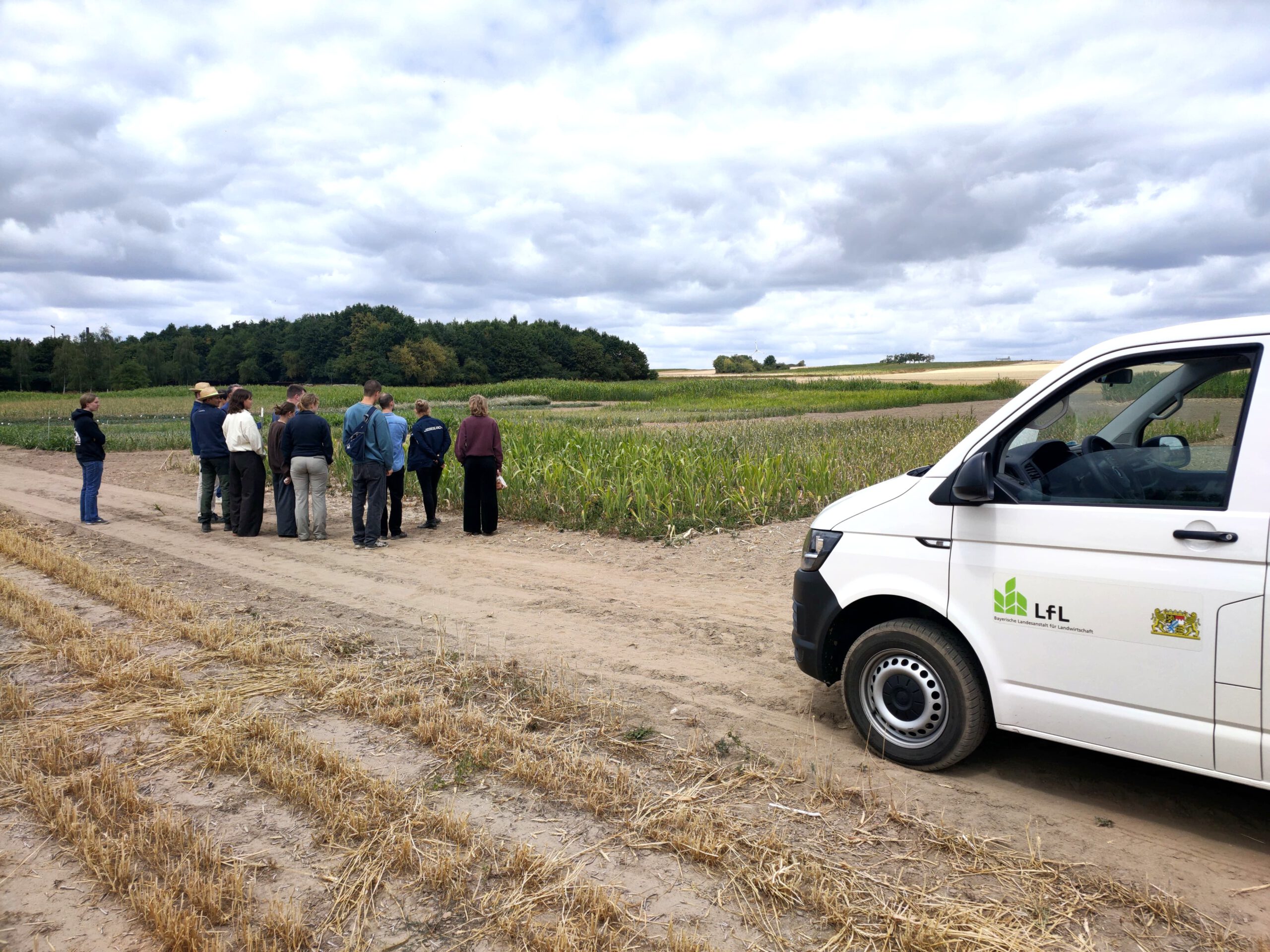
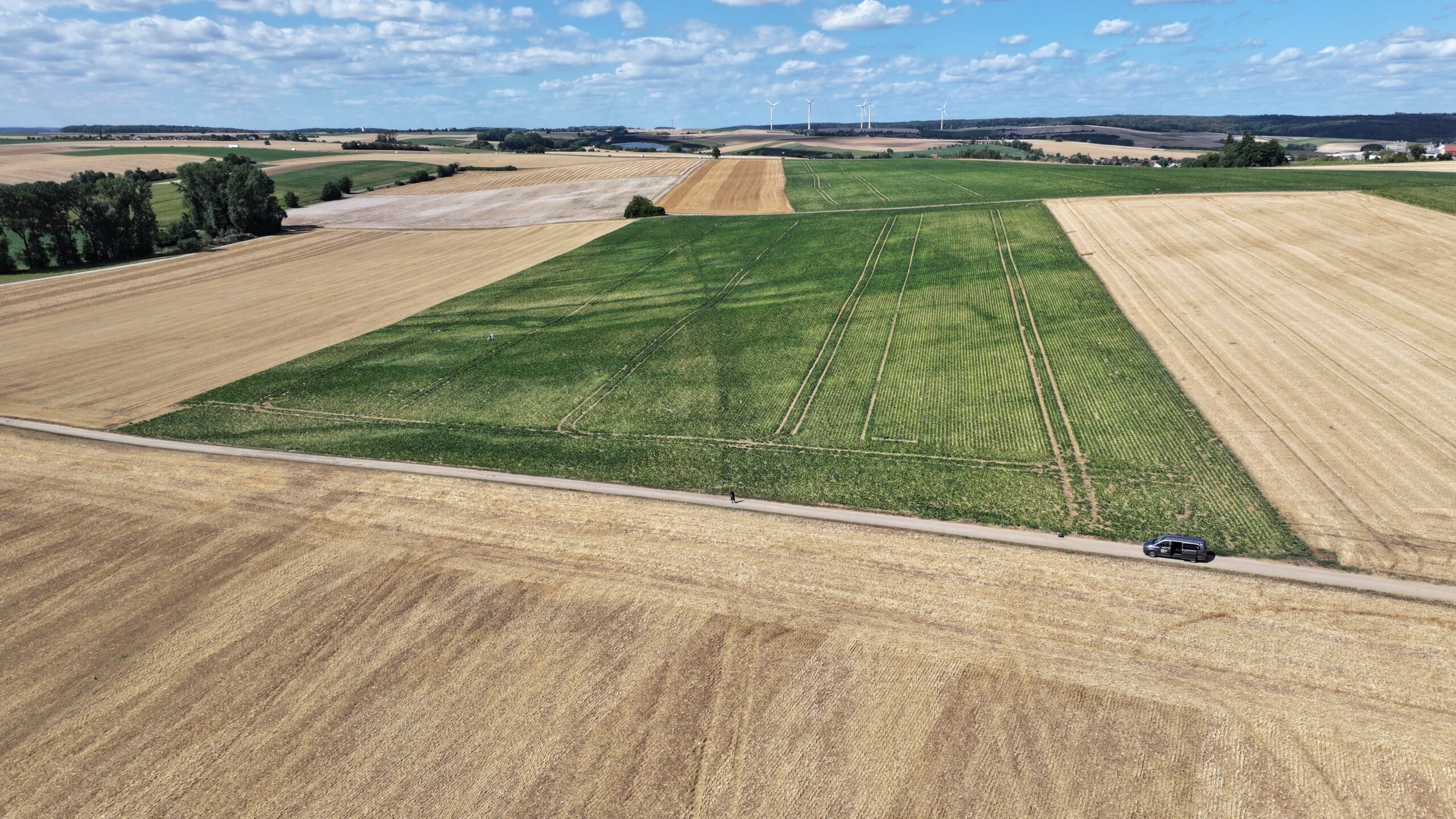

The EAGLE block course “Linking Science and Practice in Earth Observation for Climate Adaptation” concluded with a visit to the Bavarian State Office for Agriculture (LfL) and its Research Center for Agriculture in Dry Regions in Schwarzenau. Following earlier visits to the Government of Lower Franconia and the University Forest in Sailershausen, the final excursion focused on the role of Earth observation in supporting climate adaptation in agriculture.
Participants learned about the LfL’s research on climate adaptation, future crops, and resilient farming systems before visiting long-term experimental fields, where discussions centred on agricultural research under increasingly dry climatic conditions.
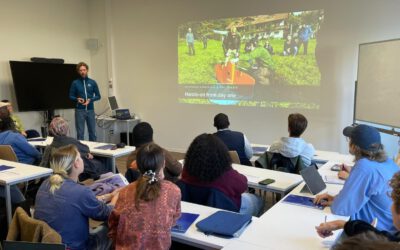
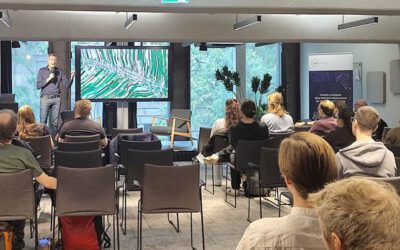
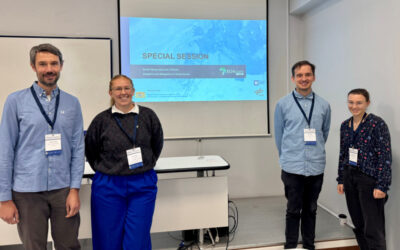
Students complemented the programme with two case studies on yield prediction of organic winter rye using multispectral UAS and satellite data and user requirements for Earth observation products in agriculture. Their presentations stimulated discussions on yield stability, landscape diversity, soil conditions, and the opportunities and challenges of integrating Earth observation into agricultural decision-making.
The seminar concluded with very positive feedback from all participating institutions. We sincerely thank our hosts at the Government of Lower Franconia, the University Forest Office in Sailershausen, and the Bavarian State Research Center for Agriculture for sharing their expertise and practical perspectives. We are equally grateful to all participating students for their excellent presentations, thoughtful discussions, and enthusiastic engagement throughout the course. Together, the three excursions demonstrated how Earth observation can support climate adaptation across water management, forestry, and agriculture. More importantly, they highlighted the value of close collaboration between science and practice. While the seminar has come to an end, the ideas and discussions throughout the course will continue to hopefully inspire future theses and collaboration.