
EAGLE M.Sc. thesis in the Arctic

EAGLE M.Sc. thesis in the Arctic

m

September 24, 2024

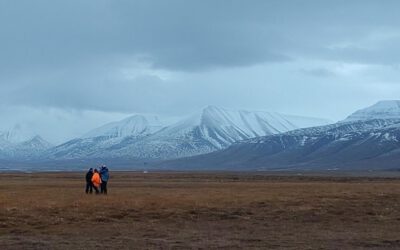
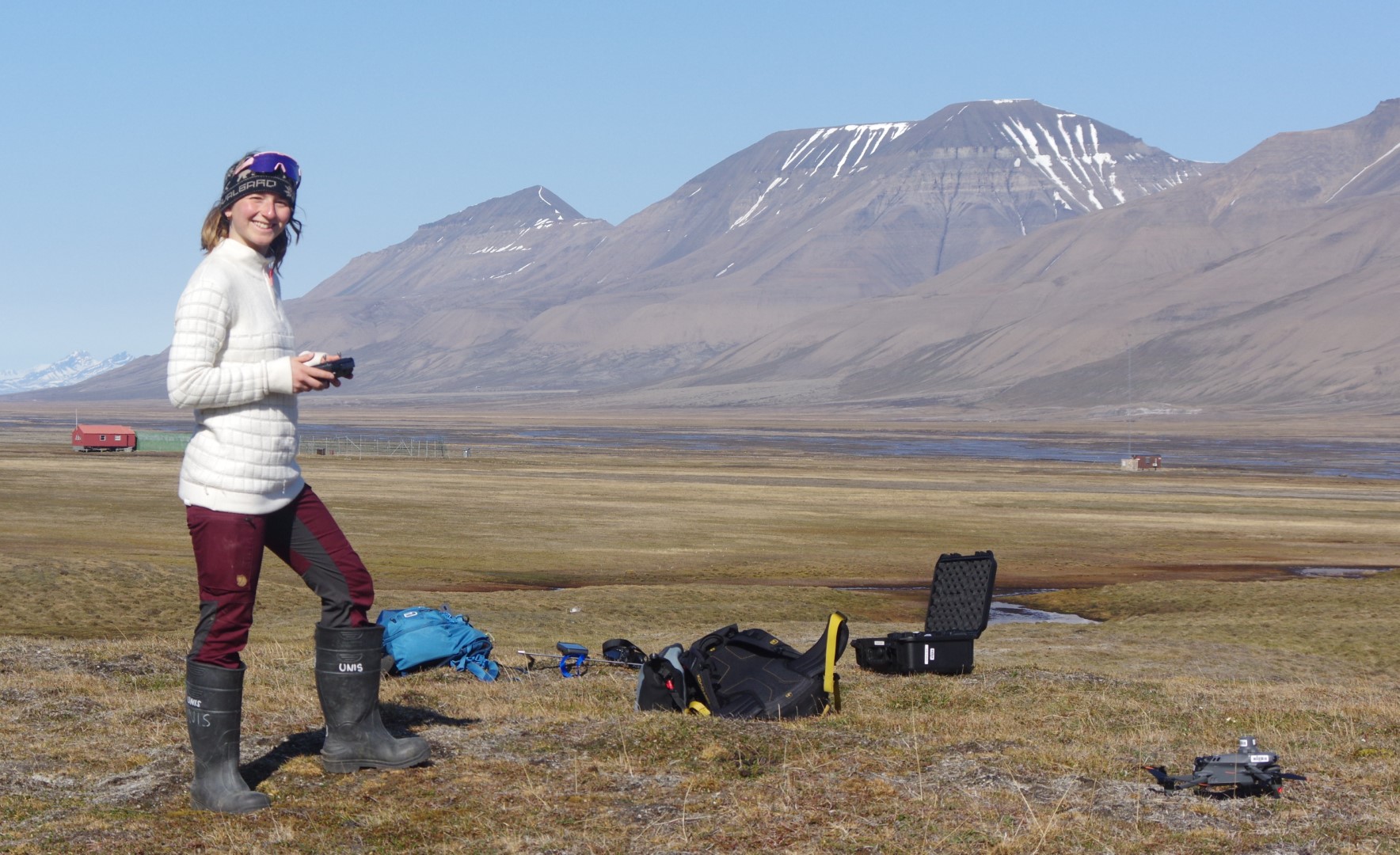
Our EAGLE student Ronja Seitz is conducting her field work for her Master thesis in the Arctic, on Svalbard. She started collecting her data in June to build up a timeseries with UAS multispectral data to investigate disturbances like rain on snow (ROS) events and goose grubbing on vegetation.

The high resolution time series data acquired by her in a regular time interval throughout the vegetation period accompanied by in-situ observations increases the precision of mapping vegetation, since it includes different phenological stages and raises the possibility to monitor vegetation affected by ROS – events or goose grubbing in the arctic tundra.

UAS data provide the necessary resolution and area coverage to bridge the gap between micro scale field observations and landscape to regional scale satellite data via upscaling using models and is a highly valuable mean of collecting data in inaccessible or vulnerable areas like the arctic.

Her M.Sc. thesis is supervised by Dr. Mirjana Bevanda and Dr. Hélène Barthelemy, and done in collaboration with furhter colleagues on Svalbard and EORC colleagues like Tobias Ullmann.

follow us and share it on:

you may also like:

Space Days in Würzburg: EORC on site

Space Days in Würzburg: EORC on site

This Saturday turned out busier than we expected. At the Space Days at the University of Würzburg, Sarah Schoenbrodt-Stitt and Mirjana Bevanda represented EORC with a small booth, and the visitors were quite numerous. Students and colleagues stopped by, as expected....

EORC at the Zugspitze

EORC at the Zugspitze

The CSU Working Group for Environment and Consumer Protection recently visited the Environmental Research Station Schneefernerhaus (UFS) on the Zugspitze. The visit provided an opportunity to present current research activities connected to this unique high-alpine...

bzgl. Art. 50 Verordnung (EU) 2024/1689 (AI Act):

Überwiegend werden eigene originäre Texte und Bilder des EORC genutzt, jedoch sind einige Inhalte von blog post Texten teilweise mit Hilfe von KI überarbeitet worden und einige Bilder sind ganz mit KI erstellt, die jedoch deutlich keine photorealistische Darstellungen abbilden. Aussnahmen sind KI generierte fernerkundliche Datensätze, die explizit für Forschungszwecke mit KI erstellt wurden, hier wird aber durch den assoziierten Text der wissenschaftliche Grund der KI generierten Bilder erläutert.

Privacy Policy

Lehrstuhl für Fernerkundung & Lehrstuhl für Urbane Fernerkundung

Erdbeobachtung an der Universität Würzburg

Share This