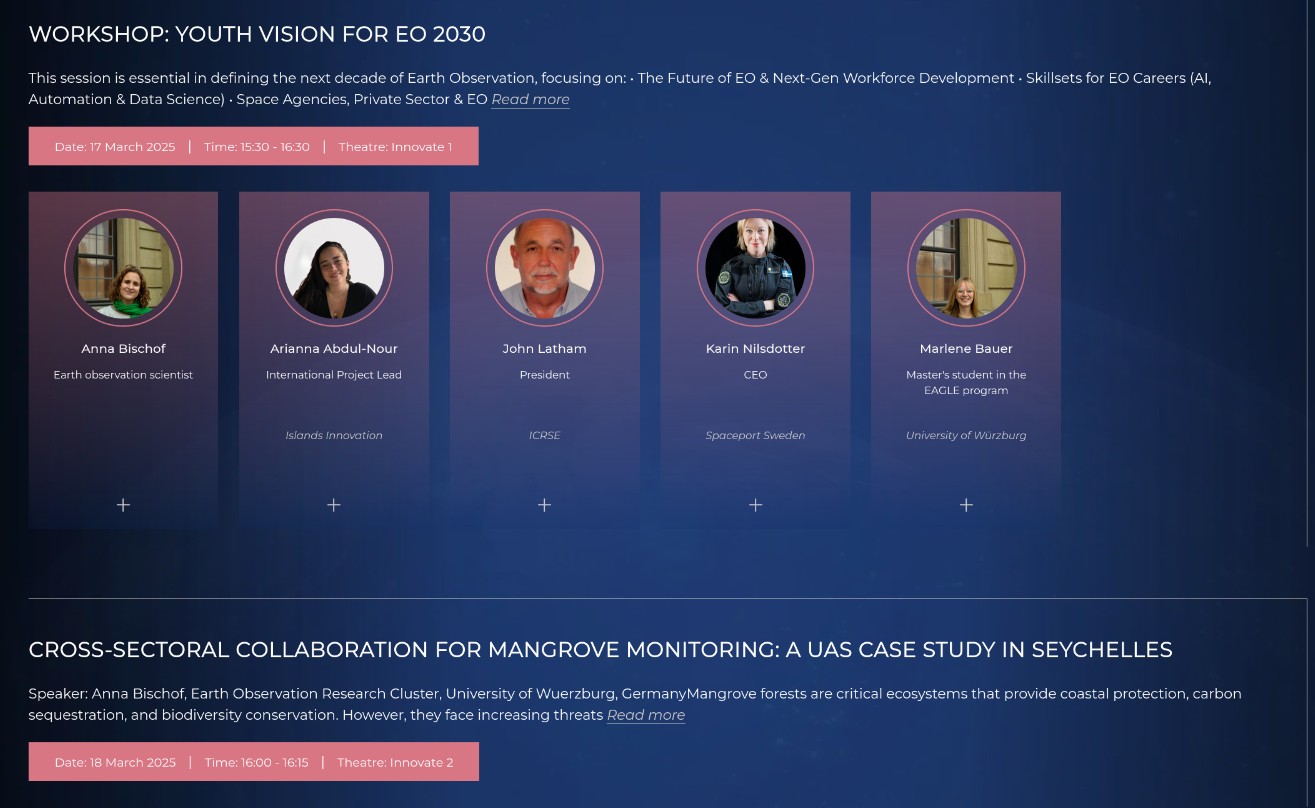

EAGLE Students Marlene Bauer and Anna Bischof to Participate in ISRSE 2025

EAGLE Students Marlene Bauer and Anna Bischof to Participate in ISRSE 2025

m

March 16, 2025

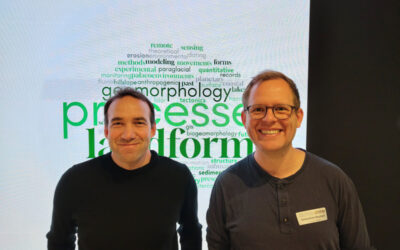
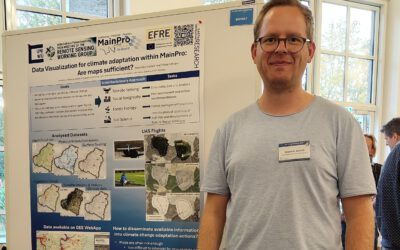
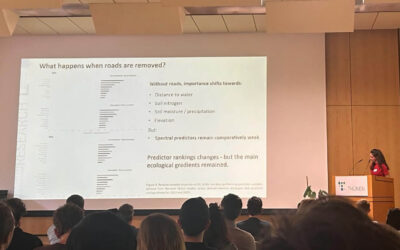
We are very pleased to share that two of our students, Marlene Bauer and Anna Bischof, will be actively contributing to the International Symposium on Remote Sensing of Environment (ISRSE) 2025 in the UK next week. As part of their involvement with talks and posters, they also had the chance to be involved in the Organizing Board, and experience how to shape a conference.

Marlene and Anna will also take part in two expert panels, where they will join discussions on various topics within the field of remote sensing. Their contributions aim to provide insights into current developments and challenges, reflecting the research conducted within the EAGLE program.

Presenting Research on UAS Data Analysis

In addition to their organizational insigts, they will present their UAS (Unoccupied Aerial Systems) data analysis research, which has been carried out in Kruger National Park and the Seychelles. Their work, supervised by Dr. Mirjana Bevanda and Antonio Gomez Castaneda, explores the application of remote sensing technologies for environmental monitoring and conservation.

Their research highlights how UAS data can support environmental assessments and contribute to conservation strategies. By applying advanced data analysis techniques, their findings offer valuable perspectives for ecological monitoring.

Representing the EAGLE Program

Marlene and Anna’s participation in ISRSE 2025 underlines the quality of research and education provided by the EAGLE program. Their engagement demonstrates the program’s emphasis on practical applications of remote sensing and the contribution of young researchers to the field.

We look forward to their presentations and discussions at ISRSE 2025 and wish them success in their contributions. More about their presentations as well as other members of our Earth Observation Research Cluster will be posted here in the next days.

follow us and share it on:

you may also like:

Welcome, Prof. Dr. Stefan Dech!

Welcome, Prof. Dr. Stefan Dech!

Big news at the EORC: as of today, October 1st, 2026, Stefan Dech is officially a senior professor at the University of Würzburg, and he's staying right where he belongs, with us at the EORC. Stefan will keep working with us on a whole range of Earth Observation...

EO4CAM Meeting with LfU and StMUV at DLR

EO4CAM Meeting with LfU and StMUV at DLR

On 30 September 2026, representatives from the Bavarian State Ministry of the Environment and Consumer Protection (StMUV), the Bavarian Environment Agency (LfU), the EORC of the University Würzubrg (JMU), and the...

Field campaign for DFG Fire and Savanna project

Field campaign for DFG Fire and Savanna project

Our PhD candidate Luisa Pflumm is back in Kruger National Park for her third field campaign. Her PhD focuses on how savanna trees respond to combined fire and drought stress for which she is flying UAVs equipped with multispectral and LiDAR sensors. With this round of...

Successful MSc Defense by Henning Riecken

Successful MSc Defense by Henning Riecken

Congratulations to Henning Riecken, who successfully defended his MSc thesis on September 28, 2026: "Mapping and Structural Assessment of Woody Vegetation in Bavaria Using Digital Elevation Models and Multisource Geodata" Henning's thesis explores how newly available...

bzgl. Art. 50 Verordnung (EU) 2024/1689 (AI Act):

Überwiegend werden eigene originäre Texte und Bilder des EORC genutzt, jedoch sind einige Inhalte von blog post Texten teilweise mit Hilfe von KI überarbeitet worden und einige Bilder sind ganz mit KI erstellt, die jedoch deutlich keine photorealistische Darstellungen abbilden. Aussnahmen sind KI generierte fernerkundliche Datensätze, die explizit für Forschungszwecke mit KI erstellt wurden, hier wird aber durch den assoziierten Text der wissenschaftliche Grund der KI generierten Bilder erläutert.

Privacy Policy

Lehrstuhl für Fernerkundung & Lehrstuhl für Urbane Fernerkundung

Erdbeobachtung an der Universität Würzburg

Share This