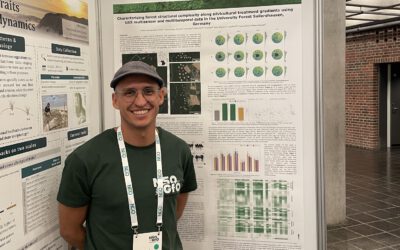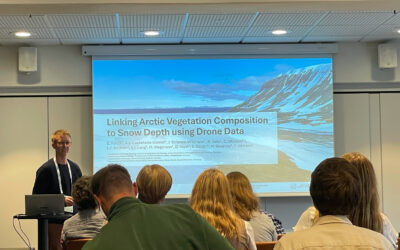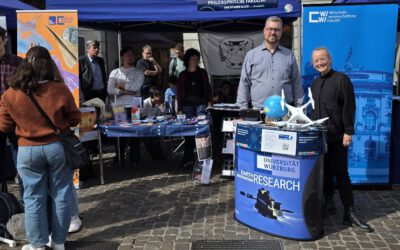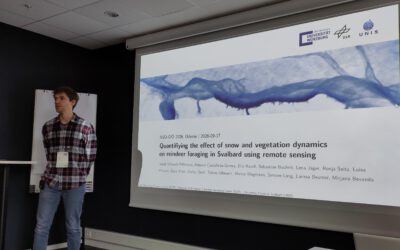
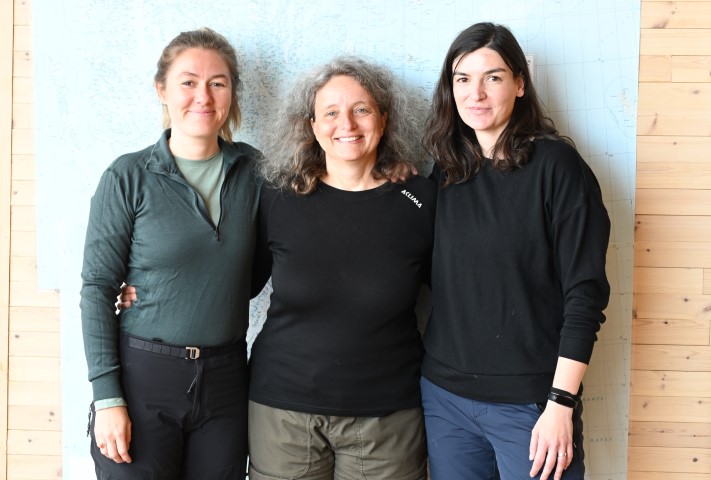

Our Earth Observation Research Cluster has with Prof. Tobias Ullmann a long history in arctic research, namely Canada and Alaska. Establishing further arctic field study sites has been going on since a few years. Our Postdoc Dr. Mirjana Bevanda established new collaborations in Svalbard around Longyearbyen, with Prof. Larissa Beumer and Prof. Simone lang, two professors working on animal environment interaction and vegetation patterns. Our drone and satellite Earth Observation research fits perfectly within their research scope of small to medium scale environmental analysis. Several field campaigns were conducted last month within this new collaboration and we flew with the VTOL system various multispectral, thermal and Lidar missions.
Further collaborations will deal with snow and ice dynamics in the arctic winter, also with other collaborators at UNIS working on glaciers or sea ice.
Additionally to joint research activities did we also already established a lively exchange of students. MSc students are already conducting their research on Svalbard, jointly supervised by Prof. Beumer, Prof. Lang and Dr. Bevanda, beside various internships of other EAGLE students working on UAS and satellite based remote sensing analysis for ecologist research are taking place.
We are very much looking forward to these new research collaborations and exciting new projects.
Further collaborations will deal with snow and ice dynamics in the arctic winter, also with other collaborators at UNIS working on glaciers or sea ice.
Additionally to joint research activities did we also already established a lively exchange of students. MSc students are already conducting their research on Svalbard, jointly supervised by Prof. Beumer, Prof. Lang and Dr. Bevanda, beside various internships of other EAGLE students working on UAS and satellite based remote sensing analysis for ecologist research are taking place.
We are very much looking forward to these new research collaborations and exciting new projects.