
EORC researchers teaching drone remote sensing at UNIS, Svalbard

EORC researchers teaching drone remote sensing at UNIS, Svalbard

February 5, 2026

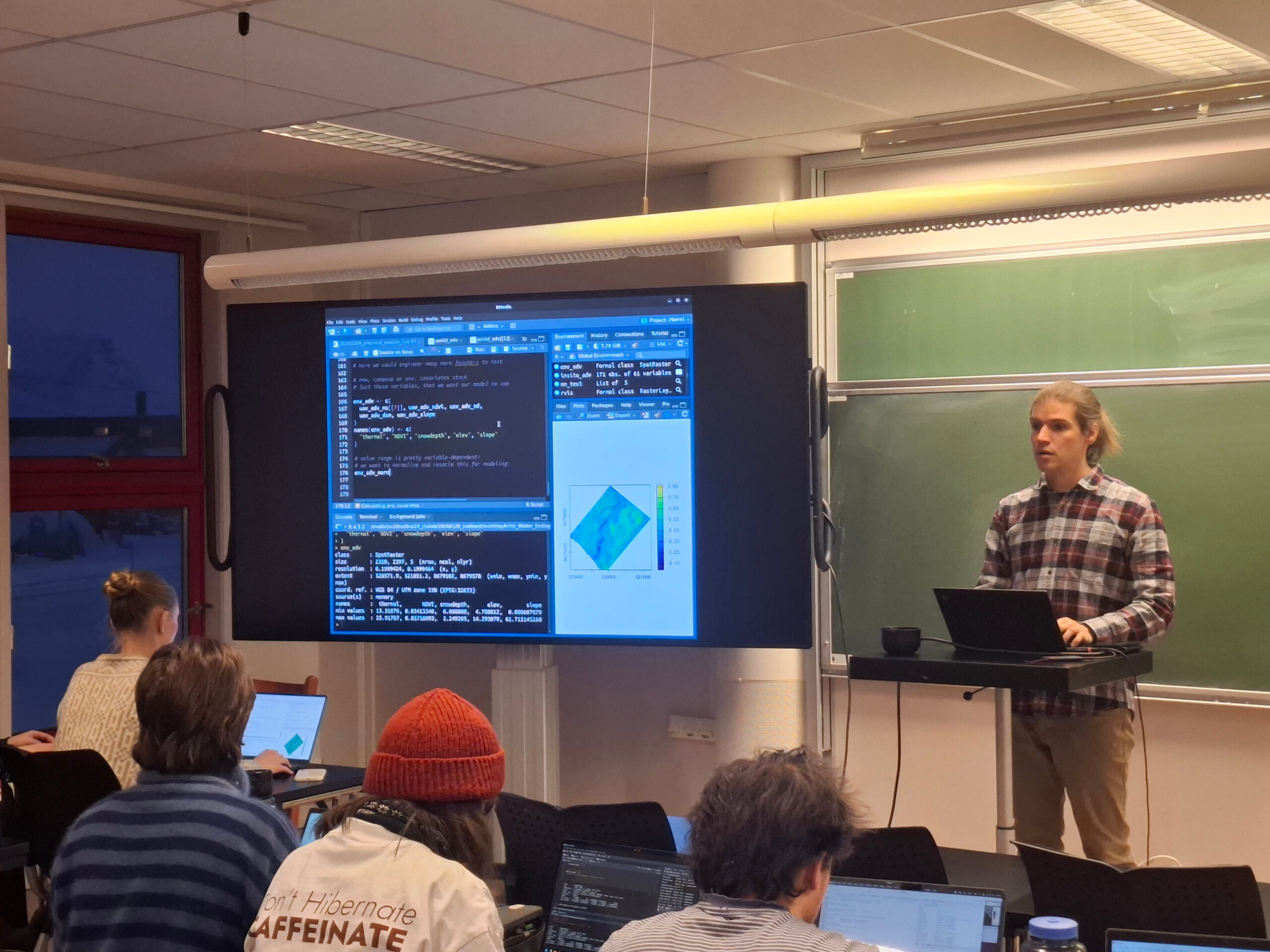
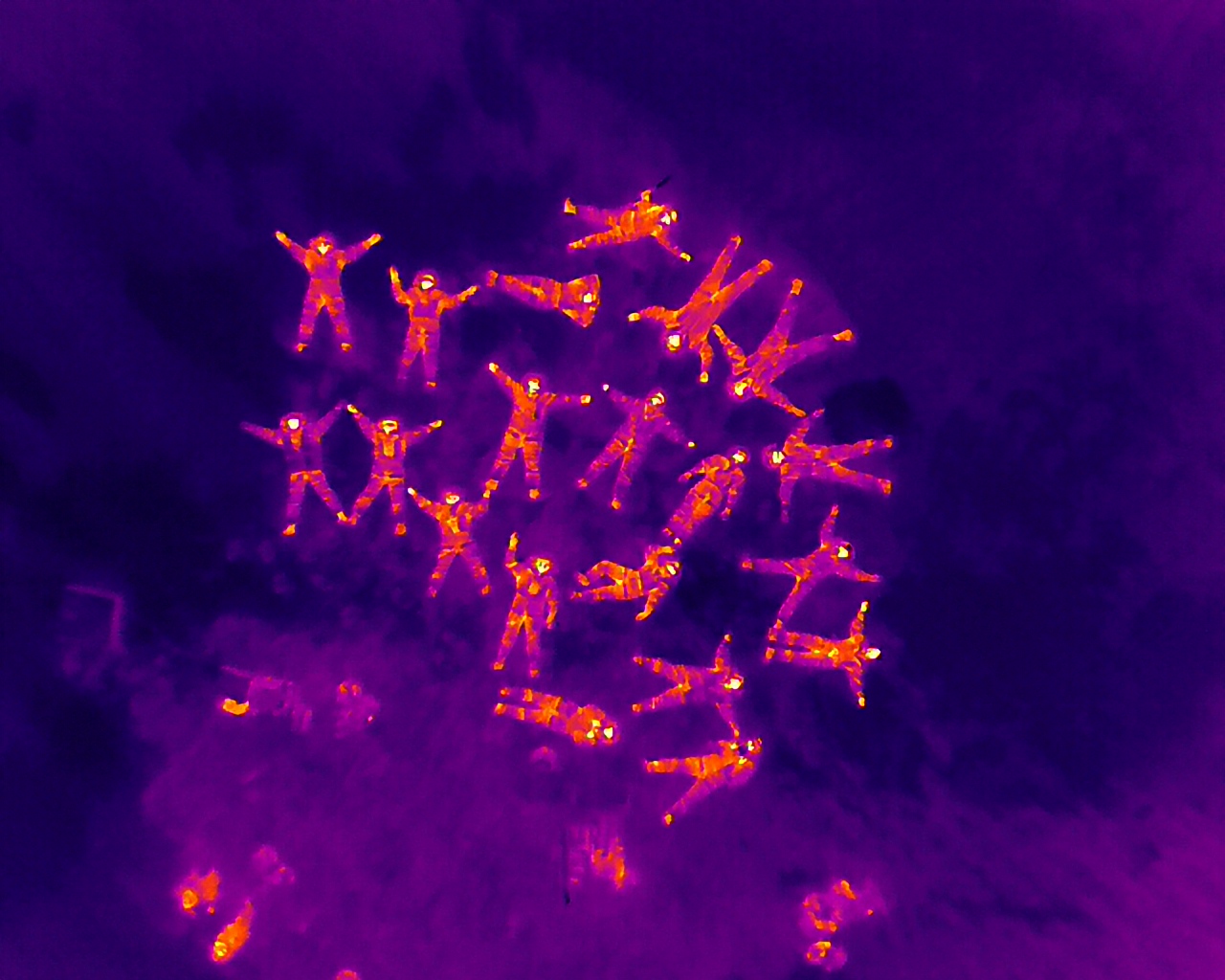
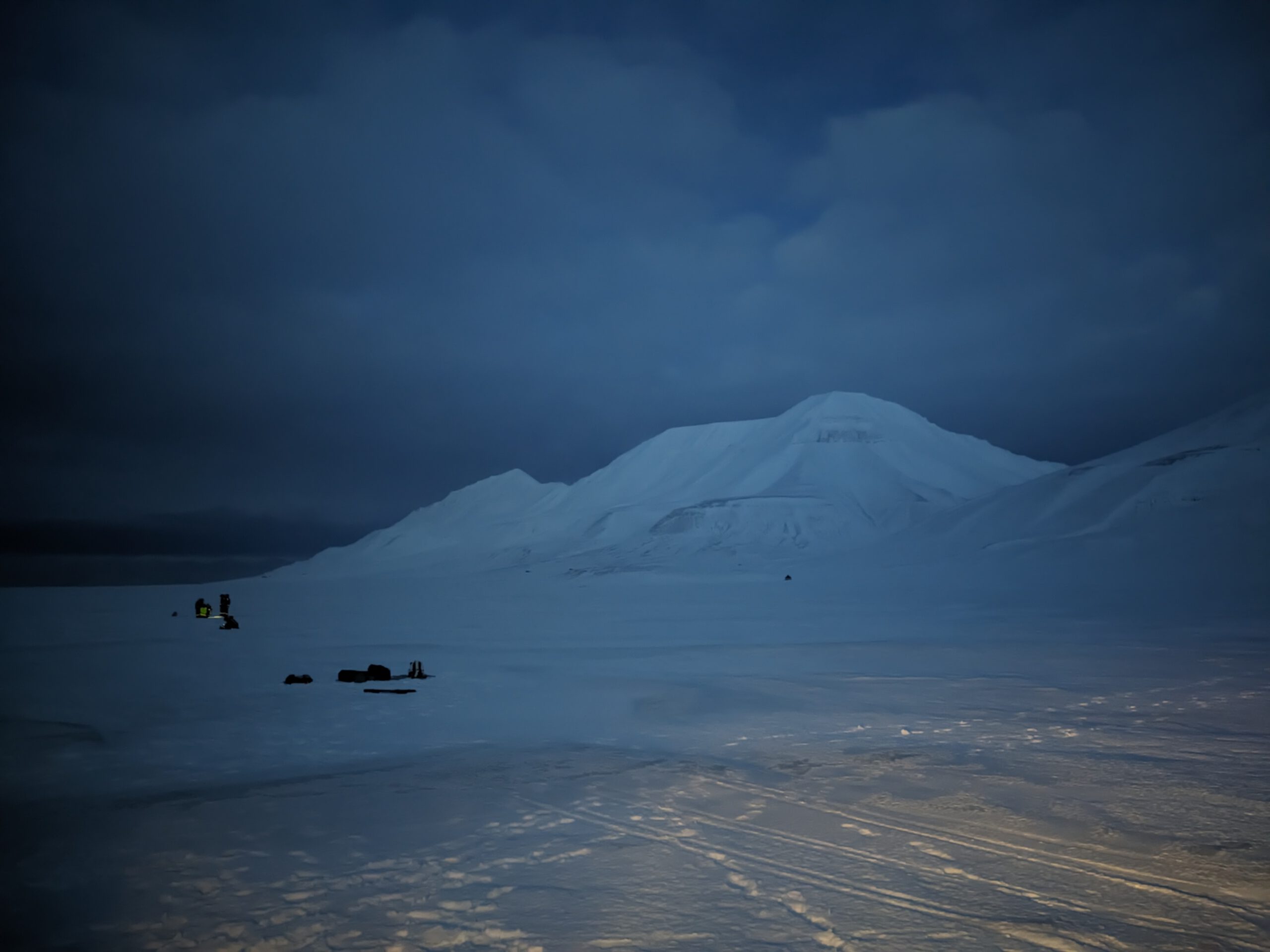
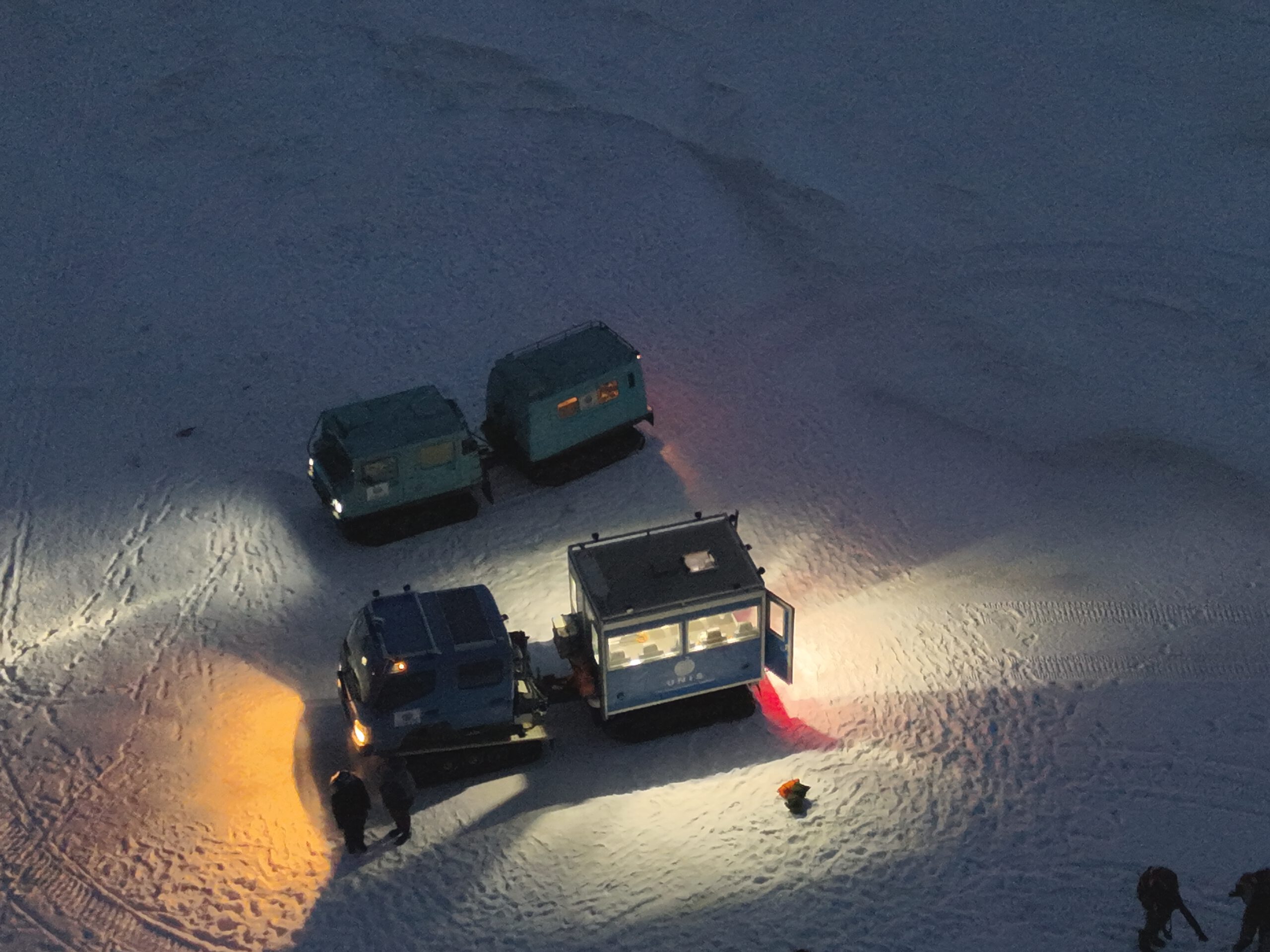
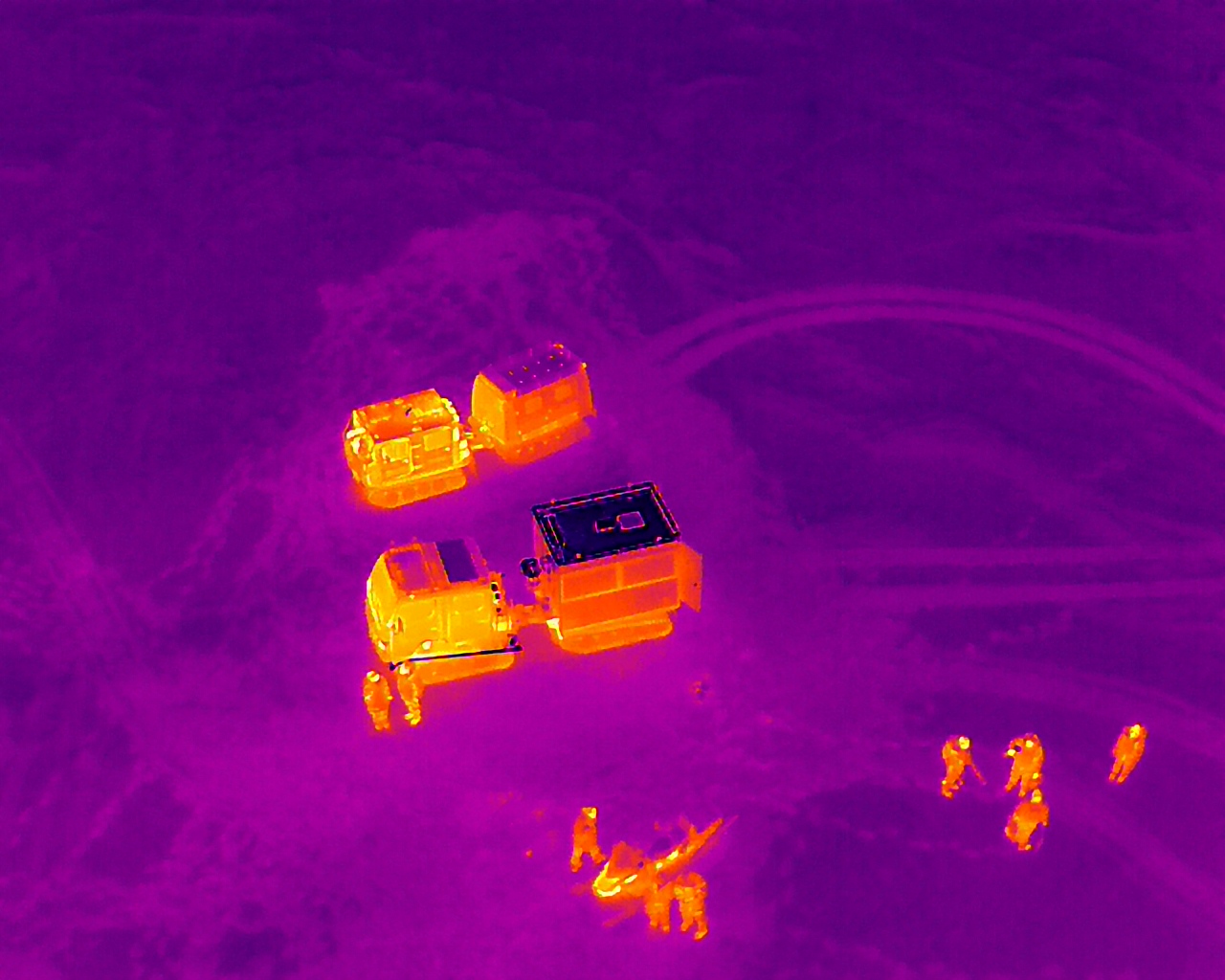
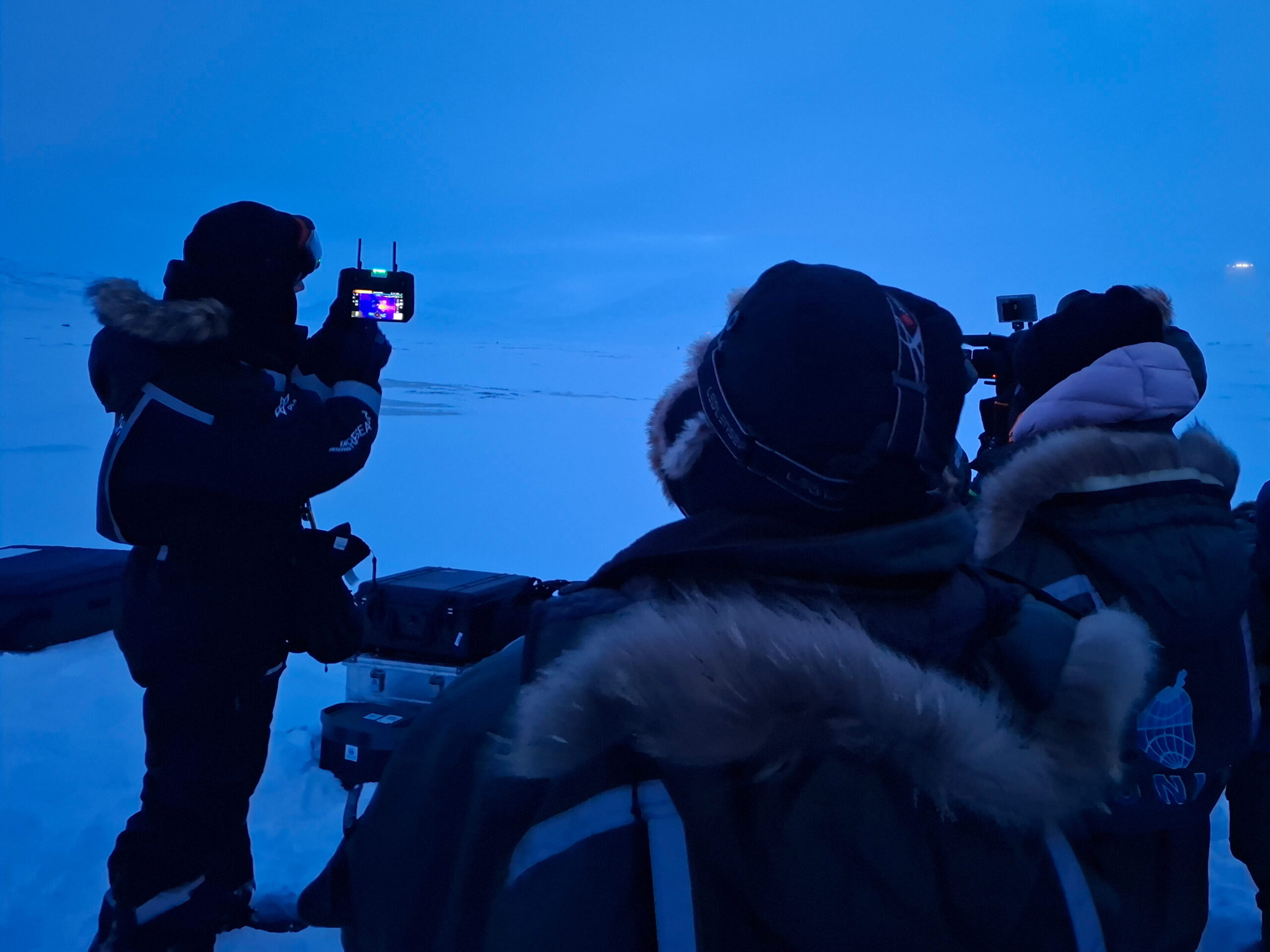
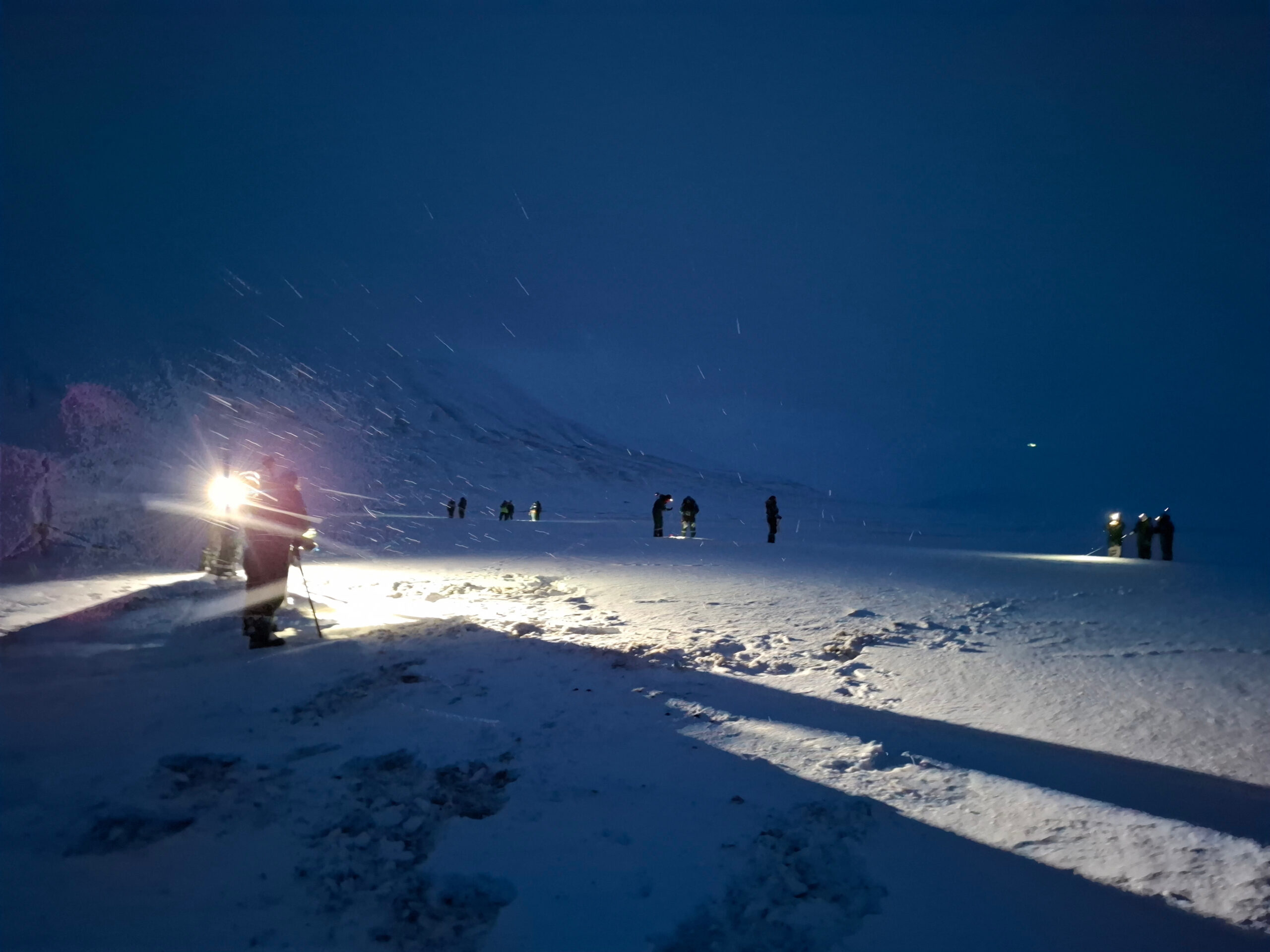
During their current visit to Svalbard, EORC researchers have been teaching UNIS students from all over Europe on how drones can be used for remote sensing in the high Arctic. Invited by our UNIS collaborators Prof. Dr. Simone Lang (UNIS) and Prof. Dr. Eero Rinne (UNIS), they spend multiple days in the class room and out in the Tundra to record and analyse data.

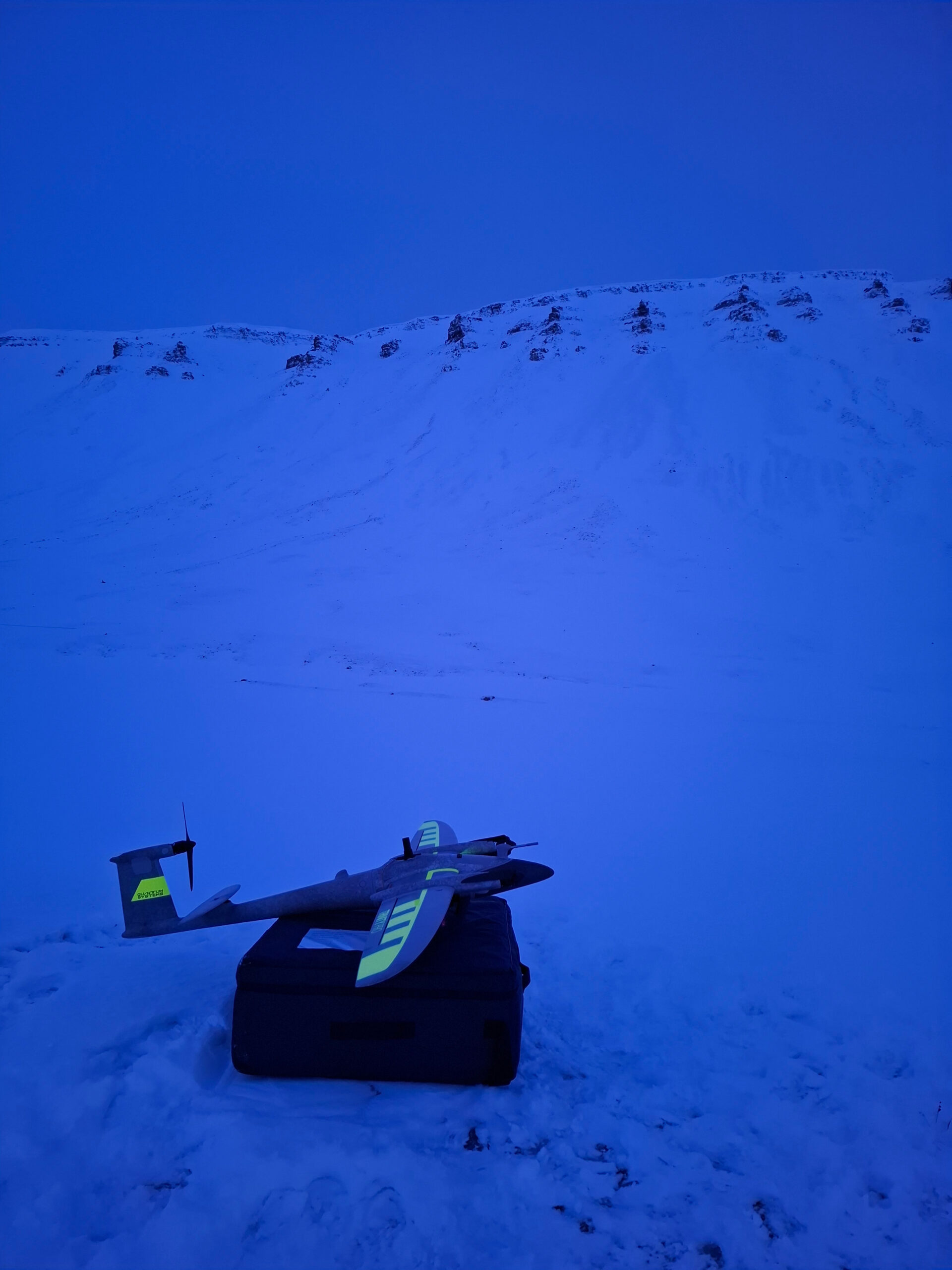
Dr. Jakob Schwalb-Willmann taught a 6-day course segment on UAV remote sensing for Arctic biology as part of Simone Lang’s six-week MSc. course on Arctic Winter Ecology. Students were introduced to remote sensing, drones and in situ data acquisition for remote sensing research in the class room, before going into the field for data collection in the subsequent days. Together with Prof. Dr. Simone Lang and our long-time collaborator Prof. Dr. Larissa Beumer (UNIS), students learned how to map the topography, snow texture and snow depth using LiDAR remote sensing at cm-resolution and how to use differential GNSS to measure snow depth and reindeer traces such as tracks and craters in situ in the field. For this, the group visited two research areas in Adventdalen and Endalen, were UNIS and EORC had already collected data in the past in ongoing research projects. Back in the lab, students were introduced to spatial data handling, geo-statistics and modeling, ultimately resulting in them being able to predict reindeer selection and habitat suitability throughout the two research areas.

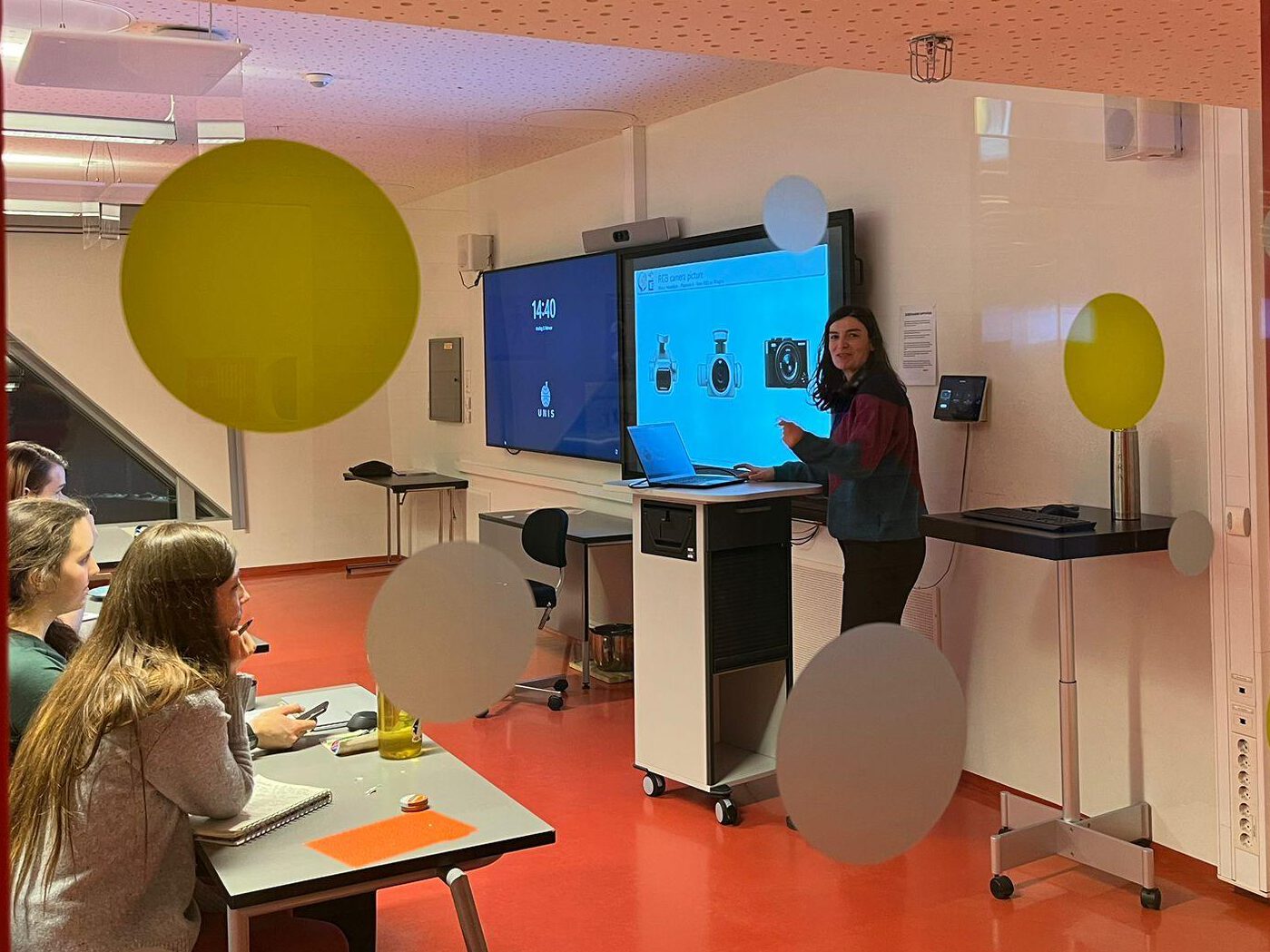
In parallel, Dr. Mirjana Bevanda gave a guest lecture introducing drone remote sensing to BSc. students enrolled in a multi-month course on snow and ice processes taught by Eero Rinne. Students learned, how drone remote sensing can be used for snow and ice research, e.g. for monitoring glaciers, and were introduced into the requirements and planning necessities for drone mapping.

We are glad for the opportunity to share our knowledge on drone remote sensing for high Arctic research at UNIS and for the continued collaboration between UNIS and the EORC at University of Würzburg!
follow us and share it on:

you may also like:

Photo contest – Würzburg through your lens

Photo contest – Würzburg through your lens

Take part in the Geolingual Studies photo contest and contribute to the exhibition "A Sense of the City". The GLS team wants to see what Würzburg looks like through your lens. Whether your photo depicts a well-known landmark or an overlooked corner, was taken by day...

Help Us Understand Ticks: Join the MONID HABITRACK Study

Help Us Understand Ticks: Join the MONID HABITRACK Study

Lyme borreliosis and tick-borne encephalitis (TBE) are the most common tick-borne diseases in Germany, and they are becoming more relevant. Many infections go unnoticed because they cause mild symptoms or none at all. The MONID HABITRACK project, funded by the BMFTR,...

Earth Observation at the DFG BETAFOR workshop

Earth Observation at the DFG BETAFOR workshop

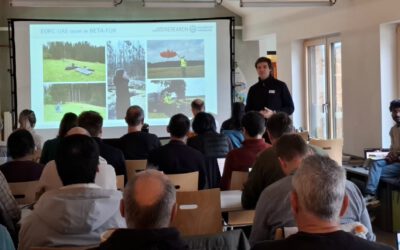
Jakob Schwalb-Willmann represented our team at the DFG BETAFOR workshop in the Bavarian Forest National Park. The room was full of biologists, which is the whole point of an interdisciplinary project, and our UAS multisensor time series drew a lot of interest from the...

Würzburger Förderpreis awarded to our URBAN:Pulse project

Würzburger Förderpreis awarded to our URBAN:Pulse project

“A remote sensing scientist, a social geographer, an informatics researcher, a sports researcher, a psychologist, a linguist and an economist meet ... what sounds like the start of a joke, was the start of a great interdisciplinary research project.” That’s how Hannes...

Annual Meeting of the NetCDA consortium

Annual Meeting of the NetCDA consortium

On November 3-4, 2026, the NetCDA II (European Academic Network for Capacity Development in Climate Change Adaptions in Africa) project network of 12 German academic partners met at the EORC for their annual meeting. We welcomed our new German research institutions on...

bzgl. Art. 50 Verordnung (EU) 2024/1689 (AI Act):

Überwiegend werden eigene originäre Texte und Bilder des EORC genutzt, jedoch sind einige Inhalte von blog post Texten teilweise mit Hilfe von KI überarbeitet worden und einige Bilder sind ganz mit KI erstellt, die jedoch deutlich keine photorealistische Darstellungen abbilden. Aussnahmen sind KI generierte fernerkundliche Datensätze, die explizit für Forschungszwecke mit KI erstellt wurden, hier wird aber durch den assoziierten Text der wissenschaftliche Grund der KI generierten Bilder erläutert.

Share This