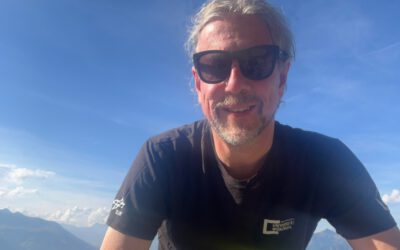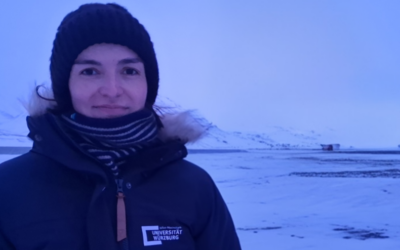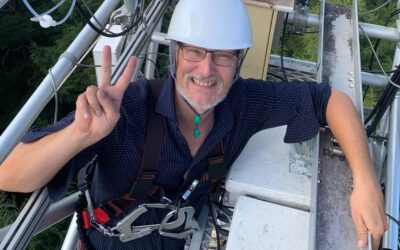
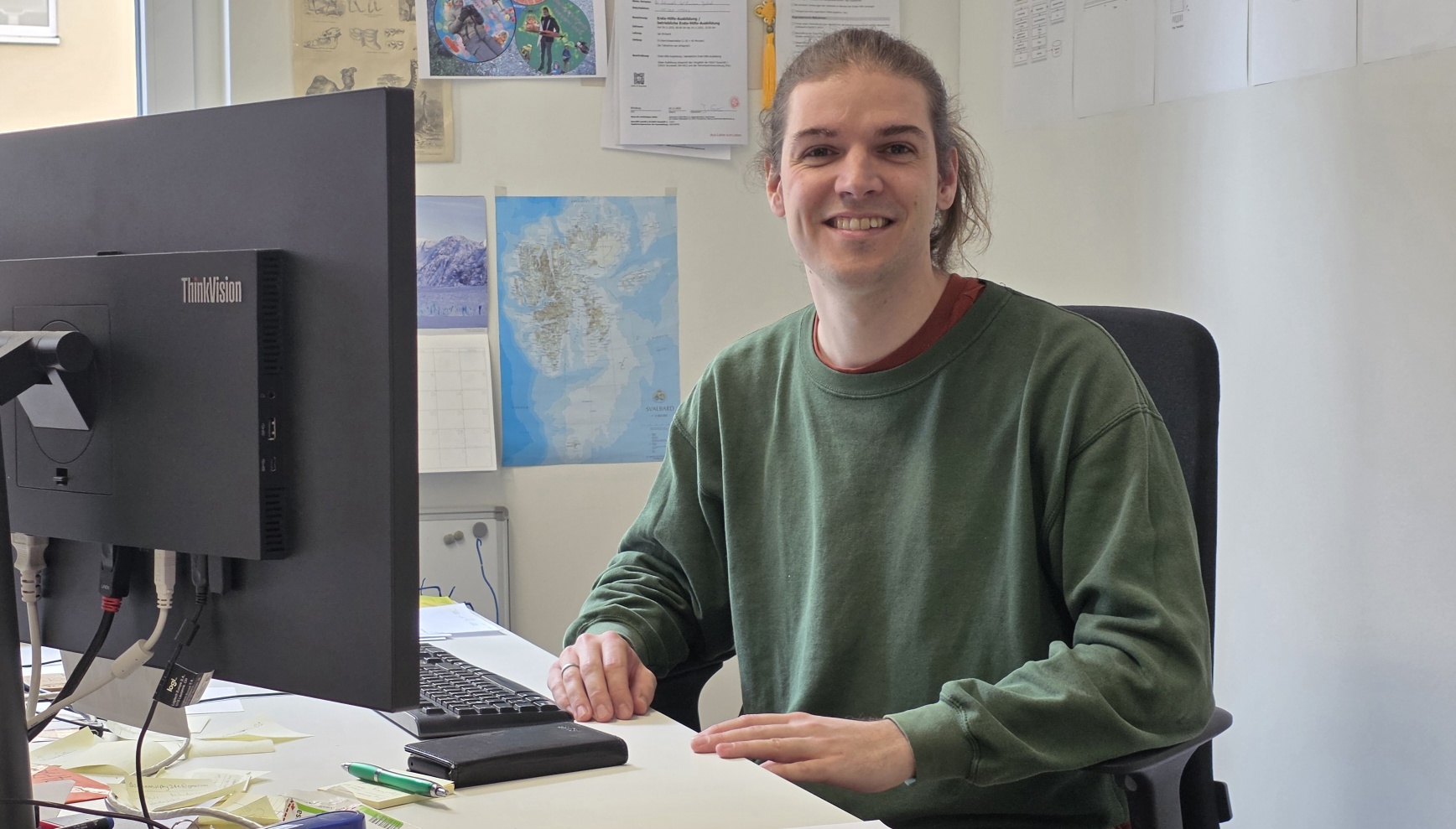

At the intersection of ecology, machine learning, and Earth observation, Jakob Schwalb‑Willmann explores new ways of understanding our planet. As a researcher at the Earth Observation Research Cluster (EORC) at the University of Würzburg, his work bridges remote sensing with ecology to better understand environmental change and ecosystem dynamics.
Observing Earth through tracking animals
Jakob’s academic path began with a Bachelor’s degree in Geography and Sociology at Ludwig-Maximilians-Universität München, followed by the EAGLE MSc in Earth Observation and Geoanalysis at the University of Würzburg. During his studies, he explored how animal movement data can reveal patterns in environmental conditions by developing deep learning approaches to detect anomalies in animal-environment interactions.
He later continued this research as a doctoral student at the Department of Remote Sensing, focusing on how animal movement data can complement satellite and environmental observations. His doctoral work investigated the potential of animal-environment interactions for remote sensing research by developing methods to employ animals as environmental sensors, soley relying on their movement behavior in interaction with the environment. In 2025, Jakob’s doctoral thesis was honored with the GGW (Geographische Gesellschaft Würzburg e.V.) Doctoral Award (Promotionspreis) of the year 2025, recognizing its innovative contribution to environmental monitoring at the intersection of geography and ecology
Research: Satellite and Drone Remote Sensing for Ecology
Throughout the research topics he is working on, Jakob develops and uses predictive modelling, e.g. by employing machine/deep learning to turn remote sensing data into information of value for ecological applications. In addition, his research has been focusing on the value of high-resolution UAV (drone) remote sensing to study ecosystems ranging from the African savannas through German temperate forests to the Arctic tundra. For example, he has been using UAV-borne LiDAR remote sensing to derive snow depth at cm-resolution in Svalbard. Since snow protects plants from harsh winds an icing in winter due to its insolation capacity, it influences vegetation dynamics. By that, it also regulates access of herbivore animals such as reindeer to plants to feed on. Jakob is interested in analysing and understanding such snow-ecosystem interactions across spatial scales to quantify the impact of snow on the ecosystem and what to expect when snow conditions change with climate change.
Open-Source Tools for the Remote Sensing Community
Alongside his research, Jakob is committed to open science and software development. He has contributed to several widely used open-source tools for geospatial analysis, including:
moveVis – an R package to visualize animal movement data together with environmental variables through animated maps.
RStoolbox – tools for remote sensing image processing in R.
basemaps – an R package that simplifies accessing spatial maps.
Teaching and Mentoring the Next Generation
In addition to his research, Jakob plays an active role in teaching within the EAGLE Master’s program. His courses cover topics such as deep learning for Earth observation, spatial programming, and movement data analysis, equipping students with the computational and analytical skills needed for modern geospatial research.
He has also contributed to international training initiatives and guest lectures. For example, he has been teaching satellite remote sensing methods for ecology research at the AniMove Science School. In addition, he has been giving lectures and practical training on UAV remote sensing methods for ecological research at the University Centre in Svalbard (UNIS), where students explored how drones can be used to monitor Arctic wildlife and ecosystems.
As environmental challenges intensify with climate change and other anropogenically induced pressures on the ecosystem, Jakob is looking for the value of combining remote sensing, ecology research, machine learning and (spatial) data science to contribute to building knowledge that humans will need to sustain life on Earth.