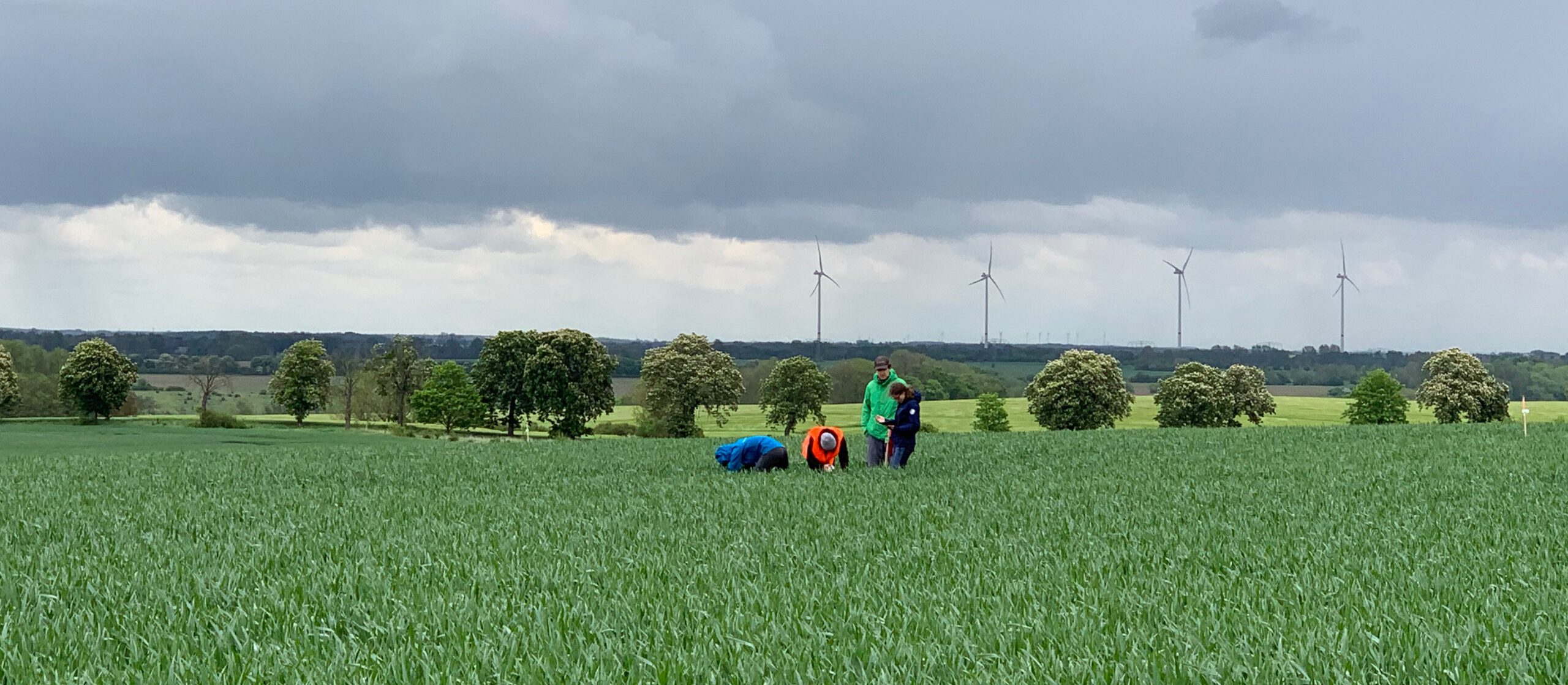

Field Work at Demmin, May 24-28 2021

Field Work at Demmin, May 24-28 2021

June 4, 2021

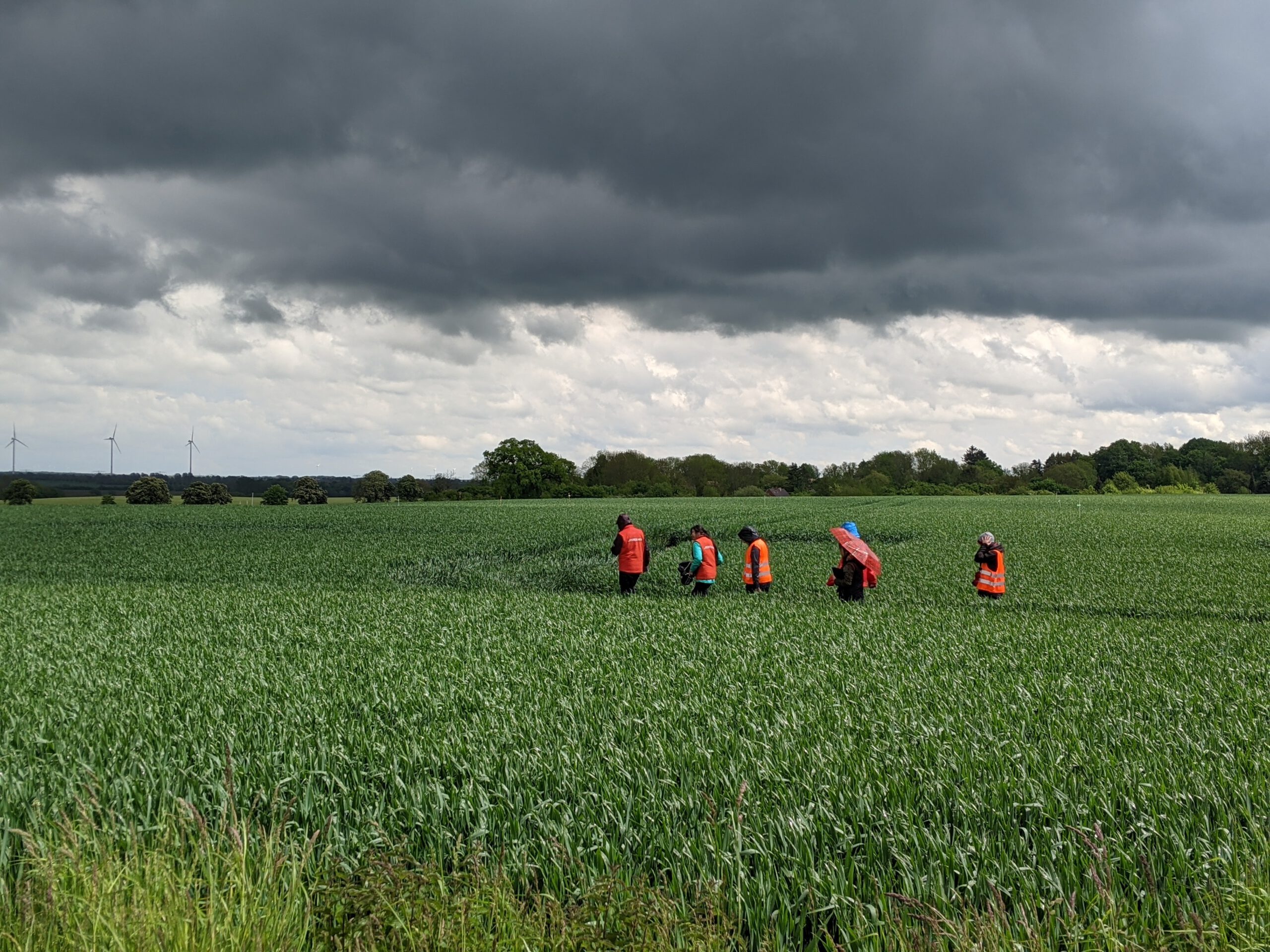
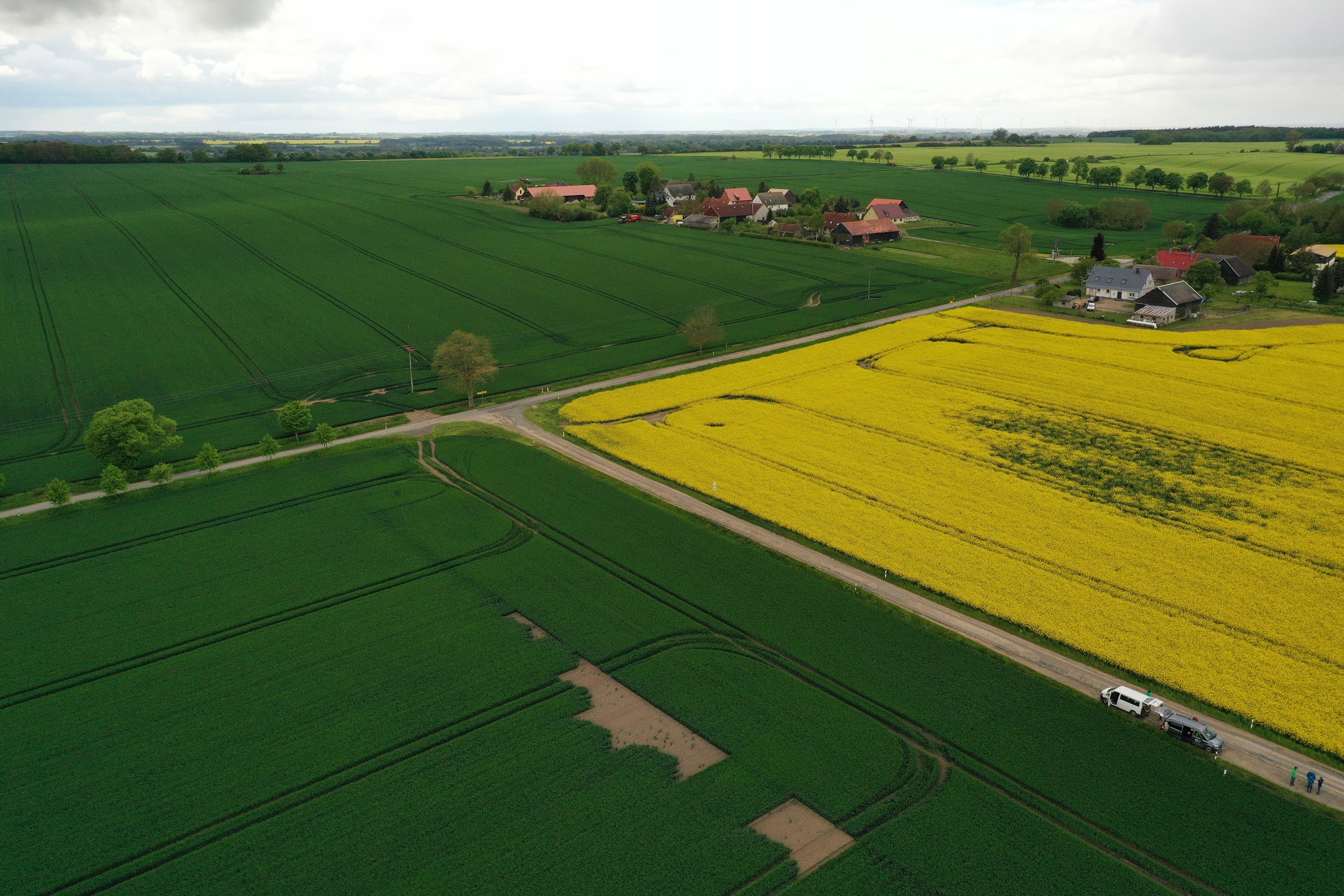
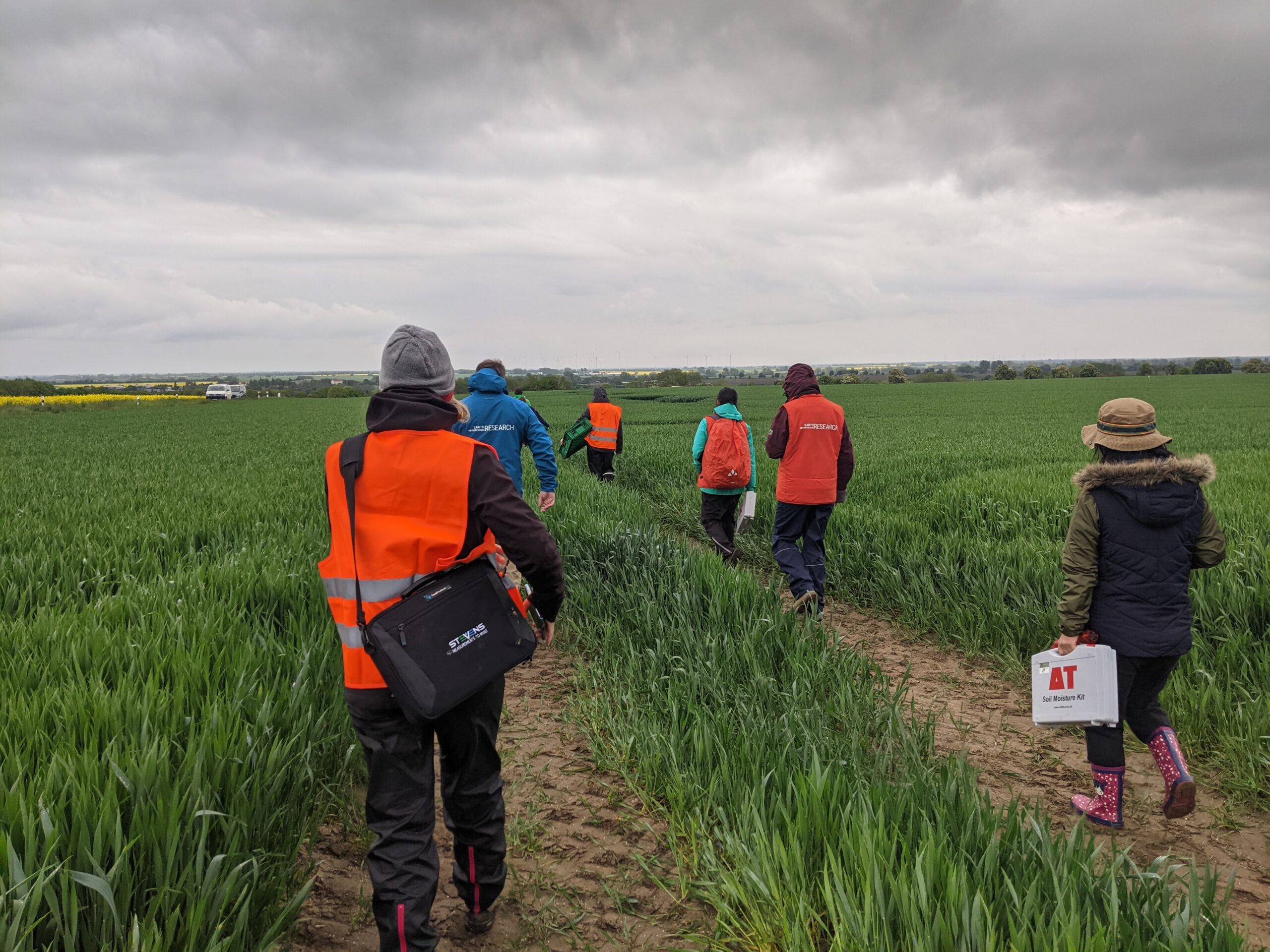
   Last week the EAGLE students ventured out for a field campaign at the Durable Environmental Multidisciplinary Monitoring Information Network (DEMMIN) test site to support us in the field work for the AgriSens DEMMIN 4.0 project funded by the Federal Ministry of Food and Agriculture (FKZ: 28DE114D18). The site is located near the city of Demmin in Mecklenburg-Western Pomerania, and intensively used for agriculture. EAGLEs had a closer look at the landscape formed during the Weichsel glaciation over 11,600 years ago. In particular, students conducted vegetation and soil property surveys on the winter wheat fields despite challenging weather conditions.

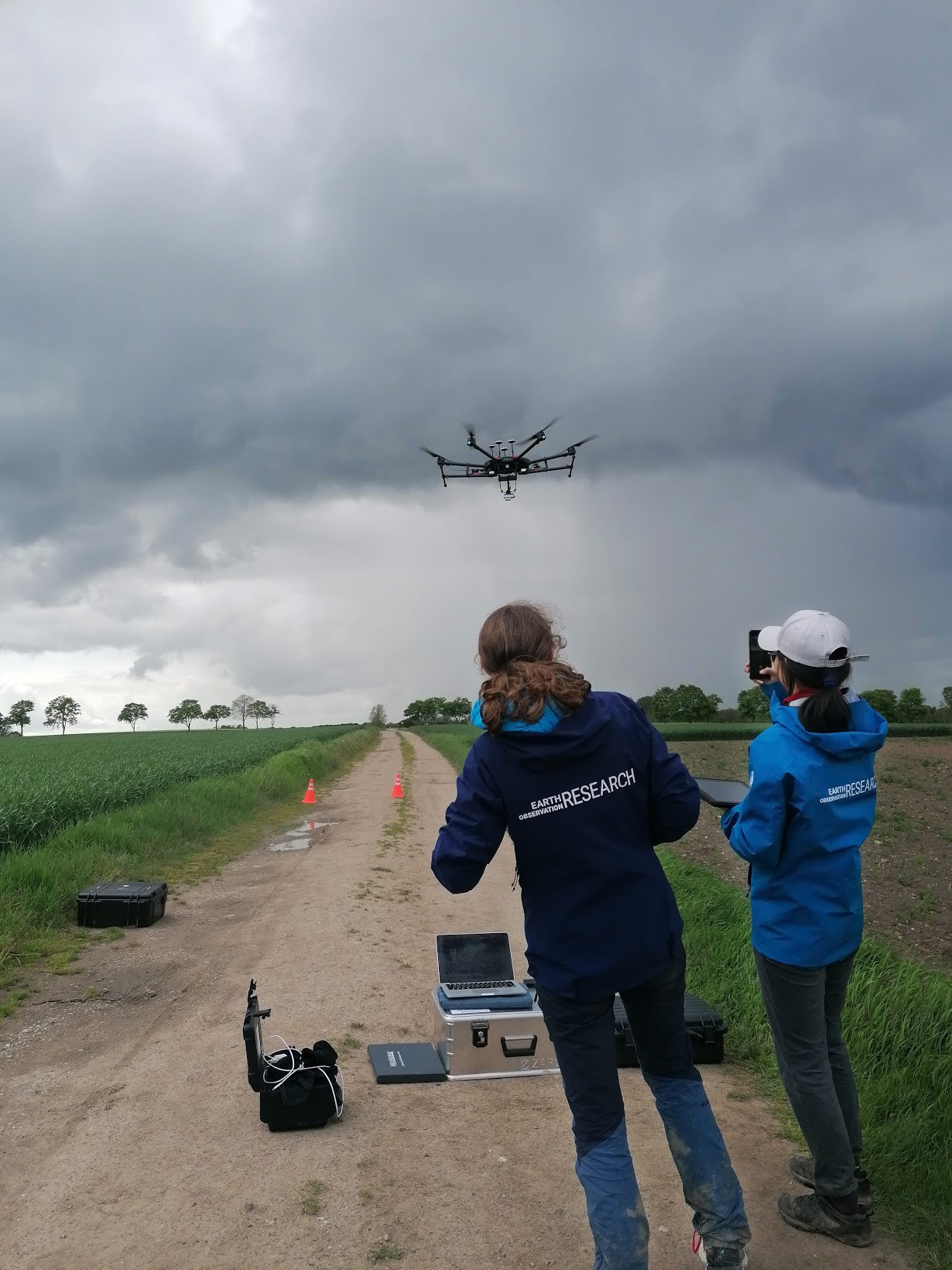
   In return to their support, they learned how to collect in-situ data with a variety of devices under the supervision of Johannes Löw who got seconded by Dr. Michael Thiel. In the context of agricultural applications for remote sensing, the relevance of phenological cycle, soil moisture, and biomass were extensively discussed. In addition, our UAV was used to collect high-resolution images with its multispectral sensor. EAGLEs have gained a valuable perspective on field information and planning in the scope of earth observation.
EAGLESM600

follow us and share it on:

you may also like:

Successful MSc Defense by Christina Krause

Successful MSc Defense by Christina Krause

Congratulations to our EAGLE student Christina Krause, who successfully defended her MSc thesis titled "Active Learning and Parameter-Efficient Feature Adaptation for Cross-City Seismic Building Type Transfer Using DINOv2 and Street-Level Imagery" on November 12,...

Successful MSc Defense by Marlene Bauer

Successful MSc Defense by Marlene Bauer

Congratulations to our EAGLE student Marlene Bauer, who successfully defended her MSc thesis titled "Robust and Uncertainty-Aware Informal Settlement Mapping – Cross-City Generalisation Across Diverse Urban Morphologies Using High-Resolution Satellite Imagery in...

Help Us Understand Ticks: Join the MONID HABITRACK Study

Help Us Understand Ticks: Join the MONID HABITRACK Study

Lyme borreliosis and tick-borne encephalitis (TBE) are the most common tick-borne diseases in Germany, and they are becoming more relevant. Many infections go unnoticed because they cause mild symptoms or none at all. The MONID HABITRACK project, funded by the BMFTR,...

Setting Up for the 2nd EO4CAM Nutzerworkshop

Setting Up for the 2nd EO4CAM Nutzerworkshop

Right now our staff are busy hauling cases, mounting displays and testing every cable for the 2nd EO4CAM Nutzerworkshop, “Erdbeobachtung für die Klimaanpassung, behördliche Akteure in Bayern”. The doors open tomorrow, and the exhibition...

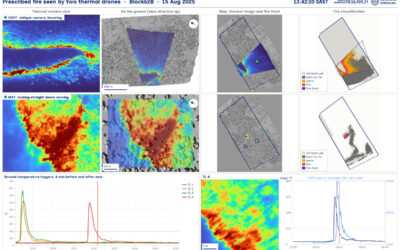
A dashboard for multi-UAS thermal data

A dashboard for multi-UAS thermal data

Mapping an active fire with various drones flying in parallel is hard enough. But getting the data processed, evaluated and turned into research datasets is a different story. The publication is on its way, and for now we’d like to share a dashboard by Antonio José...

bzgl. Art. 50 Verordnung (EU) 2024/1689 (AI Act):

Überwiegend werden eigene originäre Texte und Bilder des EORC genutzt, jedoch sind einige Inhalte von blog post Texten teilweise mit Hilfe von KI überarbeitet worden und einige Bilder sind ganz mit KI erstellt, die jedoch deutlich keine photorealistische Darstellungen abbilden. Aussnahmen sind KI generierte fernerkundliche Datensätze, die explizit für Forschungszwecke mit KI erstellt wurden, hier wird aber durch den assoziierten Text der wissenschaftliche Grund der KI generierten Bilder erläutert.

Share This