
Fieldwork in the Arctic

Fieldwork in the Arctic

July 8, 2024

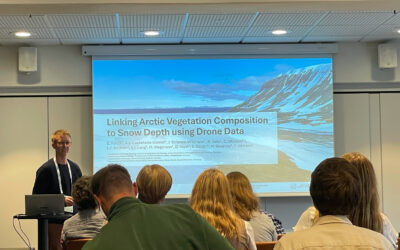
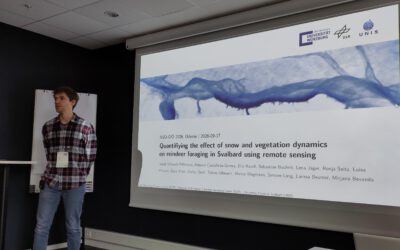
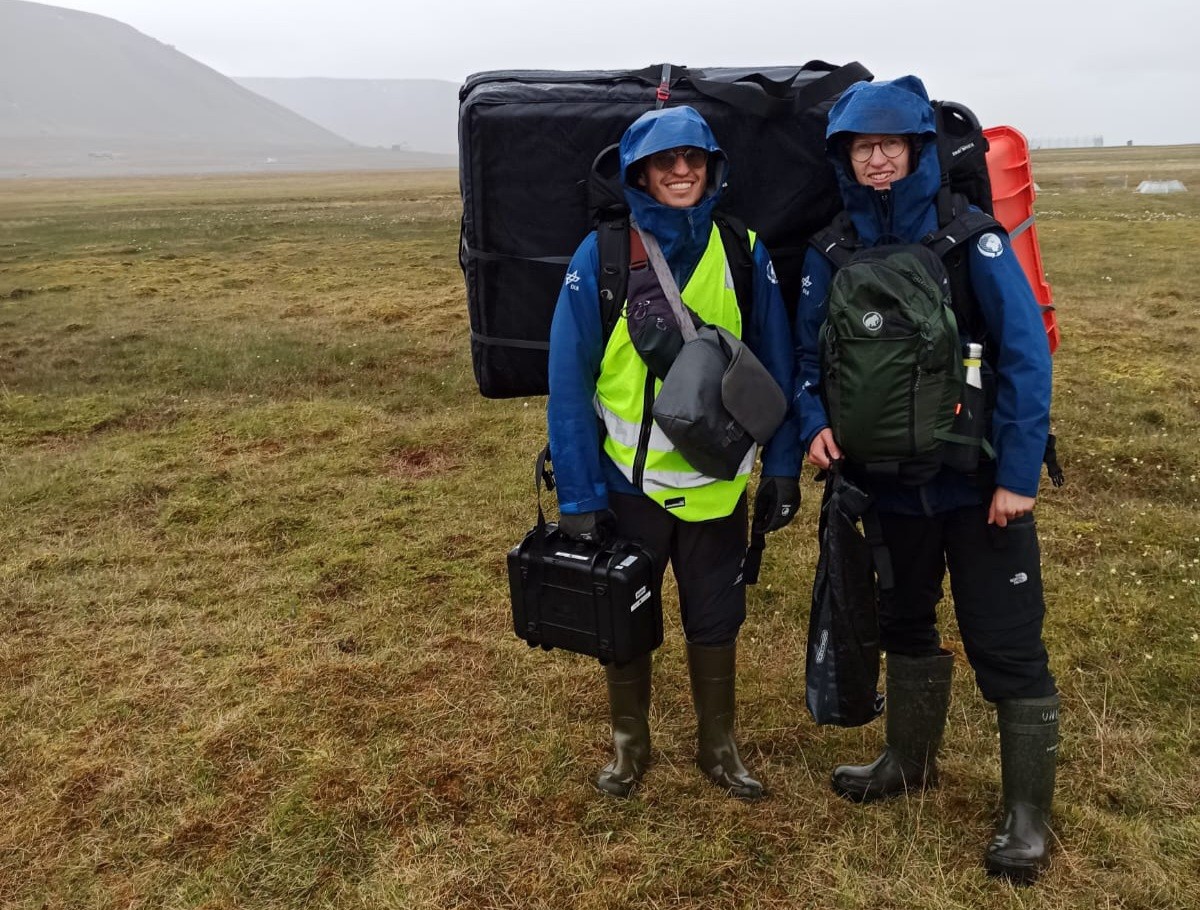
Our UAS team is currently conducting fieldwork in the Arctic and is facing rapidly changing weather conditions. Even though the weather did not work out as planned and only first test flights with our Lidar, multispectral, oblique or thermal sensors were possible the mood was still good because of the amazing landscape unimportant of the weather conditions.

While the two PhD students of the UAS team, Elio Rauth and Antonio Castaneda under supervision from Dr. Mirjana Bevanda and in close cooperation with Prof. Larissa Beumer and Prof. Simone Lang from UNIS, are awaiting better conditions, the missions are refined and the accessibility of the different sites are discussed – while accounting for different means of transport, from car to walking with all the equipment. Many more missions are scheduled for the next weeks and we are very much looking forward to some great multi-sensor analysis and interdisciplinary applications of our UAS earth observation data sets.

follow us and share it on:

you may also like:

Drone manufacturer Wingtra visits EORC

Drone manufacturer Wingtra visits EORC

Is it possible to combine the efficiency of a fixed-wing drone with the precision of a laser scanner? That question brought researchers from EORC together with Wingtra, a Swiss company designing and manufacturing fixed-wing UAS, to exchange on UAS research and discuss...

How We Learned to Fly: The Story Behind UAS Research at EORC

How We Learned to Fly: The Story Behind UAS Research at EORC

Every research group that's ever bought a drone has a story about the first one it lost. We're no different. So let's just get that out of the way up front: this is the inside story of how UAS (Unoccupied Aerial System) research grew up at the Earth Observation...

Ticks from Above: UAS Fieldwork for the MONID Habitrack Project

Ticks from Above: UAS Fieldwork for the MONID Habitrack Project

Forest edges are tricky places. They're where woodland meets open ground, where light and shade trade off every few meters, and where, it turns out, ticks tend to do really well. That last bit is exactly why Dr. Ariane Droin, Sofía García de León, Dr. Jakob...

Congratulations to Julia Rieder on Her Successful PhD Defense

Congratulations to Julia Rieder on Her Successful PhD Defense

We are pleased to congratulate Julia Rieder on the successful defense of her PhD thesis! Over the past years, Julia has investigated how European beech forests respond to severe drought events and which factors determine whether individual trees survive or die under...

Share This