
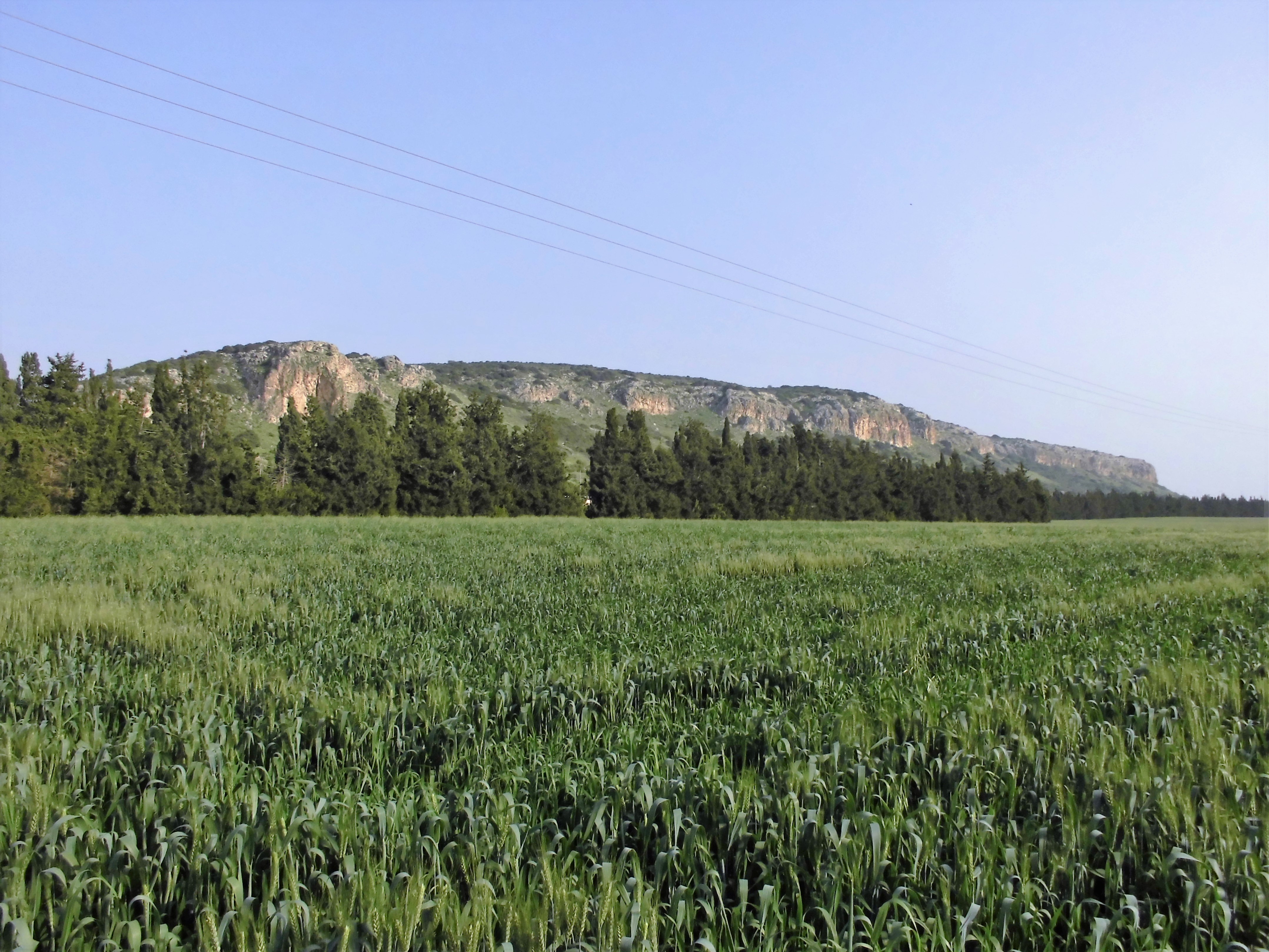
Land use (here cropping of wheat) in the Taninim catchment close to the Taninim spring in northern Isreal. In the backround, the Carmel mountain range is shown. Picture taken by S. Schönbrodt-Stitt (March 2018)
In March 2018, a colleague from the Department of Remote Sensing at University of Würzburg has joined the field trip to Isreal within the framework of the BMBF-funded project MedWater.
Together with the partners from the Chair of Hydrology at the Technical University of Berlin, the Research Group on Ecological Service at the University of Bayreuth, the Chair of Applied Geology at the University of Göttingen, and from Mekorot Water Company Ltd. In Israel, a first survey of – inter alia – the physio-geographic situation and land use pattern in the Western Aquifer Basin was conducted. Particularly, the topics of groundwater resources and water management in the Taninim catchment were discussed. Knowledge gained from this first field survey will be used to conduct remote sensing based assessment and analysis of the land use and land cover in the focus study area of the MedWater project.
MedWater (GRoW) – Sustainable use of politically and economically relevant water resources in hydraulically, climatically and ecologically highly dynamic hard-rock aquifers in the Mediterranean region
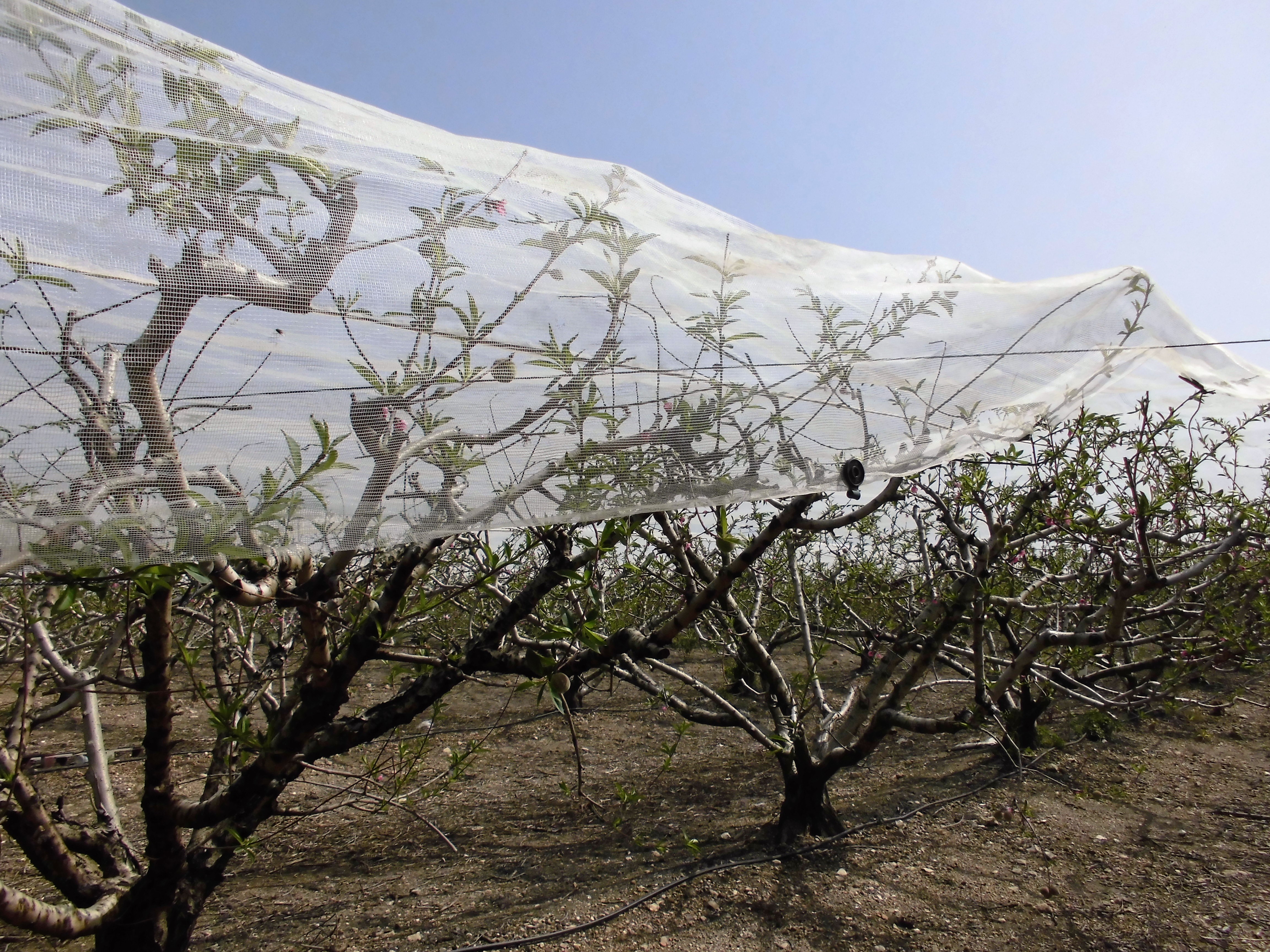
Peach orchard with a typical anti-bird mesh in the Taninim catchment. Picture taken by S. Schönbrodt-Stitt (March 2018).
The MedWater project is part of the GRoW funding measure funded by the German Federal Ministry of Education and Research (BMBF) within the FONA framework. The overall objective of MedWater is the optimal management of scarce groundwater resources in vulnerable aquifers subject to the Mediterranean climate by developing management tools for improving efficiency in water use and preserving existing water resources and ecosystem services. The international MedWater consortium involves multi-disciplinary partners from the side of research and industry.