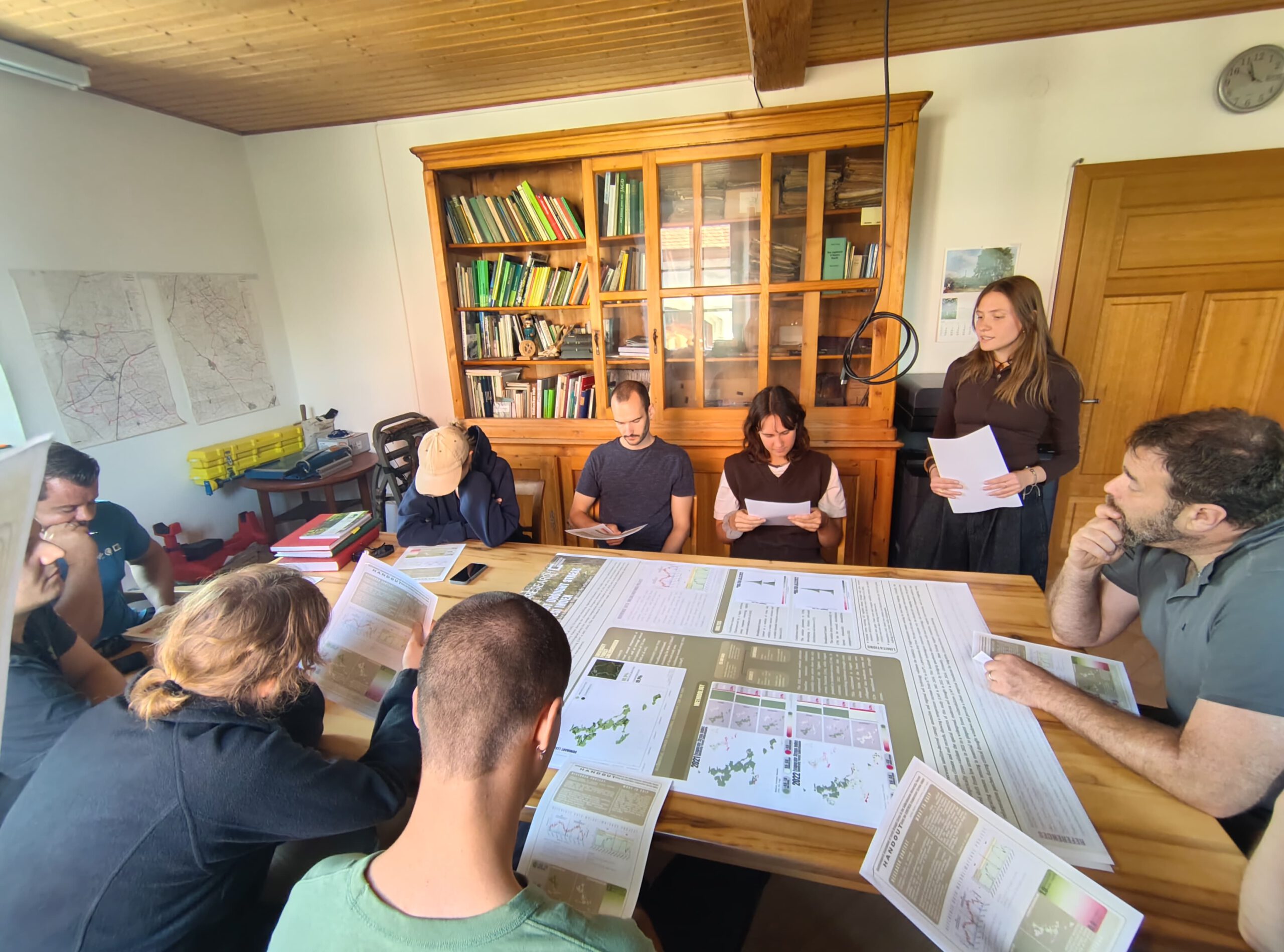
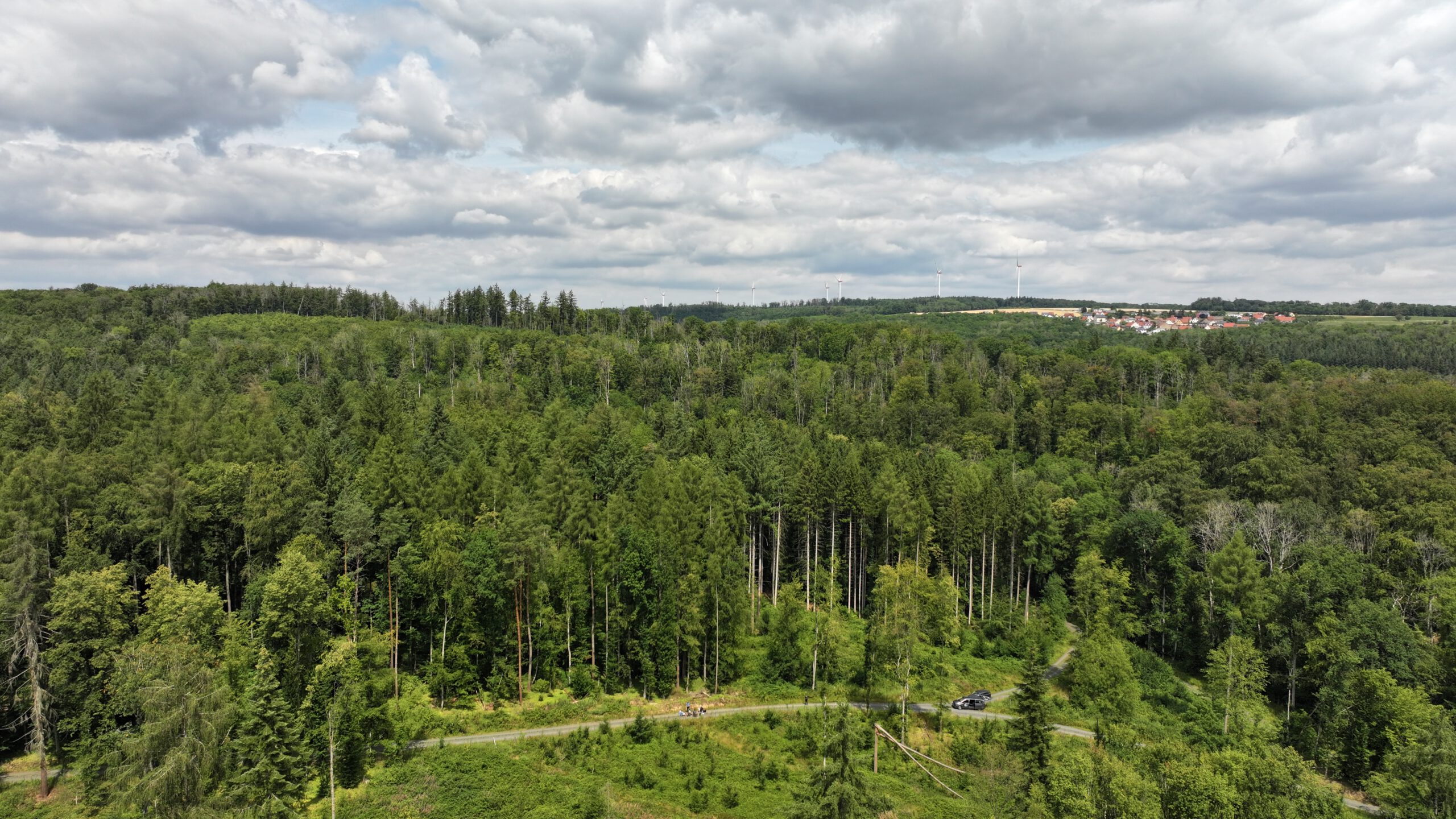

A recent visit to the University Forest Sailershausen brought students together with Forest Management to discuss current challenges in forestry under a changing climate. Hosted by the head of the forest administration Daniel Kraus, the day combined presentations by the students, practical discussions, and a forest excursion, demonstrating how Earth observation can support sustainable forestry under changing climatic conditions.
The visit began at the forest office with an introduction to the University Forest of Würzburg and its management. Afterwards students presented two posters showcasing complementary approaches to forest drought monitoring using Earth observation. The first focused on assessing drought stress at the individual forest stand level using high-resolution thermal satellite observations, while the second demonstrated how satellite data can be used to monitor drought dynamics across larger forest landscapes and protected areas. The subsequent discussion focused on the practical relevance of these methods, their potential to support operational forest management, and the requirements for translating scientific research into practical applications.
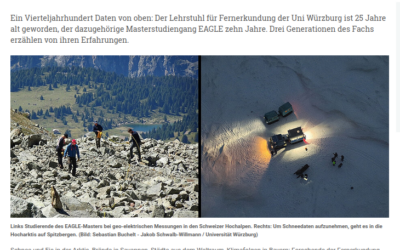
In the afternoon, the group moved into the forest to visit a research site. On this site disturbance plots that are being investigated by the EORC in cooperation with the Technical University of Munich (TUM) to better understand how forest disturbances influence local microclimatic conditions. Throughout the excursion, additional practice-oriented topics were discussed with Dr. Julian Fäth and Dr. Sarah Schönbrodt-Stitt, including the suitability of different tree species under future climate conditions, wildlife management, the typical structure of a traditional forestry study program in Bavaria, etc. The combination of scientific research, modern Earth observation techniques, and practical forest management provided participants with valuable insights into the opportunities and challenges of developing climate-resilient forests.