
Guest lecture by Dr. Luis Inostroza on 23rd of May, 4pm at the Geographic Colloquium at the Institute of Geography and Geology

Guest lecture by Dr. Luis Inostroza on 23rd of May, 4pm at the Geographic Colloquium at the Institute of Geography and Geology

m

May 4, 2023

The Earth Observation Research Hub has invited Dr. Luis Inostroza from the Mendel University, Faculty of Regional Development and International Studies, in Brno in Czechia.

On Tuesday the 23rd of May, he will present at the Geographic Colloquium at the Institute of Geography and Geology in HS222 at 4pm. We cordially invite you to the presentation.


His talk is titled: The urban ecosystem. Can cities be sustainable at all?


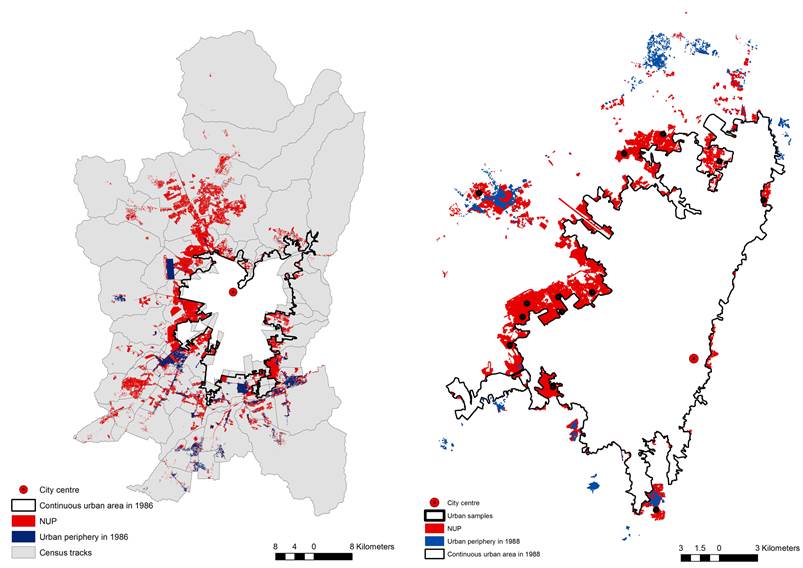
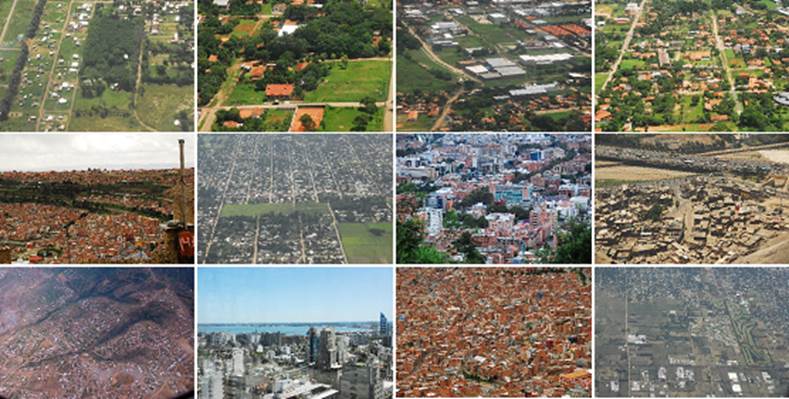
Abstract: While the urban era is fully determining our lives, as it was announced by Lefebvre in the early ’70s, we continue experiencing increasing challenges to conceptualize, analyze, and measure cities and their impacts. The conceptual apparatus we inherited from theoretical and applied disciplines to deal with the urban question seems overcome by the paramount challenges posed by planetary urbanization, the ecological crises and climate change. However, at the beginning of the XXI century, the urban challenge remains more epistemological than operational. I would like to explore some angles of these questions looking at urban as dynamic systems far from equilibrium, determined by the laws of thermodynamics, having, therefore, a particular metabolism that is materialized in distinguishable spatial structures, that can be conceptualized and measured as ecosystems looking at their material side. I will concentrate on aspects of expansion, informality, metabolic fluxes and heat to explore the regularities that we found present in most urban systems. Using examples from Latin America and Europe I will illustrate some possible entry points for a generalized urban hypothesis that brings ecology to the center of the urban epistemological discussion including ontological as well as operational aspects.


­


Plesse see here for past joint work with Luis Inostroza: https://www.sciencedirect.com/science/article/abs/pii/S0169204618306455



follow us and share it on:

you may also like:

Hackathon within the Super-Test-Site Project

Hackathon within the Super-Test-Site Project

What happens when researchers and developers sit down together to explore a multidisciplinary urban dataset? Our researchers from the EORC joined a hackathon that took place within the Super-Test-Site Project, organised by Prof. Dr. Gunther Gust from the Chair of...

Field Days in the Oberpfalz: Exploring FSME Hotspots

Field Days in the Oberpfalz: Exploring FSME Hotspots

On April 17th and 29th our researchers Sofía and Ariane had two field days in the areas around Amberg and Schwandorf, one of Germany's most well-known TBE (tick-borne encephalitis) risk regions. They joined Prof. Dr. Gerhard Dobler and Dr. Lidia Chitimia-Dobler from...

Johannes Mast has successfully defended his PhD Thesis

Johannes Mast has successfully defended his PhD Thesis

Johannes Mast defended his PhD Thesis titled "Geographical Migration Research using Remote Sensing and Social Media Data" at the Julius-Maximilians-University Würzburg successfully on the 29th of April 2026. We congratulate him very much for his...

EAGLEs at SANParks – Kruger National Park

EAGLEs at SANParks – Kruger National Park

Our EAGLEs Sebastian Rothaug and Clemens Schömig just finished their 2+ months for the internship/InnoLab in Kruger National Park. The work was done with SANparks, Dr. Coetsee and Dr. Wigley within a year-long collaboration of EORC researcher Dr. Bevanda. The...

Fieldwork in Focus: Our New “Hex Wall” Installation

Fieldwork in Focus: Our New “Hex Wall” Installation

At EORC, the transition from physical reality to digital analysis is a core part of our methodology. While our primary output consists of Earth Observation data the foundation of this work is laid in the field. To document this essential aspect of our research, we...

Share This