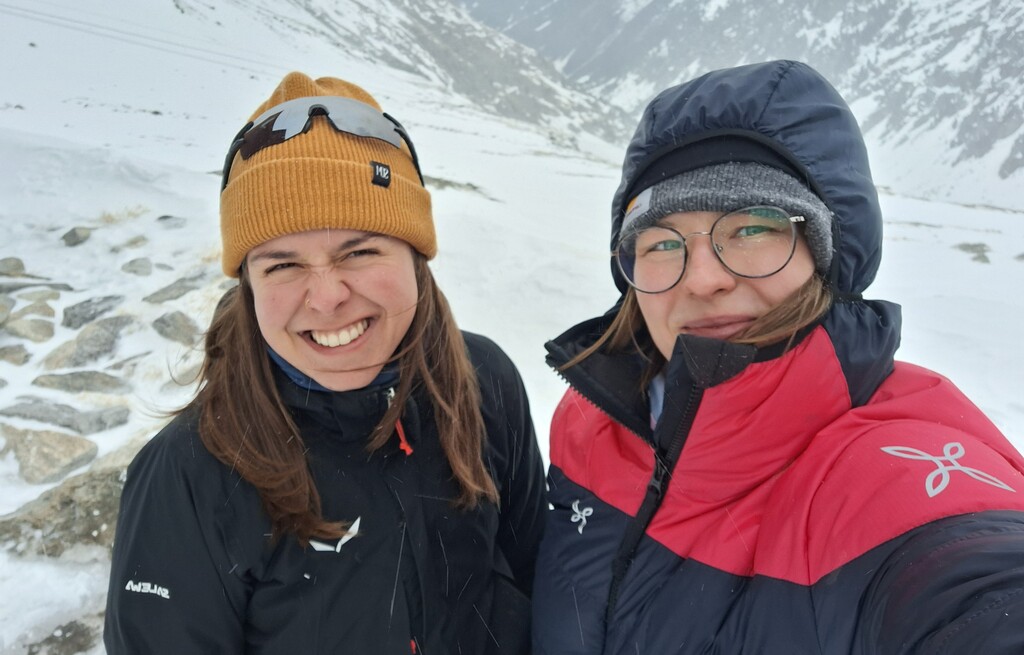
In collaboration with the German Alpine Club (DAV), Laura, one of our EAGLE students and Clara, a student assistant at our institute, recently participated in avalanche rescue training aimed at equipping individuals with essential skills and knowledge to respond effectively to avalanche emergencies in mountain areas. Throughout the training, we engaged in basic exercises using avalanche safety equipment. The minimal snow cover at Spitzingsee transformed the experience into a unique adventure reminiscent of geocaching. The training commenced with foundational exercises utilizing avalanche beacons, probes, and shovels. Despite the limited snow cover, we diligently practiced search and rescue techniques, honing our abilities to locate buried beacons and simulate rescue scenarios. Indulging in delectable Kaiserschmarrn—a traditional Austrian dessert—enhanced their culinary experience, while the overnight stay in Albert-Link Hütte offered a glimpse into the rustic charm of mountain living.
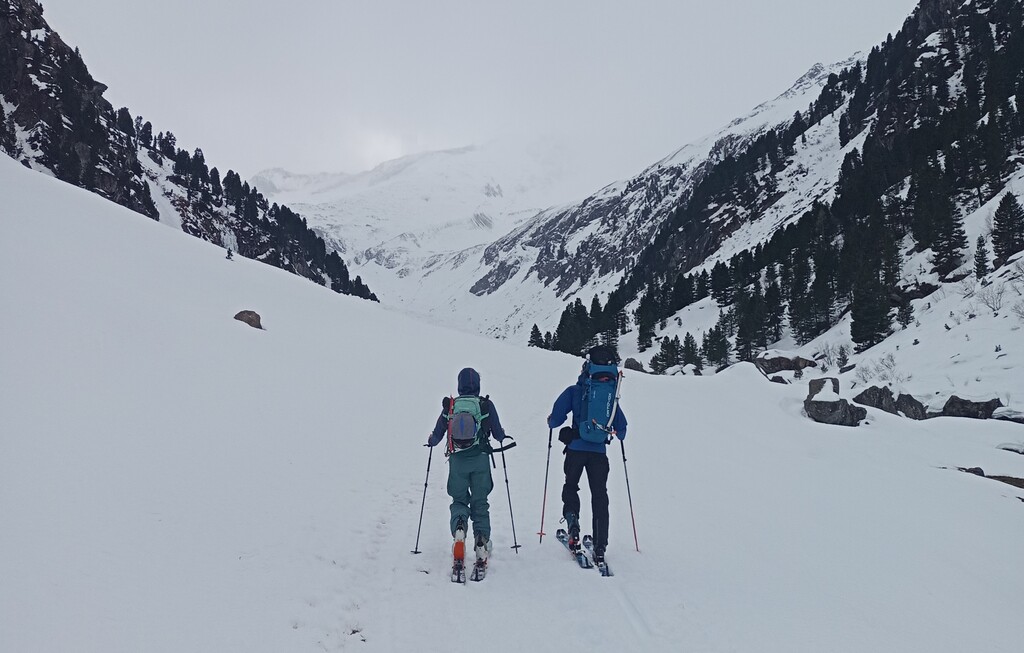
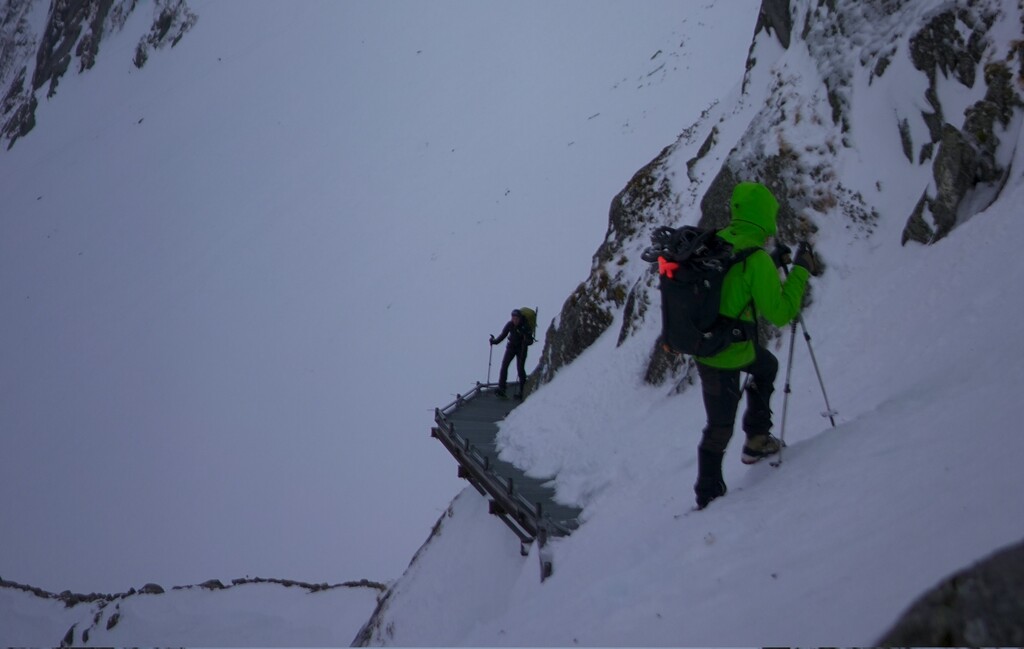
Having completed the training, they were eager to apply their newfound skills in a real-world setting the next day. A snowshoe/ski tour to Zittauer Hütte in Zillertal, Austria, proved to be a worthy destination to this end. The approach was challenging, with strong winds, icy trails and whiteout conditions. Therefore, they decided not to climb Wildkarspitze. Against this backdrop, they traversed the terrain with enthusiasm, relishing the beauty of the alpine wilderness. Fortunately, the winter chamber of the Zittauer hut was equipped with enough wood to heat the old stove, providing them with tea from melted snow, a hot noodle soup and a night of good sleep. This outdoor excursion served as a fitting conclusion to our training experience, reinforcing the importance of preparedness and safety in mountain environments.
Reflecting on the training experience, Laura emerged with a heightened sense of confidence and proficiency in avalanche rescue procedures. The training underscored the significance of ongoing education and preparedness in mitigating avalanche hazards.