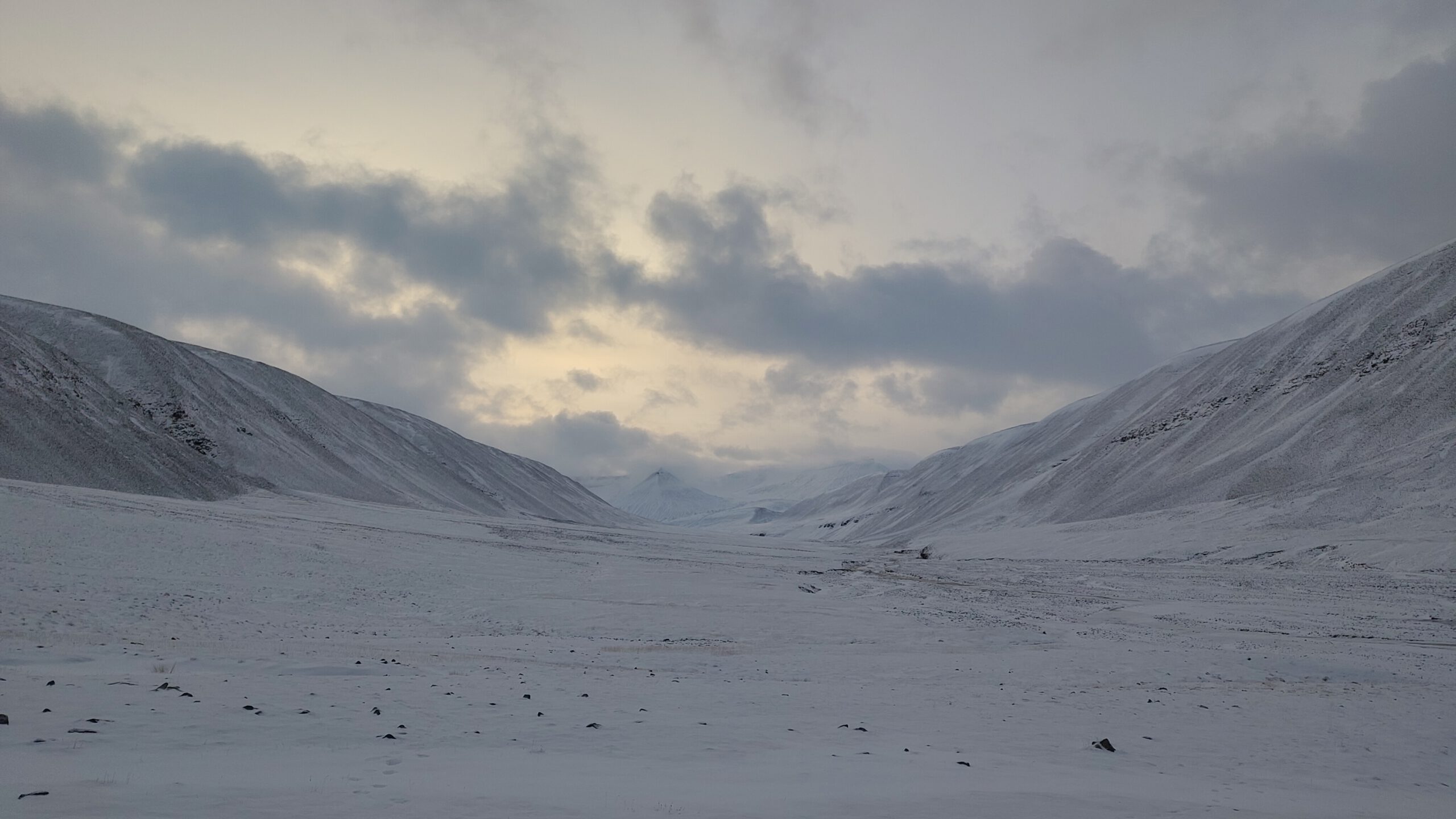

Last week, EORC employees Jakob Schwalb-Willmann and Sebastian Buchelt travelled to Longyearbyen, Svalbard, for a two-week research and teaching stay on the high-arctic island. Invited by our collaborators and colleagues Assoc. Prof. Larissa Beumer (Arctic biology) and Assoc. Prof. Eero Rinne (Arctic geophysics), they have been hosted by the University Centre in Svalbard (UNIS). As part of their stay on Svalbard, they have been conducting field work at our research sites on Svalbard. In this context, they recently headed out to Bjørndalen valley, located just a few kilometers west of Longyearbyen, accompanied by our EAGLE Master’s student Ronja Seitz. Ronja is currently working at the Arctic biology department of UNIS as a research assistant where she is supervised by our research collaborators Assoc. Prof. Simone Lang. and Assoc. Prof. Larissa Beumer.
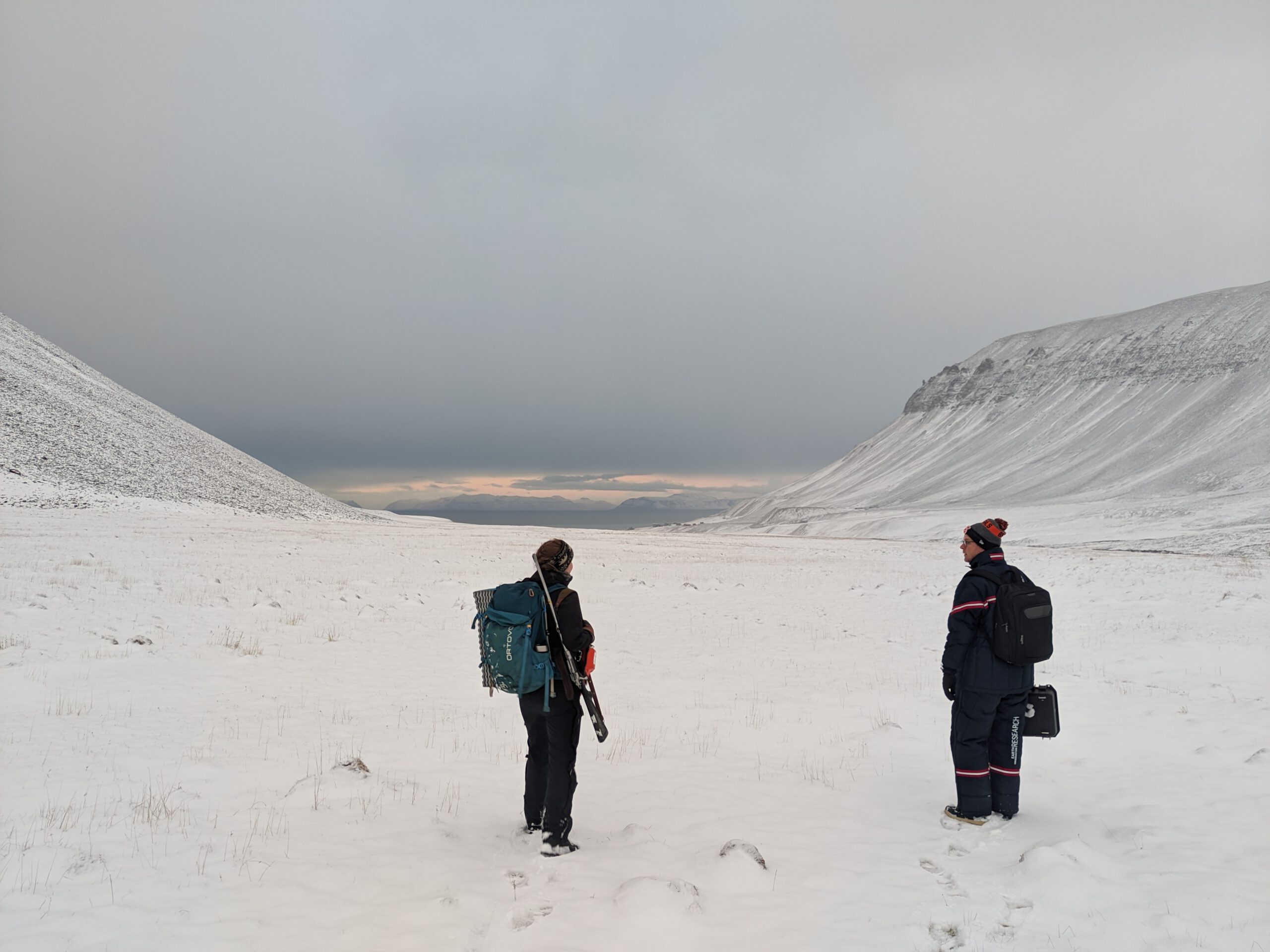
Protected thanks to Ronja‘s experience as field guide and polar bear guard, the group hiked into the valley to install air temperature sensors and collect UAV remote sensing data. This work is part of the EORC‘s research on high-resolution Arctic vegetation and snow depth mapping to better understand local ecosystem processes which are severely impacted by the effects of climate change.
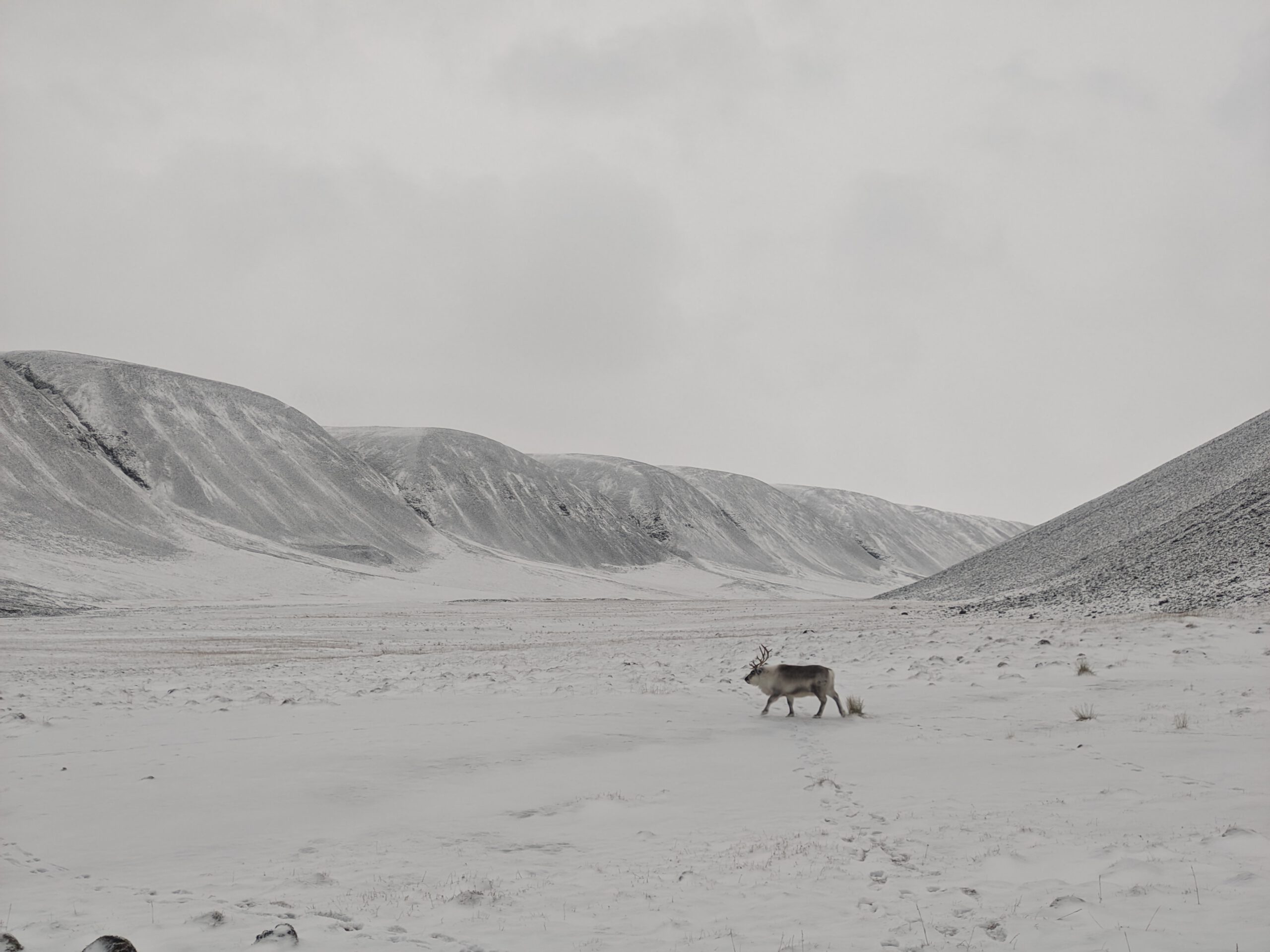
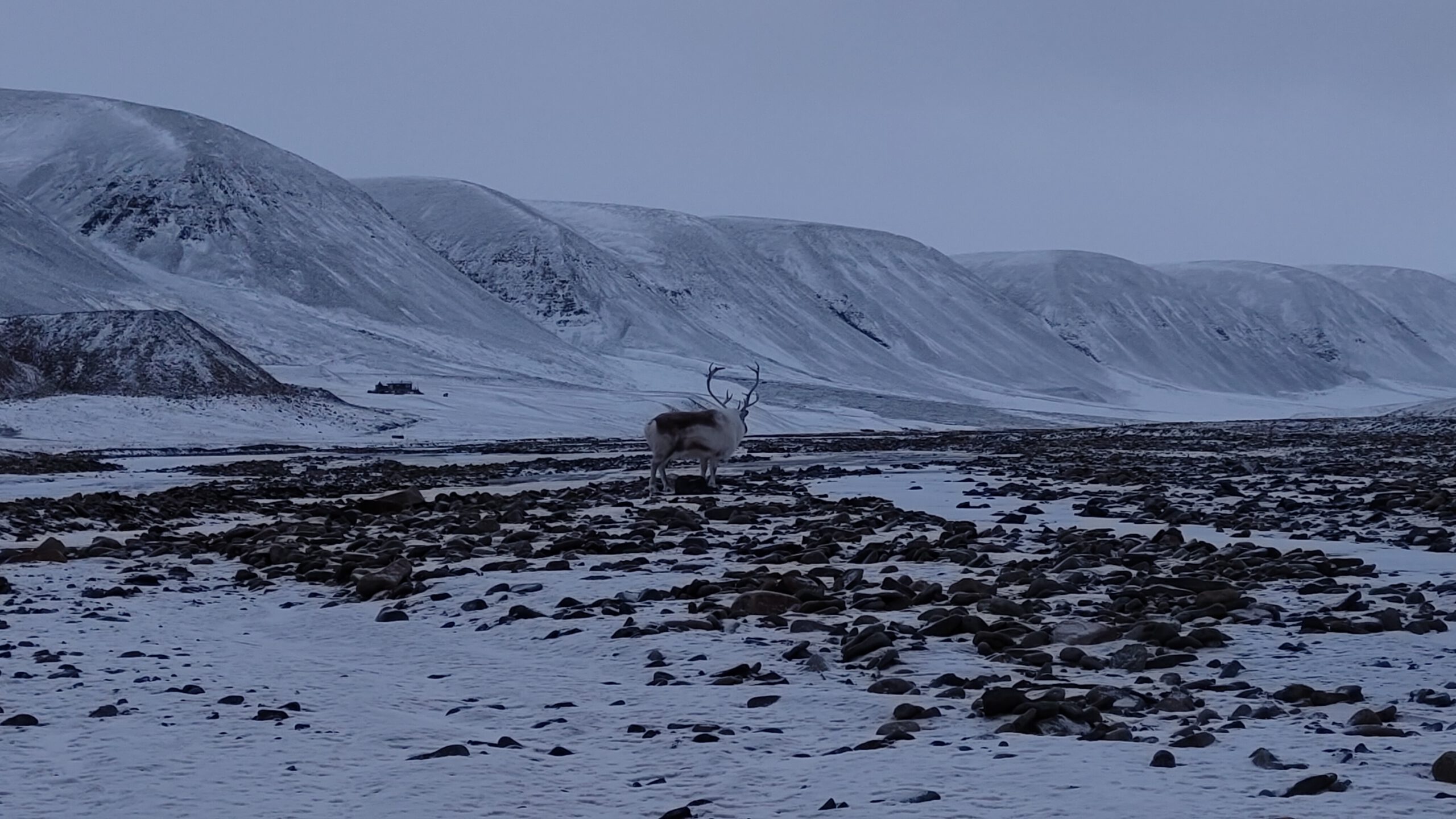
On their way through the valley, the team came across several Svalbard reindeer, which were grazing along the slopes. To reach the field site, they also had to cross a partially frozen braided river which still showed some flowing surface water that will soon fully freeze up as the polar night is approaching. Thus, they had to carefully test the ice before moving equipment across. Once in place, they installed the temperature loggers and carried out UAV flights to map the terrain and snow cover. These new measurements and aerial data will add to our ongoing monitoring records, which have been carried out since 2023, helping to improve our understanding of how local climate, surface and vegetation conditions as well as animal behavior interact in the High Arctic.