
Lecturer Spotlight: Michael Wurm

Lecturer Spotlight: Michael Wurm

July 31, 2026

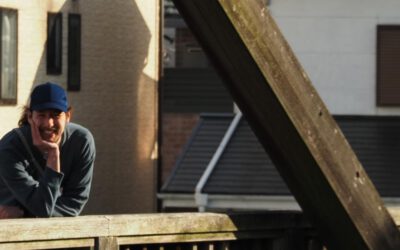
Michael’s the guy you want in front of the class when it’s time to actually open up an image and start segmenting it. At EAGLE he teaches the urban side of things: environmental exposure, pollutants, green space, noise, traffic, air pollution, urban heat islands. And that’s not some random assignment, it’s literally what he does as team leader at DLR DFD GZS too.

He studied geography in Graz, focusing on remote sensing, geoinformatics and human geography, then joined DLR in 2008 for his PhD. That work was about bringing remotely sensed spatial data into empirical social science analysis, done together with the German Institute for Economic Research in Berlin. It’s a pretty good preview of how he operates generally, take a remote sensing method and figure out what question it actually answers for a social scientist or urban planner, instead of treating it as a technical exercise that exists for its own sake.

After Graz and a stint at Joanneum Research, he came to University Würzburg and DLR in 2008 to work on integrating earth observation into social sciences and urban remote sensing. Since 2012 he’s also been lecturing at the University of Graz, teaching Urban Remote Sensing, Advanced Classification and Object-based Classification, so by the time he walks into an EAGLE classroom he’s already taught that material more times than he can probably count. From 2013 to 2022 he worked as a postdoc on urban poverty, urban green spaces and air pollution, and since 2022 he’s been leading the City and Society research group at DLR.

In the EAGLE classroom, his sessions on earth observation for urban environmental exposure, green space, noise, traffic, air pollution and heat islands are a recurring fixture, the kind of hands-on class where students go from raw imagery to meaningful urban objects and you can watch the workflow actually click for them. It’s a deceptively hard thing to teach well. Object-based thinking asks people to stop looking at images pixel by pixel and start thinking in terms of objects and how they relate to each other, and that’s a real shift for a lot of students. Michael’s been teaching exactly that shift for over a decade now.

What comes through in his bio is genuine curiosity about cities, how they grow, how poverty and green space and air quality play out spatially, and that curiosity is clearly part of what makes his classes land. He’s not just demonstrating software. He’s showing students why object-based thinking actually matters for understanding real urban problems.



follow us and share it on:

you may also like:

Lecturer Spotlight: Jakob Schwalb-Willmann

Lecturer Spotlight: Jakob Schwalb-Willmann

What if animals could help us monitor environmental change? Jakob Schwalb-Willmann explores exactely this idea. As a postdoctoral researcher and lecturer at the Earth Observation Research Cluster (EORC), he works at the intersection of ecology, Earth observation,...

Lecturer Spotlight: Henri Debray

Lecturer Spotlight: Henri Debray

How are we shaping our cities and in turn, how are cities shaping us? This is the question at the core of the work of our lecturer Henri Debray. As a postdoctoral researcher at the Earth Observation Research Cluster (EORC), he uses remote-sensing-derived geospatial...

Lecturer Spotlight: Elio Rauth

Lecturer Spotlight: Elio Rauth

What better place to learn about snow than high up in the Alps, surrounded by snow-covered mountains? For Elio Rauth, teaching means getting students out of the classroom and into the field. Since 2025 he has been teaching a field course about using uncrewed aerial...

Lecturer Spotlight: Dr. Julia Rieder

Lecturer Spotlight: Dr. Julia Rieder

Why do some trees survive extreme drought while neighbouring trees of the same species and age suffer severe damage or even die? For Julia Rieder, answering this question means looking beyond individual trees and investigating the complex interactions between forest...

Lecturer Spotlight: Thilo Erbertseder

Lecturer Spotlight: Thilo Erbertseder

Thilo is the person at EORC who can tell you exactly how much air pollution was hanging over a given megacity in any given year since the 1990s, and what that actually meant for the people living there. He teaches atmospheric composition and urban remote sensing at...

Lecturer Spotlight: Mirjana Bevanda

Lecturer Spotlight: Mirjana Bevanda

There's a particular moment in the EAGLE program that shows that EAGLE is different, it is the moment the students realize their thesis isn't just another task to receive a M.Sc., their internship or InnoLab isn't just ECTS points, but it's a real world application....

bzgl. Art. 50 Verordnung (EU) 2024/1689 (AI Act):

Überwiegend werden eigene originäre Texte und Bilder des EORC genutzt, jedoch sind einige Inhalte von blog post Texten teilweise mit Hilfe von KI überarbeitet worden und einige Bilder sind ganz mit KI erstellt, die jedoch deutlich keine photorealistische Darstellungen abbilden. Aussnahmen sind KI generierte fernerkundliche Datensätze, die explizit für Forschungszwecke mit KI erstellt wurden, hier wird aber durch den assoziierten Text der wissenschaftliche Grund der KI generierten Bilder erläutert.

Privacy Policy

Lehrstuhl für Fernerkundung & Lehrstuhl für Urbane Fernerkundung

Erdbeobachtung an der Universität Würzburg

Share This