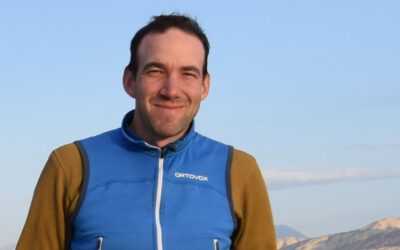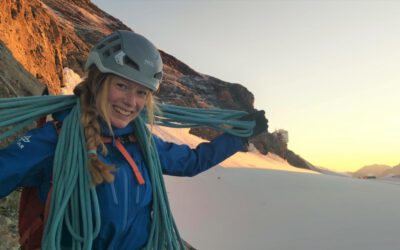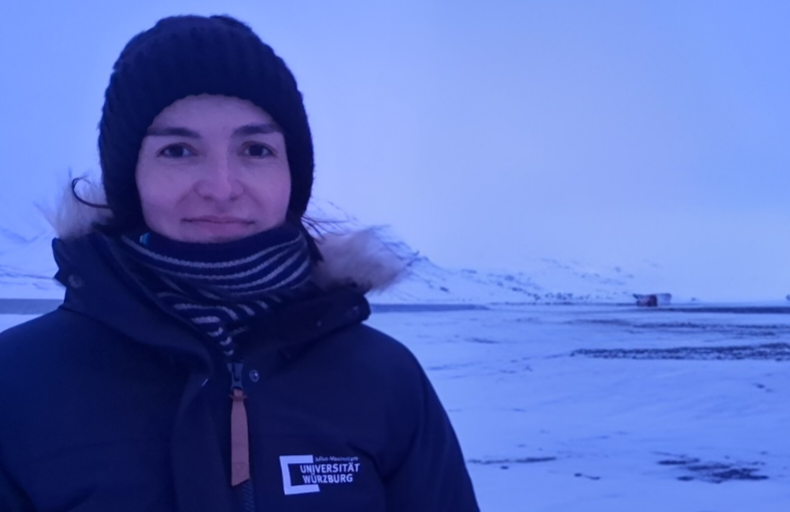

There’s a particular moment in the EAGLE program that shows that EAGLE is different, it is the moment the students realize their thesis isn’t just another task to receive a M.Sc., their internship or InnoLab isn’t just ECTS points, but it’s a real world application. For a good number of EAGLE students over the past few years, that moment has had Dr. Mirjana Bevanda’s name attached to it somewhere.
Mirjana works on Earth Observation and UAS at EORC, but it’s really just the entry point for students. Her (as well as many other EORC staff members) bigger contribution is something a bit harder to put a label on, she’s the person who takes a student’s vague sense of “I’d like to do something in somewhere with something within the broad topic of something” and turns it into an actual internship or thesis, in an actual place, with actual local partners who’ll teach them things no seminar room can, with actual research topics that have a concrete application.
It helps that she’s never treated UAS research just as a method on its own but a way to achieve new research approaches together with collaborators from different disciplines. Be it the ecologists working at the University Research Forest, conservationists at the Nationalpark Bavarian Forest, colleagues in the High Arctic or Kruger Nationalpark. She built her own experience over the years, multispectral and lidar drone research on forest application, fire and drought monitoring with SANParks down in Kruger National Park up to snow and ice work up on Svalbard with UNIS. So when a student tells her what they’re curious about, she’s not guessing where that curiosity might lead, she’s mostly already been there herself.
The High Arctic is probably the clearest example of how this plays out. She’s spent multiple seasons doing UAS fieldwork on Svalbard herself mostly with Jakob, on snow and ice variability and, more recently, on snow bunting nesting sites near Longyearbyen, and she’s used those relationships to plug EAGLE students directly into collaborations with UNIS, the University Centre in Svalbard, and researchers around Tromsø. Students end up co-supervised across EORC and Arctic colleagues, flying multispectral, thermal and Lidar-sensor drones over nesting habitat in terrain that genuinely punishes mistakes, learning Arctic field logistics from people who do it for a living. For some students in the past this even lead to a PhD on Svalbard, started with 2 months and now living in the high Arctic for years – that’s what an internship, followed by a MSc thesis could lead to ….
What makes all of this work isn’t just that Mirjana has contacts in various corners of the world. It’s that she actually listens to where a given student wants their career to go, then matches them to whichever of the ongoing research activities fits best. A student interested in conservation and savanna fire might be linked up with collaborators in South Africa. Someone drawn to snow and wildlife gets introduced to the Svalbard contacts. Someone wanting something more locally rooted gets the Bavarian Forest connection. The common thread across all of it is that nobody’s doing fieldwork in a vacuum, there’s always a local partner organization on the other end, actually using what the students produce.
For a master’s program that explicitly wants its graduates job-ready, that kind of matchmaking is worth more than it might look like on paper. It’s the difference between writing a thesis about a place and actually having spent weeks or months there, dirt or snow on your boots, working alongside the people who are doing research in these areas for years or decades.