
Lecturer Spotlight: Martin Bachmann

Lecturer Spotlight: Martin Bachmann

September 28, 2026

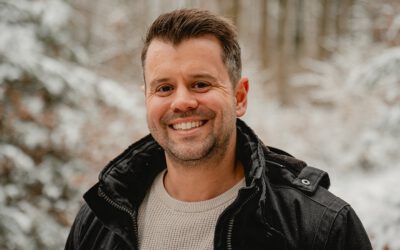
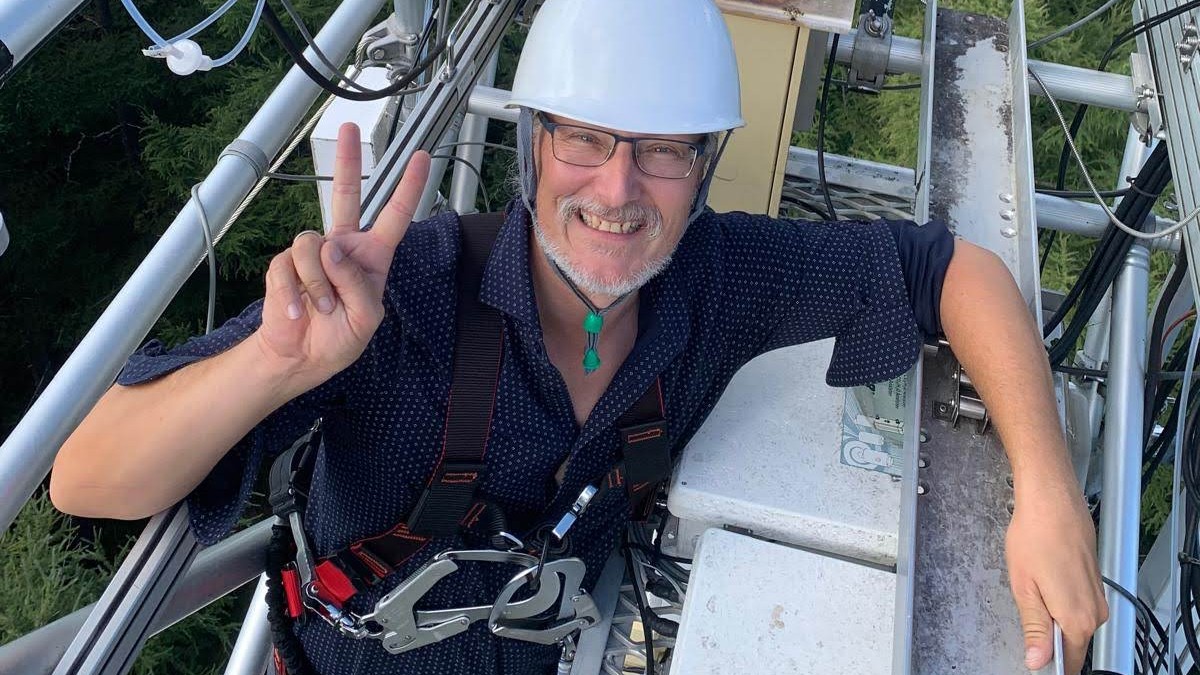
Martin’s the lecturer who actually built the systems behind the hyperspectral data EAGLE students learn to analyze. He’s a research scientist with the Land Surface Dynamics Department at DLR’s German Remote Sensing Data Center in Wessling, and his over twenty years of experience in hyperspectral data analysis and pre-processing shows up directly in what he teaches.

For eight years he ran the data pre-processing chain for DLR’s Optical Airborne Remote Sensing and Calibration Facility, and he currently leads the Data Quality Control work package within the EnMAP and DESIS ground segment, Germany’s hyperspectral spaceborne missions. That kind of close, hands-on relationship with calibration and data quality is exactly what makes his teaching distinctive, he’s not explaining hyperspectral remote sensing from the outside, he’s explaining the pipeline he personally helped build and still runs. In addition, he’s involved in the upcoming ESA spectrometer mission CHIME, as well as in the validation activities of ESA FLEX.

And since many years, he is involved in teaching / training activities focusing on optical remote sensing data analysis (Universities of Wuerzburg and Jena, within DLR capacity building activities and Marie-Curie projects). Integrating field spectrometer measurements in the courses, students can work on the full chain: from experiment set-up, actual spectroscopic measurements and data pre-processing to the actual retrieval of bio- / geophysical variables, and the transfer to airborne and spaceborne hyperspectral sensors.



follow us and share it on:

you may also like:

Lecturer Spotlight: Tanja Kraus

Lecturer Spotlight: Tanja Kraus

Tanja is the lecturer whose work keeps landing directly on the desks of the people who actually have to act on it: Bavarian ministries, municipalities, foresters, farmers and planners. She joined DLR's German Remote Sensing Data Center (DFD) in 2002 and has been...

Lecturer Spotlight: Michael Wurm

Lecturer Spotlight: Michael Wurm

Michael's the guy you want in front of the class when it's time to actually open up an image and start segmenting it. At EAGLE he teaches the urban side of things: environmental exposure, pollutants, green space, noise, traffic, air pollution, urban heat islands. And...

Lecturer Spotlight: Florian Betz

Lecturer Spotlight: Florian Betz

If you've spent any time around EORC, you've probably crossed paths with Florian at some point, maybe standing knee deep in a riverbed somewhere in Central Asia, or deep in conversation about river dynamics. Florian is a Principal Investigator at the Earth Observation...

Lecturer Spotlight: Celia Baumhoer

Lecturer Spotlight: Celia Baumhoer

Celia's the person who got an entire generation of EAGLE students to care about ice they'll probably never set foot on. She's a postdoctoral researcher in the "Polar and Mountain Regions" team at DLR, and she teaches the EAGLE course “Earth Observation of Cold...

Lecturer Spotlight: Simon Plank

Lecturer Spotlight: Simon Plank

Simon is the lecturer who teaches you what to actually do when a volcano starts erupting and someone needs answers in hours, not weeks. He is with the Natural Hazards team at DLR and runs the EAGLE MSc course "Risk and Disaster Earth Observation," which is basically a...

Spotlight on our Researchers: Tamilwai Kolowa

Spotlight on our Researchers: Tamilwai Kolowa

Tamilwai Kolowa is an external doctoral student at our EORC while being at the same time a Junior Researcher at the Federal Institute for Population Research in Wiesbaden. His research explores how urban form and population dynamics interact to shape cities and...

bzgl. Art. 50 Verordnung (EU) 2024/1689 (AI Act):

Überwiegend werden eigene originäre Texte und Bilder des EORC genutzt, jedoch sind einige Inhalte von blog post Texten teilweise mit Hilfe von KI überarbeitet worden und einige Bilder sind ganz mit KI erstellt, die jedoch deutlich keine photorealistische Darstellungen abbilden. Aussnahmen sind KI generierte fernerkundliche Datensätze, die explizit für Forschungszwecke mit KI erstellt wurden, hier wird aber durch den assoziierten Text der wissenschaftliche Grund der KI generierten Bilder erläutert.

Share This