
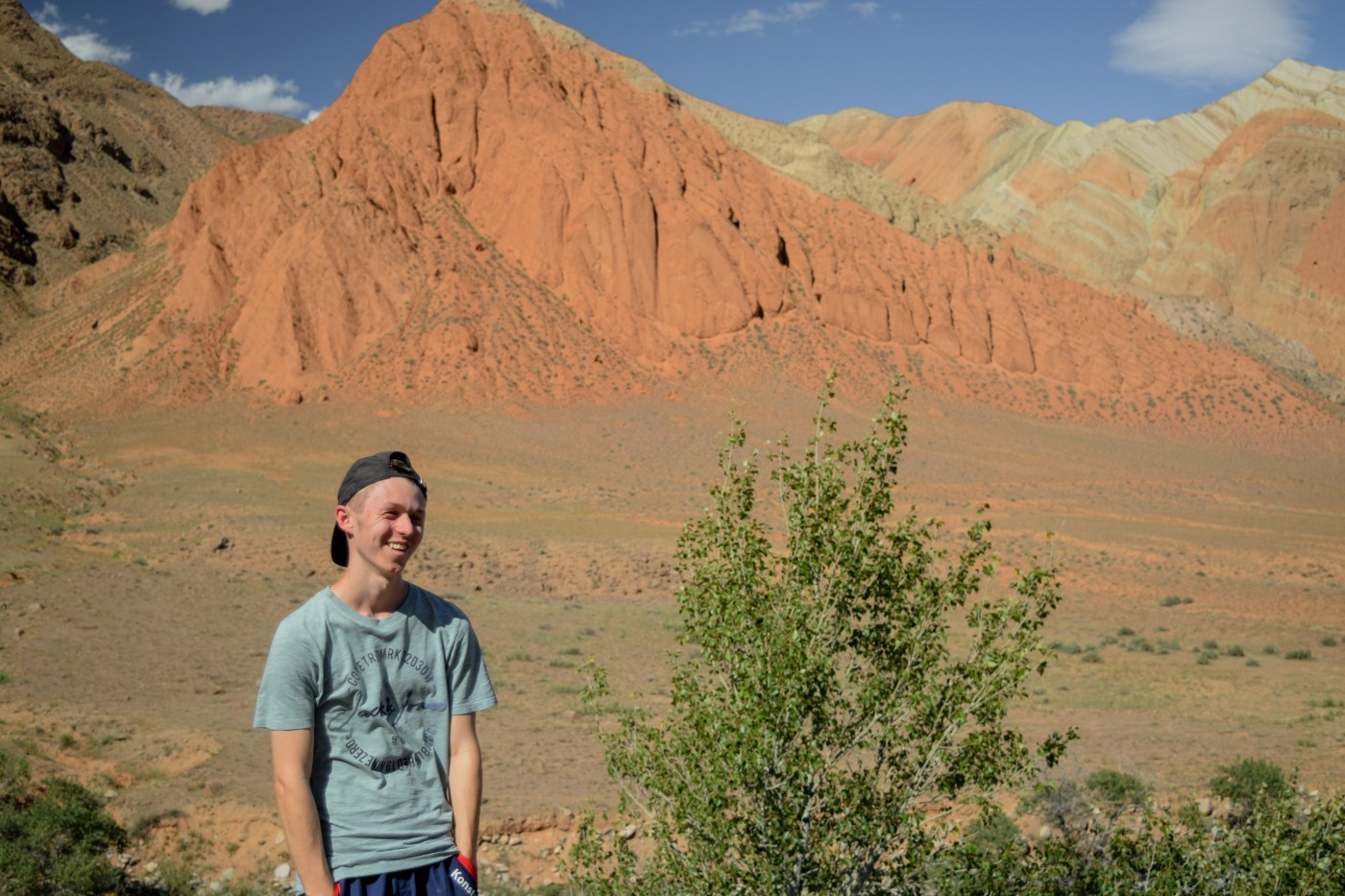

We welcome a new PhD student, Konstantin Müller, one of our former EAGLE students.
Konstantin Müller studied Computer Science at the JMU Würzburg before working as a software engineer and studying Aerospace IT. After switching to EAGLE and focusing his research in the direction of Earth Observation, he quickly was able to publish his first paper on Digital Surface Model creation through deep learning together with Hannes Taubenböck, Christian Geiss, and the Computer Science Department of the JMU. With his expertise on programming, he re-developed the already well established R package RStoolbox while coding QGIS plugins for the community. So far, he tries to keep his research in a multidisciplinary manner finishing a master thesis about animal path segmentation and starting a PHD in the direction of central African settlement development.
you may also like:
Successful MSc Thesis Defense by Sharmin Mim on Ability of Random Forest Model to Predict the Mean and,Standard Deviation of Winter Wheats Biomass in Bavaria: A Case Study
Congratulations to Sharmin Mim on the successful defense of her MSc thesis, titled "Ability of Random Forest Model to Predict the Mean and Standard Deviation of Winter Wheat Biomass in Bavaria: A Case Study." Her work focused on the Rhön region, where she combined...
Exploring Arctic Vegetation Patterns: PhD Fieldwork on Svalbard
This summer, one of our PhD students, Elio Rauth, embarked on an exciting scientific journey to the High Arctic—conducting detailed vegetation surveys on the remote archipelago of Svalbard. The aim? To better understand the intricate mosaic of Arctic plant communities...
John Friesen gives a talk at DLR
On the 17th of July, Dr. John Friesen gave a inspiring talk at the seminar of the department "Georisks and Civil Security (GZS)" at the Earth Observation Center (EOC) of the German Aerospace Center (DLR). The talk was titled "Urbanization and infrastructure in the...
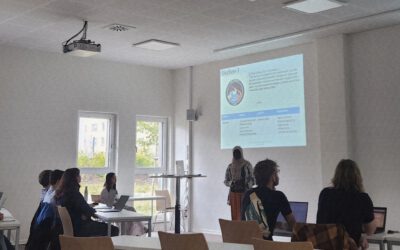
Future in Focus: EAGLE Students Host Mini-Symposium on Remote Sensing Innovations
In a spirited display of teamwork, scientific curiosity, and professional growth, our international MSc students from the EAGLE program recently organised and chaired their own scientific mini-symposium, showcasing the latest developments in remote sensing. The event...

Insightful perspectives from the global urban South: EORC lecture with guests from the University of Bayreuth and the University of Kaiserslautern-Landau
On July 14, the Earth Observation Research Cluster (EORC) had the pleasure of hosting a stimulating lecture by Prof. Eberhard Rothfuß from the University of Bayreuth in collaboration with Dr. Axel Prestes Dürrnagel (University of Kaiserslautern-Landau). The lecture...

EORC and EAGLE summer BBQ
We’re happy to announce that our summer BBQ is happening again on Thursday, July 24th at 4 pm! Alongside good food and a relaxed atmosphere, we’re also hosting a series of short talks highlighting exciting topics in Earth Observation and environmental science: “The...