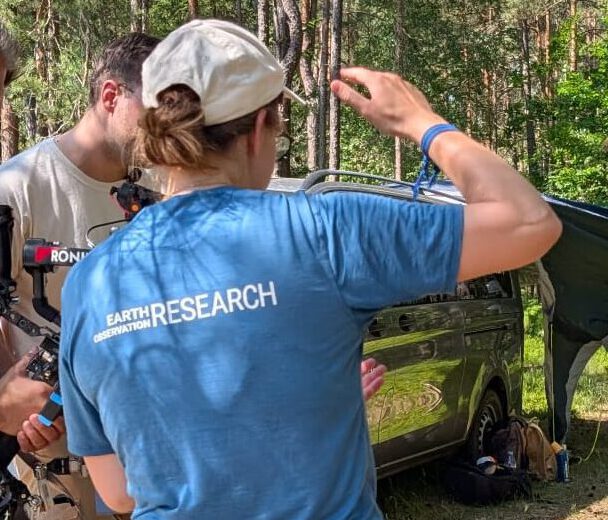

A bit of extra excitement at EORC recently: A television crew showed up to film a segment on the MONID Habitrack project financed by the BMFTR, and Dr. Ariane Droin was right in the middle of it, walking them through what Earth Observation actually brings to the table for a project like this.
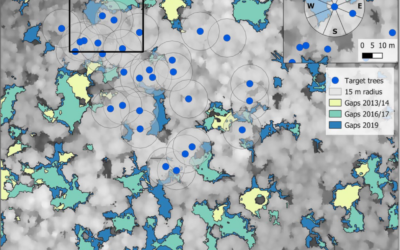
The crew talked with Ariane about why Earth Observation matters here at all. It’s not always obvious from the outside why you’d need drones and satellites to study ticks, so Ariane took the time to explain how Earth Observation data helps characterize forest structure and link it to where infected ticks tend to show up. She didn’t just talk through it either, she pulled up actual UAS based EO data collected for the project and showed the crew what it really looks like once it’s been gathered and processed.
What really caught the TV team’s attention, though, was watching the data collection itself. They were especially keen to see a UAS in action, and got to watch a VTOL system go through its paces, taking off vertically before transitioning into fixed-wing flight to cover the study area. It’s one thing to describe how these systems work, it’s another to actually watch one take off, fly a survey pattern, and come back down. The crew seemed genuinely interested in the mechanics of it, which made for a pretty good afternoon out in the field.
It’s always a nice moment when a project that started out as a fairly technical question about forest structure and tick ecology ends up being interesting enough to bring a TV crew out to EORC. Once the segment airs in a few weeks, we’ll share the link here so everyone can see how it turned out.