
Spotlight on our Researchers: Christian Schäfer

Spotlight on our Researchers: Christian Schäfer

March 19, 2026

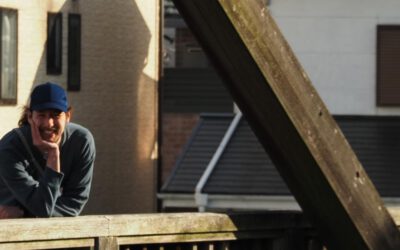
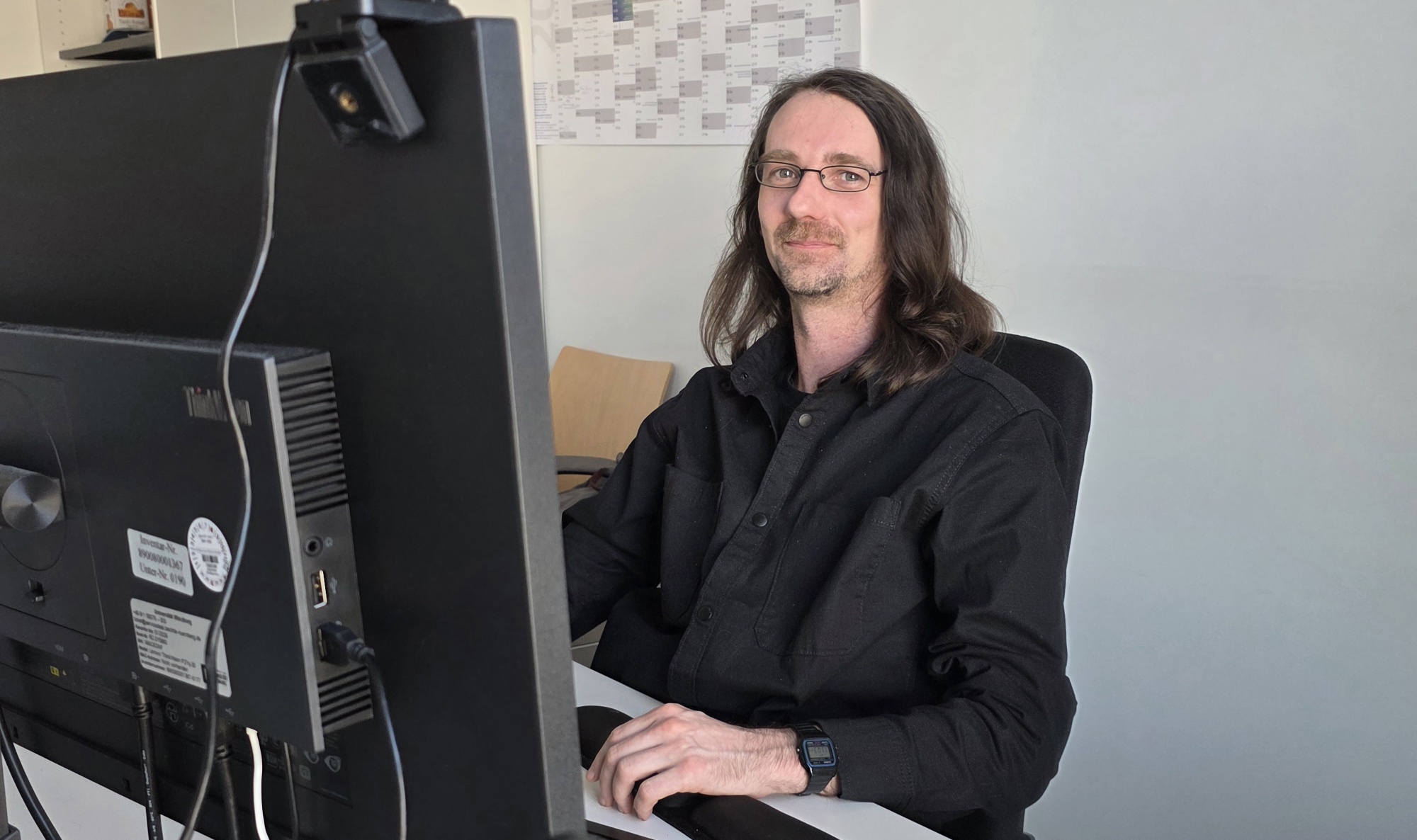
Christian Schäfer joined our team in May 2024 as part of the EO4CAM project. He brings a strong background in geospatial data analysis and environmental modelling, contributing expertise in hydrological modelling, data management, and geospatial programming.

Christian received his M.Sc. from the University of Würzburg, where he focused on the GIS-based synthesis of transboundary soil maps. During his work in the BigData@Geo project, he further developed his skills in distributed hydrological modelling and environmental data analysis.

At EO4CAM, Christian supports the development of modelling workflows and data management strategies that enable efficient analysis of large geospatial datasets. His work bridges environmental modelling and Earth observation, helping to translate complex environmental processes into scalable computational workflows.

Christian is an enthusiastic user of R and Julia for geospatial analysis and scientific computing. His research interests include hydrological processes, landscape analysis, and the integration of remote sensing data with environmental models.

Outside of research, Christian enjoys exploring new computational tools and workflows for open and reproducible geospatial science.

follow us and share it on:

you may also like:

Lecturer Spotlight: Jakob Schwalb-Willmann

Lecturer Spotlight: Jakob Schwalb-Willmann

What if animals could help us monitor environmental change? Jakob Schwalb-Willmann explores exactely this idea. As a postdoctoral researcher and lecturer at the Earth Observation Research Cluster (EORC), he works at the intersection of ecology, Earth observation,...

Lecturer Spotlight: Henri Debray

Lecturer Spotlight: Henri Debray

How are we shaping our cities and in turn, how are cities shaping us? This is the question at the core of the work of our lecturer Henri Debray. As a postdoctoral researcher at the Earth Observation Research Cluster (EORC), he uses remote-sensing-derived geospatial...

Lecturer Spotlight: Elio Rauth

Lecturer Spotlight: Elio Rauth

What better place to learn about snow than high up in the Alps, surrounded by snow-covered mountains? For Elio Rauth, teaching means getting students out of the classroom and into the field. Since 2025 he has been teaching a field course about using uncrewed aerial...

Lecturer Spotlight: Dr. Julia Rieder

Lecturer Spotlight: Dr. Julia Rieder

Why do some trees survive extreme drought while neighbouring trees of the same species and age suffer severe damage or even die? For Julia Rieder, answering this question means looking beyond individual trees and investigating the complex interactions between forest...

Lecturer Spotlight: Thilo Erbertseder

Lecturer Spotlight: Thilo Erbertseder

Thilo is the person at EORC who can tell you exactly how much air pollution was hanging over a given megacity in any given year since the 1990s, and what that actually meant for the people living there. He teaches atmospheric composition and urban remote sensing at...

Lecturer Spotlight: Mirjana Bevanda

Lecturer Spotlight: Mirjana Bevanda

There's a particular moment in the EAGLE program that shows that EAGLE is different, it is the moment the students realize their thesis isn't just another task to receive a M.Sc., their internship or InnoLab isn't just ECTS points, but it's a real world application....

bzgl. Art. 50 Verordnung (EU) 2024/1689 (AI Act):

Überwiegend werden eigene originäre Texte und Bilder des EORC genutzt, jedoch sind einige Inhalte von blog post Texten teilweise mit Hilfe von KI überarbeitet worden und einige Bilder sind ganz mit KI erstellt, die jedoch deutlich keine photorealistische Darstellungen abbilden. Aussnahmen sind KI generierte fernerkundliche Datensätze, die explizit für Forschungszwecke mit KI erstellt wurden, hier wird aber durch den assoziierten Text der wissenschaftliche Grund der KI generierten Bilder erläutert.

Privacy Policy

Lehrstuhl für Fernerkundung & Lehrstuhl für Urbane Fernerkundung

Erdbeobachtung an der Universität Würzburg

Share This