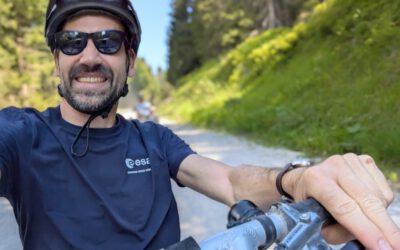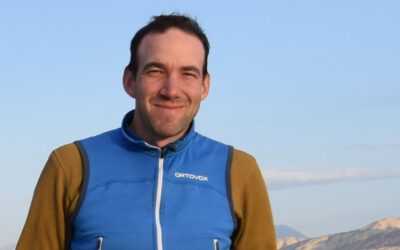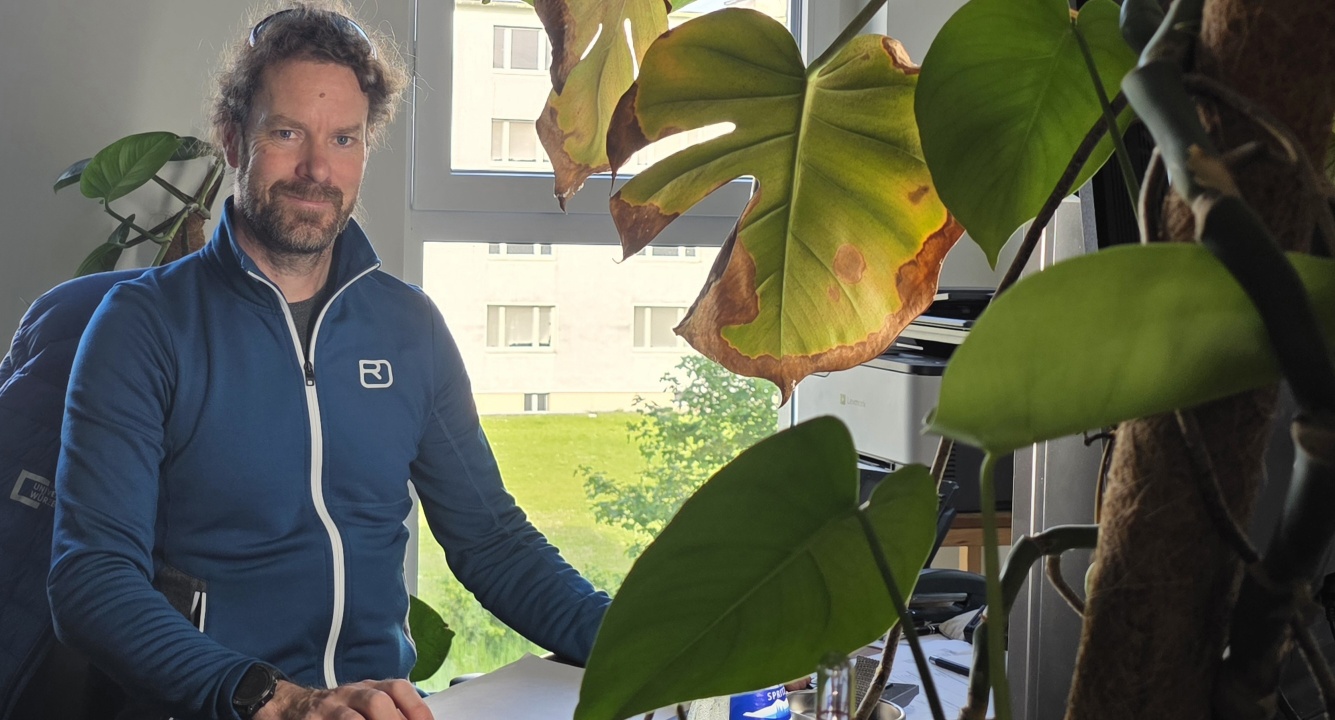

At the heart of many developments at the Earth Observation Research Cluster (EORC) stands one person who has shaped its spirit and trajectory for more than two decades: Martin Wegmann.
For more than 20 years, Martin has been a constant presence at EORC, helping to build it into the vibrant, collaborative, and internationally connected research environment it is today. Throughout this time, he has combined scientific curiosity, strategic thinking, and an extraordinary commitment to people – qualities that have left a lasting mark on both the research agenda and the community of our EORC. As Deputy to the Chair Holders at EORC ( https://www.geographie.uni-wuerzburg.de/erdbeobachtung) Martin is a central pivotal point.
Bridging Earth Observation and Biodiversity
Beyond EORC, Martin has been deeply engaged in international Earth observation initiatives. For more than a decade he coordinated biodiversity-related activities within the Committee on Earth Observation Satellites (CEOS) and the Group on Earth Observations Biodiversity (GEO-BON) initiative. In this role, he helped advance the use of satellite data for monitoring ecosystems and biodiversity worldwide, strengthening the connection between remote sensing, ecology, and conservation science.
His work brought together scientists, space agencies, and conservation organizations across continents, contributing to the growing recognition that Earth observation is essential for understanding and protecting global biodiversity.
This international engagement also meant many days in workshops abroad or wearing suits at high-level meetings, presenting at agencies such as NASA and European Space Agency, or speaking at events connected to the United Nations. These days, however, Martin is perfectly happy that the suit mostly stays in the closet while the focus returns to research, students, and our EORC.
Research Highlights
Martin’s scientific work spans a wide range of topics at the intersection of remote sensing and ecology but also linking spatial pattern analysis to urban science. His research has contributed to advancing how satellite data and spatial analysis can support environmental monitoring and conservation.
Key themes in his work include topics in biodiversity monitoring, conservation application, landscape and habitat analysis, fragmentation and several text books for EO education.
Across these topics, Martin has co-authored numerous scientific publications and collaborative studies, contributing to a growing body of research that demonstrates how Earth observation can support biodiversity conservation and sustainable environmental management.
The Heart of the EAGLE MSc Program
Yet numbers, roles, and publications tell only part of the story.
Within EORC, Martin is widely known as the heart of the EAGLE MSc program. Over the years, he has accompanied generations of students, knowing them not only by name but also by their academic backgrounds, interests, and ambitions.
Whether discussing the first spark of a thesis idea, connecting students with collaborators across projects and institutions, or offering encouragement at exactly the right moment, Martin has supported countless young scientists as they took their first steps into the field of Earth observation.
Many alumni recall how a short conversation with Martin opened new research directions, led to unexpected collaborations, or simply restored confidence during challenging moments of their studies. Through this mentorship, he has helped shape an international network of EAGLE graduates who today work across academia, government agencies, NGOs, and the private sector.
A Quiet Architect of EORC
At the institute level, Martin has been involved in nearly every major development over the years. From shaping research priorities and building international collaborations to supporting new initiatives like urban measurements, collaborations in Rwanda to research on Zugspitze and mentoring young colleagues, he has often been the quiet mastermind behind many of EORC’s successes – like this very EORC news blog, running for more than 10 years …
His ability to connect people and ideas has played a crucial role in fostering the interdisciplinary spirit that characterizes the Earth Observation Research Cluster today.
Looking Ahead
Today, Martin continues this role as Deputy to the Chair Holders at EORC, helping guide the institute into its next chapter while remaining a central figure in the community he helped build.
Simply put: EORC would not be the same without him.