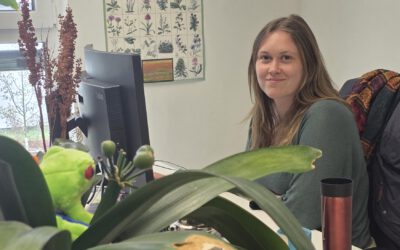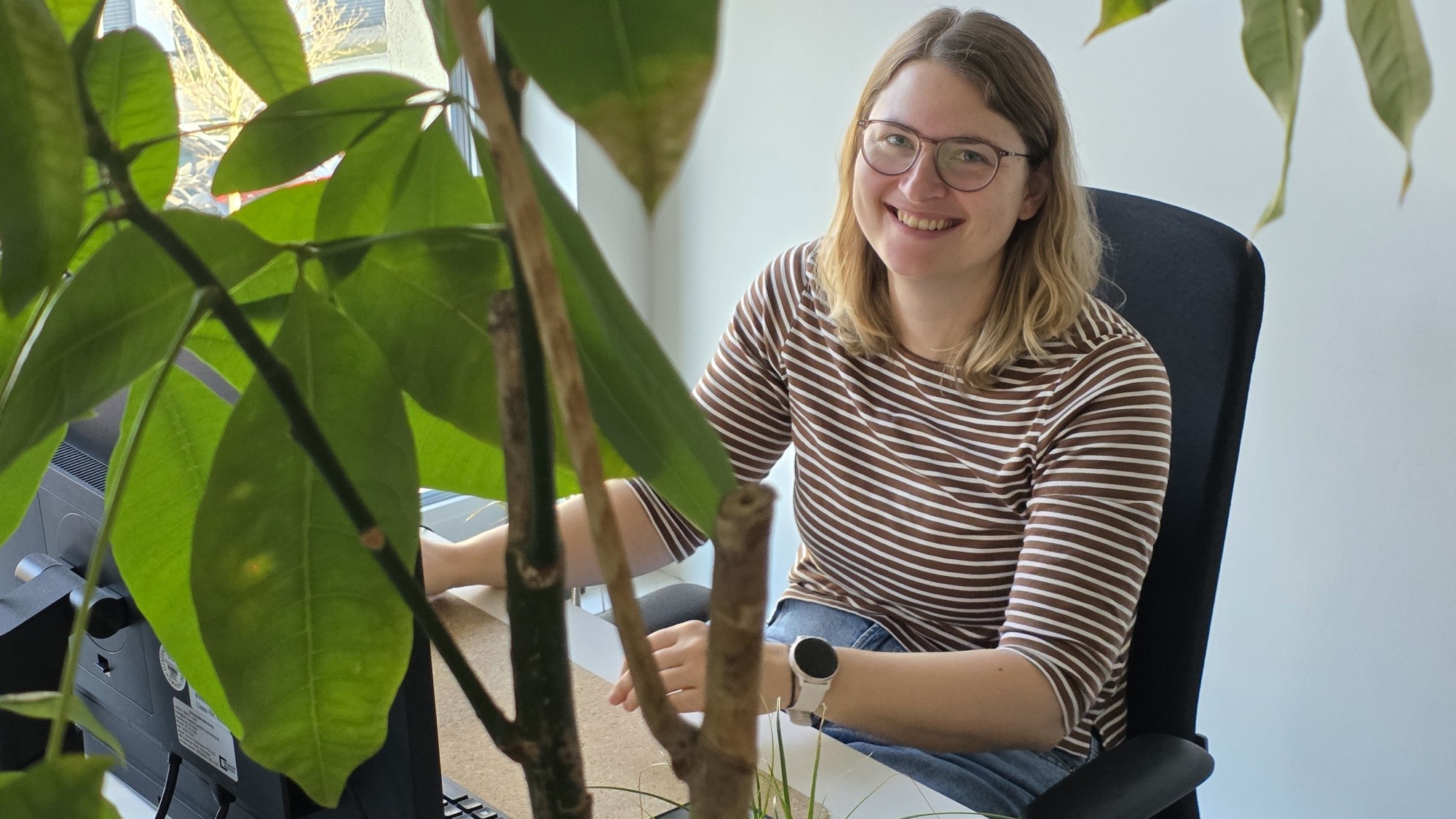

Understanding how forests respond to a changing climate is one of the defining challenges of our time. Julia Rieder is at the forefront of this effort, combining field ecology with advanced remote sensing to uncover how trees cope with environmental stress.
From Soil to Satellite: A Research Journey
Julia’s academic path began at the University of Würzburg, where she studied Geography with a focus on physical processes shaping our environment. Early on, she developed a strong interest in forest ecosystems and soil–water interactions, working with geophysical methods and LiDAR data during her master’s research.
Today, she continues this trajectory as a researcher at the Earth Observation Research Cluster, where she integrates satellite data, mobile laser scanning, and field measurements to better understand forest dynamics.
Decoding Forest Responses to Drought
At the core of Julia’s work lies a pressing ecological question: How do trees respond to increasing drought?
Her doctoral research focuses on the resilience of the European beech (Fagus sylvatica), one of Central Europe’s most important tree species. By combining LiDAR-based structural analysis with detailed field observations, she investigates how both abiotic factors (like soil properties) and biotic factors (such as neighboring trees) influence drought stress and mortality.
Her findings provide crucial insights into how forests may evolve under climate change—and how we can better protect them.
Innovation in Forest Analysis
Julia is not only analyzing ecosystems—she is also building tools to improve how we study them.
At the international ForestSat conference, she presented TreeCompR, an innovative tool designed to simplify the analysis of tree competition using both inventory data and 3D point clouds.
This approach allows researchers and practitioners to better understand forest structure and competition dynamics, key elements for sustainable forest management.
Linking Research, Technology, and Practice
Julia’s work stands out for its strong connection between methodological innovation and real-world application. Whether collecting data in forest field sites, contributing to large research projects like EO4CAM, or presenting at international conferences, she consistently bridges the gap between science and practice.
Her research also contributes to broader efforts to understand urban and regional forest resilience, helping guide strategies for adapting ecosystems to future climate conditions.
A Passion for Forest Ecosystems
Through her work, Julia Rieder exemplifies the next generation of environmental scientists—combining technical expertise in remote sensing with a deep understanding of ecological processes. Her research not only advances science but also supports the sustainable management of forests in a rapidly changing world.
A Special Dedication ❤️
This post comes with a very special note:
To Julia’s mother—one of the most dedicated readers of our blog—thank you for following along so closely and supporting the journey. Your enthusiasm for Julia’s work truly shows, and we hope this spotlight makes you just as proud as we are to have her as part of our research community.