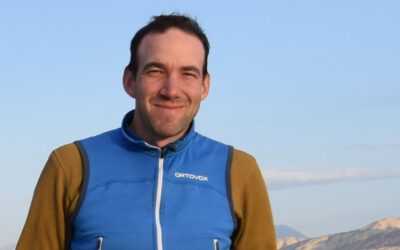
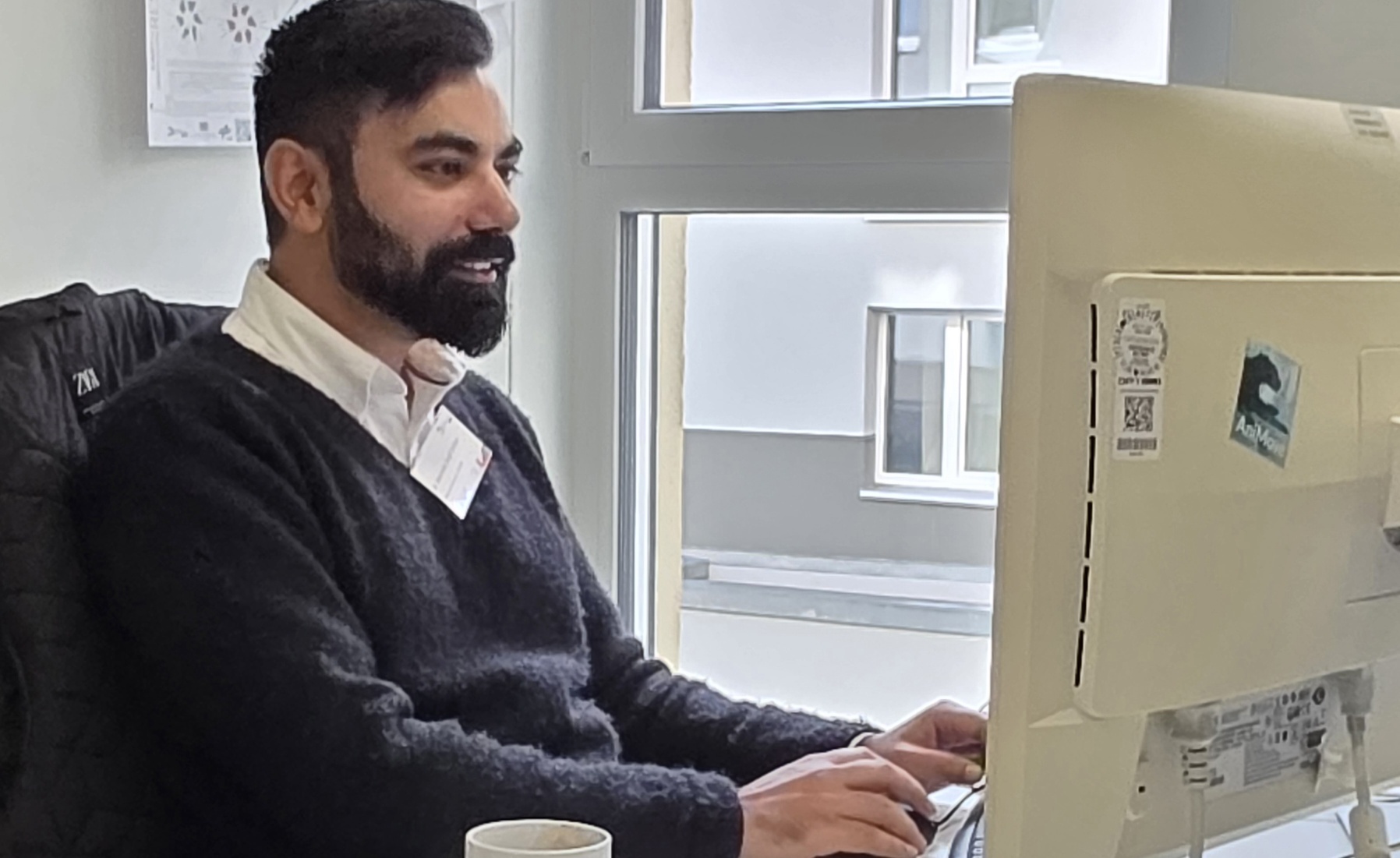

Maninder Singh Dhillon, a remote sensing scientist at the Earth Observation Research Cluster (EORC), explores the question “How do crops respond to their environment across space and time?” by analysing how agricultural productivity is shaped by climate, soil conditions, and biodiversity.
OBSERVING AGRICULTURE FROM SPACE
Maninder’s research combines remote sensing, crop growth modelling, and data-driven approaches to analyse agricultural productivity across a range of crops, including winter wheat, oilseed rape, maize (grain and silage), barley, rye, oats, potatoes, sugar beet, peas, and triticale. By integrating satellite observations with crop models and environmental data, he studies how biomass and yield develop across regions such as Bavaria. His work provides spatially explicit insights into crop dynamics under varying environmental conditions.
LANDSCAPES, BIODIVERSITY, AND YIELD DYNAMICS
Beyond crop-focused analyses, Maninder investigates agricultural landscapes as ecological systems. His work considers elements such as hedgerows, field margins, and small woody features, and how they interact with climate and soil conditions. A central aspect of his research is understanding how landscape structure and biodiversity relate not only to crop productivity but also to yield stability and variability across space and time. This includes analysing trends and identifying regions that are more resilient or sensitive to environmental variability.
FROM RESEARCH TO APPLICATION
Maninder completed the EAGLE M.Sc. in Earth Observation and Geoanalysis at the University of Würzburg, where his thesis focused on comparing crop growth models using synthetic remote sensing data. He continued as a PhD researcher (2019–2023), combining satellite data, crop models, and machine learning (e.g., Random Forest) to improve yield estimation and analyse environmental drivers. His work contributed to several publications, including developments in data fusion and hybrid modelling. Since 2024, he has been working as a postdoctoral researcher within the EO4CAM project. Here, he investigates environmental drivers of crop biomass using machine learning and remote sensing, while working closely with governmental stakeholders such as the Bavarian State Research Center for Agriculture (LfL) to align research with practical needs. Crop yield products developed by the EO4cam team are publicly available through the EO4CAM data portal:
https://eo4cam.earth-observation.info/.
He also supervises a development of a Farmland Habitat Biodiversity Indicator (FHBI) for Bavaria, providing insights into agricultural biodiversity patterns and their relevance for sustainable land management.
TEACHING, COLLABORATION, AND OUTLOOK
Alongside his research, Maninder contributes to teaching and mentoring. He has delivered courses on Google Earth Engine, cloud computing, and scientific writing, and regularly gives guest lectures in the EAGLE master’s program. He has supervised bachelor’s and master’s theses on topics such as crop modelling, machine learning, and biodiversity indicators. Internationally, he has conducted training courses, including a short course on scientific writing at Punjab Agricultural University, and collaborates with research groups working on agricultural and environmental modelling.
His work reflects a shift in agricultural research, from focusing solely on yield towards understanding the interactions between crops, environment, and biodiversity. By combining satellite data with ecological and climatic perspectives, he contributes to a more integrated understanding of agricultural systems under changing environmental conditions.