
Strengthening Scientific Networks in Côte d’Ivoire

Strengthening Scientific Networks in Côte d’Ivoire

May 18, 2025

Last week, two of our EORC members (Dr. Insa Otte and Dr. Michael Thiel) had the opportunity to visit several research institutions in Côte d’Ivoire—both in Abidjan and at the Lamto Ecological Research Station.

During this visit, they gained valuable insights into the infrastructure of our partner institutions as well as the region’s unique environmental conditions. They were particularly impressed by the facilities of the WASCAL Graduate Schools for Climate Change and Biodiversity (PhD) and Green Hydrogen (MSc). Many thanks to N’Golo Koné and Edouard Kouassi for the warm welcome and the informative tour.

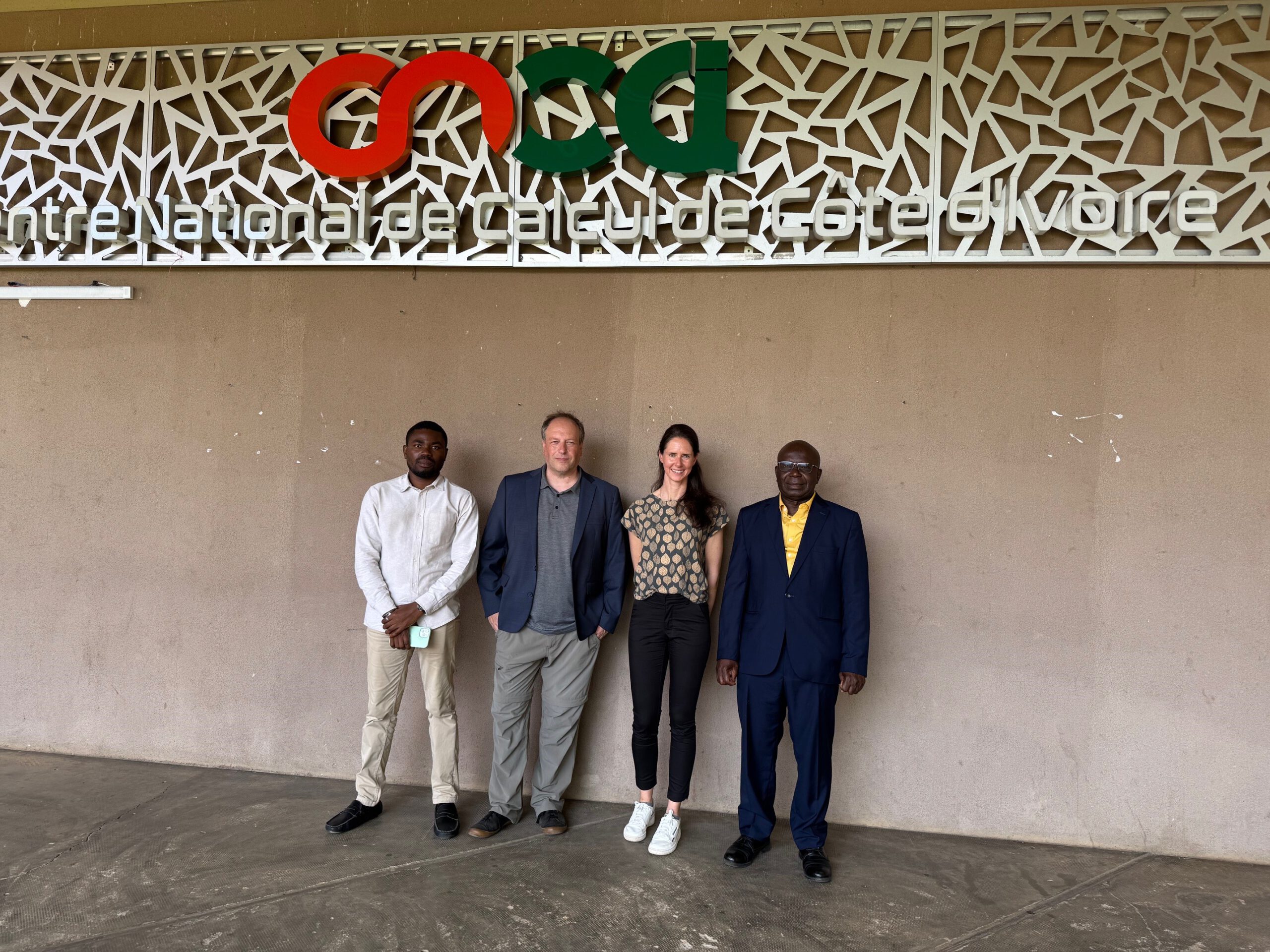
Not far from there, they also had the chance to explore the infrastructure of the Centre National de Calcul de Côte d’Ivoire (CNCCI), especially its high-performance computing cluster—an outstanding facility that stands out in the region.

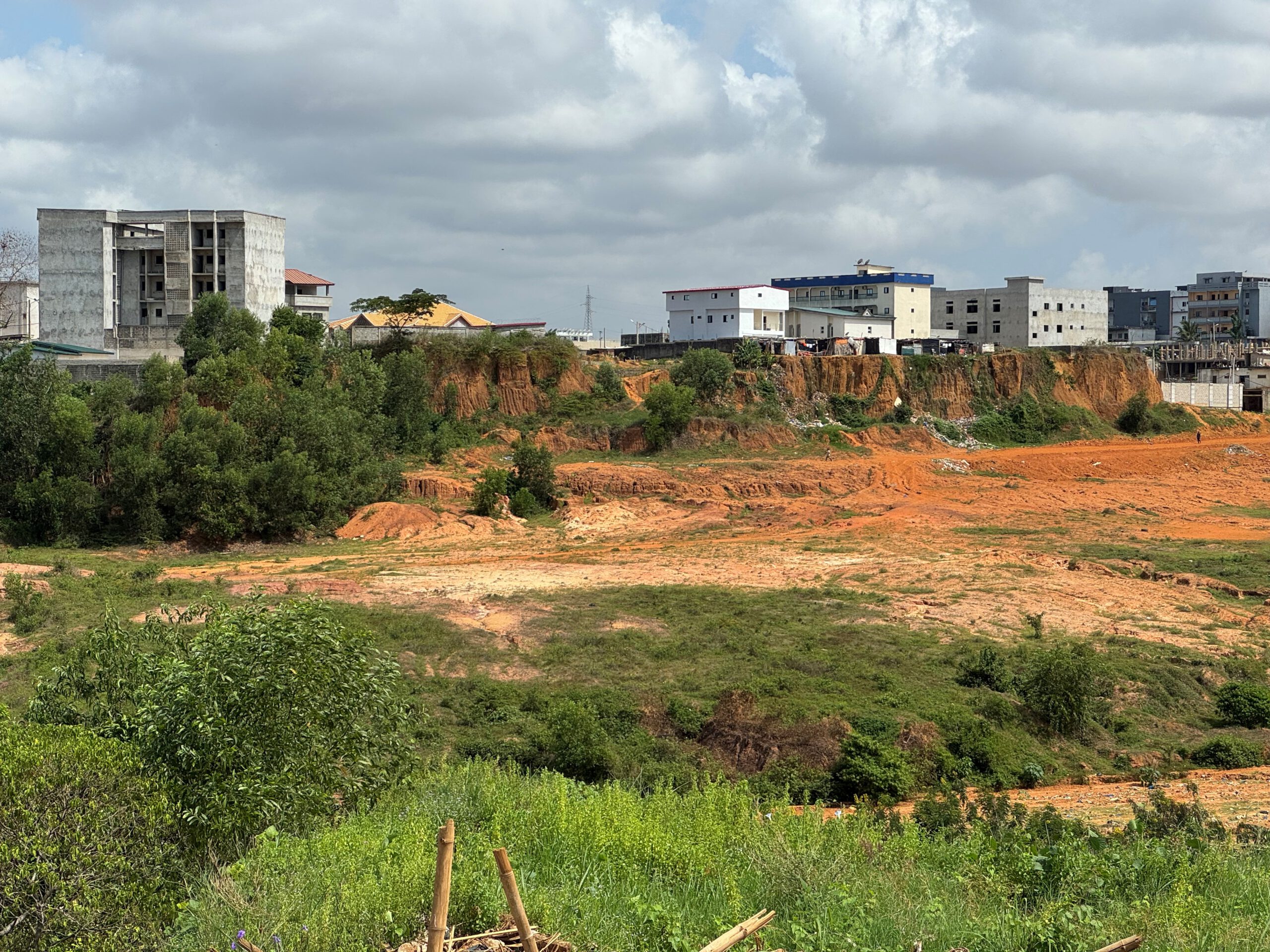
From a geographical perspective, the diverse urban landscapes of Abidjan, the economic capital of Côte d’Ivoire, were especially fascinating. The city ranges from ultra-modern downtown areas to informal settlements in more vulnerable locations. The challenges posed by landslides and flood risks were clearly visible.

In contrast, Lamto offered a different perspective: they learned how the transformation of savanna into forest can significantly enhance biodiversity in the region. Dr. Mike Abell Kouakou, who has been co-supervising by Michael during his PhD, provided deep insights into the biodiversity across different landscape types—forest, savanna, and plantation areas (we reported already: https://remote-sensing.org/field-visit-to-the-lamto-research-station-of-cote-divoire/).

A heartfelt thank you to our long term collaborator and friend Dr. Arona Diedhiou in Abidjan, who encouraged us to make this visit and played a key role in making it a success.
 

follow us and share it on:

you may also like:

Geometric calibration study of our thermal UAS sensor

Geometric calibration study of our thermal UAS sensor

At the EORC we deploy a range of space-borne and UAS-based sensors for environmental research. While many systems come with established calibration procedures, some of our UAS sensors require dedicated validation and characterization to ensure scientifically reliable...

EORC researchers teaching drone remote sensing at UNIS, Svalbard

EORC researchers teaching drone remote sensing at UNIS, Svalbard

During their current visit to Svalbard, EORC researchers have been teaching UNIS students from all over Europe on how drones can be used for remote sensing in the high Arctic. Invited by our UNIS collaborators Prof. Dr. Simone Lang (UNIS) and Prof. Dr. Eero Rinne...

Upcoming PhD Defense by Sebastian Buchelt on 11th February

Upcoming PhD Defense by Sebastian Buchelt on 11th February

We are happy to announce that our colleague Sebastian Buchelt will defend his PhD thesis "Potential of Synthetic Aperture Radar time series for mapping and monitoring of small-scale periglacial processes in alpine environments" on February 11th at 12 pm at...

Talk by Dr. Philipp on AI at Airbus

Talk by Dr. Philipp on AI at Airbus

Our former EAGLE M.Sc. graduate and EORC PhD graduate Dr. Marius Philipp will give talk about AI, ML and NLP within his current work at Airbus. The talk will take place next Wednesday, 11th of Feb., at 2pm in John-Skilton Str. 4a. It will take place either in seminar...

Urban Earth Observation Lecture: Understanding Cities from Above

Urban Earth Observation Lecture: Understanding Cities from Above

As part of the EAGLE M.Sc. programme, our international students attended this winter term the Urban Earth Observation lecture by EORC professor Hannes Taubenböck. The session offered a comprehensive overview of how remote sensing has evolved into a central tool for...

Share This