
What effects do aquatic plants have on water quality in the Lower Volta Basin?

What effects do aquatic plants have on water quality in the Lower Volta Basin?

January 24, 2025

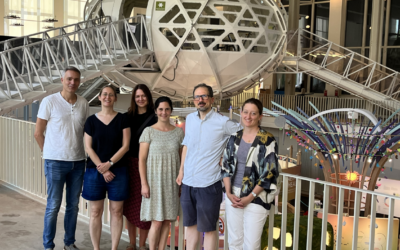
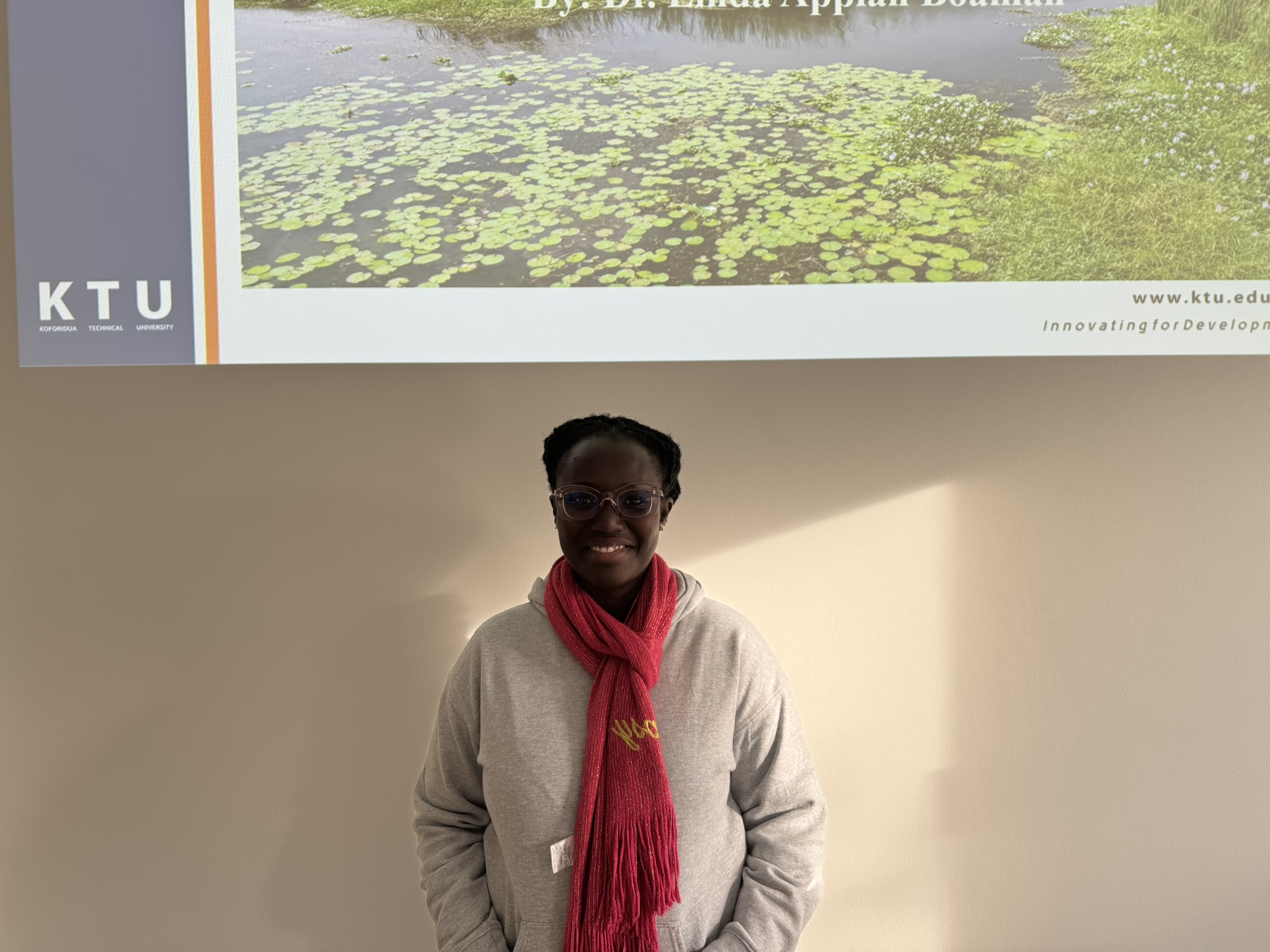
On January 22, 2025, the Earth Observation Research Cluster in Würzburg welcomed Dr. Linda Appiah Boamah from the Koforidua Technical University, Ghana. She presented her research on the “Effect of Aquatic Plants on Water Quality of the Lower Volta Basin, Ghana“.

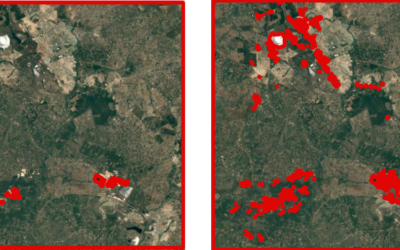
Aquatic plants significantly influence water quality in the Lower Volta Basin. Invasive aquatic species like water hyacinth can lead to reduced fish populations, hinder water transport, and decrease water supply. Dr. Boamah’s study analyzed the extent of aquatic plant growth and its effects using a combination of Landsat 7 and 8 optical imagery, drone data, and in situ sampling from 2010 to 2021.  Her findings revealed a marked increase in aquatic plant coverage during the study period. She further highlighted the potential of remote sensing in this research area to provide cost-effective, timely assessments of water quality parameters such as nutrients and vegetation spread. 

We thank Dr. Boamah for her insightful talk. Her research underscores the importance of remote sensing tools for addressing environmental challenges. 

follow us and share it on:

you may also like:

Invited presentation at the Munich creative Business Week

Invited presentation at the Munich creative Business Week

As part of the Munich creative Business Week (https://www.mcbw.de/), Schnitzer& GmbH https://www.schnitzerund.de/sonst/studio/ki organized two evening events entitled "Das macht jetzt die KI. Chancen und Risiken" [engl. "AI does that now. Opportunities and...

Presentation at StatEO26

Presentation at StatEO26

The Earth Observation for Official Statistics and policy indicators reporting Conference https://stateo26.esa.int/ has taken place from 05 to 07 May 2026 in ESRIN. The event facilitates the integration EO into national statistics and other official data supporting...

When Snow Disappears Too Early

When Snow Disappears Too Early

Fieldwork during the winter season in Svalbard usually comes with a built-in advantage: snow. It acts as a natural transport layer, making it possible to move efficiently across large distances with snowmobiles and sleds. You plan your campaign around that mobility:...

Advancing Agriculture with UAS Multi-Sensor Research

Advancing Agriculture with UAS Multi-Sensor Research

Understanding how agriculture can adapt to a changing climate is one of the key challenges of our time. At EORC, we are pleased to share that our researchers are currently collaborating with the Bavarian State Research Center for Agriculture (LfL) on an innovative...

New roll-up shows Urban Collaboration and Research

New roll-up shows Urban Collaboration and Research

Remote sensing thrives on collaboration as shown (by a few selected ones) on our most recent roll-up. Many of today’s most pressing urban and environmental challenges—rapid urbanization, climate change, landcover change, migration, inequality, and economic...

Share This