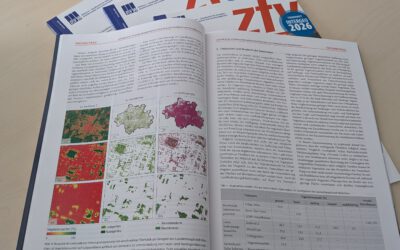
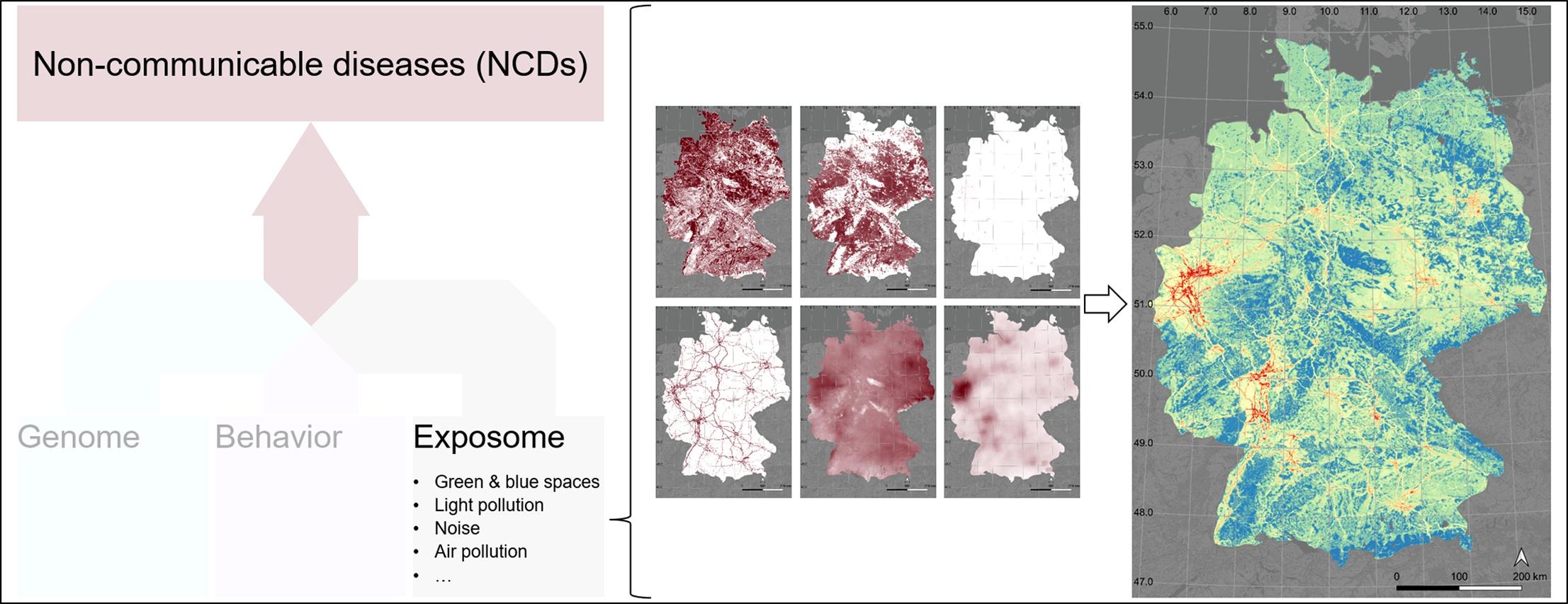

Our Phd student Patrick Sogno published an article on “Earth observation for exposome mapping of Germany: analyzing environmental factors relevant to non-communicable diseases”, read the full article here:
https://www.sciencedirect.com/science/article/pii/S1569843222002722?via%3Dihub
from the abstract: “Non-communicable diseases – NCDs – (e.g., asthma, cancer, or diabetes) are a major concern for society and medicine. According to the World Health Organization, NCDs are responsible for > 70 % of global premature deaths. Apart from increasing mortality, these diseases strain one’s immune system which leads to higher susceptibility to transmittable diseases. NCD-susceptibility depends on the genome (genetic predisposition), behavior (lifestyle), and exposome of a person. The exposome is a composition of environmental parameters such as exposure to air pollution, noise, extreme temperatures, or surrounding greenness. Using Earth Observation data, the majority of factors making up the exposome can be monitored over long periods of time at high resolution and with nearly global coverage. Still, exposome maps and products communicating NCD risk are not widely available. In this study, we utilize eight land surface datasets (distance to green spaces, distance to blue spaces, temperature, noise from industry, as well as road, rail, and air traffic, and light pollution) as well as two air pollution datasets (PM2.5 and NO2) to map health-relevant environmental exposure. We use an established cumulative approach and incorporate exposure-response relationships from scientific literature to map environments that impact public health for the complete area of Germany. We present results communicating exposure relevant to myocardial infarction risk. The methodology is transferable to other NCDs and other areas of interest. In the context of the global health burden from NCDs and ongoing global change, this approach supplies findings for communicating health-relevant exposure.”