
We are glad to announcing our last workshop reports at the Department of Remote Sensing in 2019. This time, we have the chance to listen to two presentations. The presenters Alexandra Bell and Jakob-Schwalb-Willmann (both Department of Remote Sensing, University of Würzburg) will talk about “Remote Sensing for Policy and Policy-making” (Alexandra Bell) and “Potentials of Animal‐Environment‐Interactions for Remote Sensing Research ‐ Animals as Geoinformants for Earth Observation” (Jakob Schwalb-Willmann).
01st presentation will be about
Remote Sensing for Policy and Policy‐making
Abstract
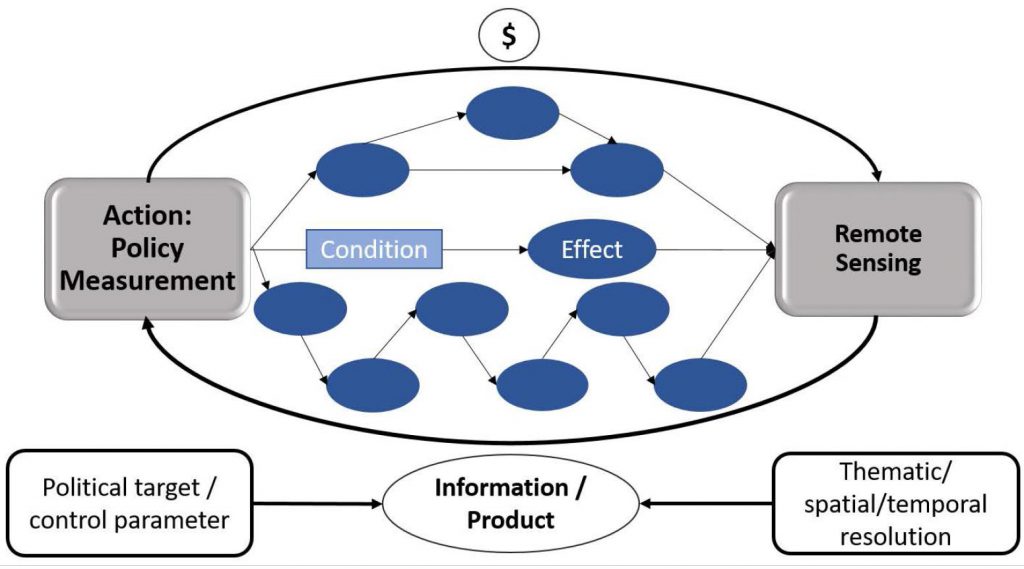
What impact do policy measurements, such as subsidies, have on local to regional development, the way we use our natural resources or on biodiversity? And how can remote sensing contribute to monitoring, forming and enhancing the effectiveness and efficiency of policies? These are main questions I intend to focus on during my PhD. During my presentation, I will give a brief overview of my PhD concept, the challenges that we face if we want to link policy and remote sensing as well as a first outlook on potential case studies.
02nd presentation will be about
Potentials of Animal‐Environment‐Interactions for Remote Sensing Research ‐ Animals as Geoinformants for Earth Observation
Abstract
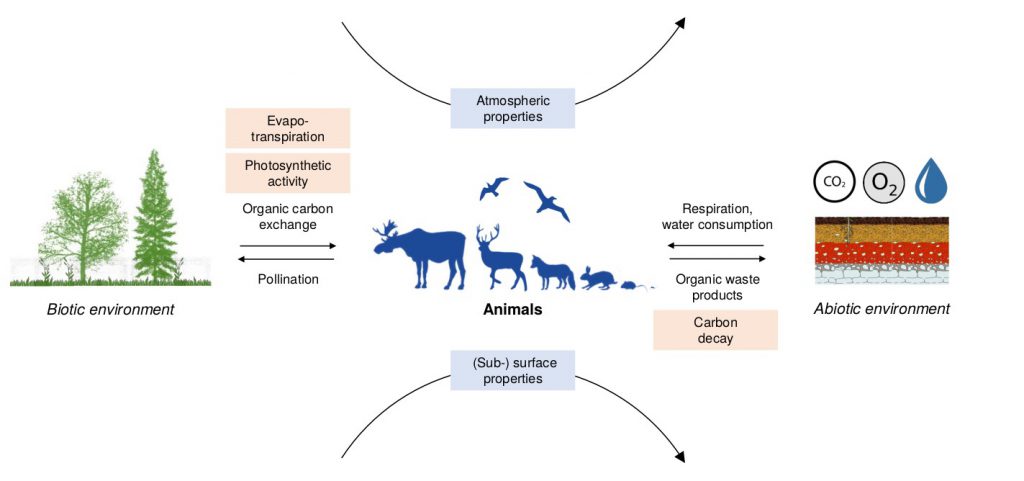
The environmental conditions that animals perceive and interpret influence their movement behavior. Hence, animal movement data contain information on local environmental conditions that animals distinguish and classify by the way they are moving through the landscape. This link between animal movement and the environment creates repeating patterns that are difficult to detect due to their dimensional complexity. In the context of my PhD, I am developing a machine-learning-driven methodology to detect and classify such patterns in the interaction of animal movements and environmental conditions. This way, I am working towards the aim to turn animal movement data into practically usable ground truth data for remote sensing applications such as thematic classifications, and to thereby utilize animals as globally acting geoinformants.
Titles of presentation: “Remote Sensing for Policy and Policy‐making” and “Potentials of Animal‐Environment‐Interactions for Remote Sensing Research ‐ Animals as Geoinformants for Earth Observation”
Date: Friday, 13th December, 2019 Time: 10 – 12 am s.t. Place: Josef-Martin-Weg 52 (1), Campus Hubland Nord, Würzburg
Presentation language: English Slides: English
All interested persons are cordially invited! We are looking forward to seeing you.