
Earth Observation for the Living Environment
Monitoring status and changes of the earth is essential for a sustainable management of our limited natural resources. A special focus lies on pristine areas, which are often prone to change owing to pressure resulting from human activities and their need for food, water and energy.
Using Earth Observation data from satellites, ecosystems and the human-environment interaction can be analyzed regarding their spatial and temporal properties in a continuous systematic way. Monitoring approaches across different bio-climatic zones are needed to understand global implications. However, this requires the development of robust methods, which are applicable across biomes.
This project ought to investigate the usefulness of optical and/or SAR remote sensing data for characterizing such changes in landscape structures. Especially the potential of multi-sensor approaches as well as time-series analysis should be explored for analyzing our environment and its changes. Robust transferable methods for active and passive remote sensing data with regard to deriving landscape status should be developed. Within this general research frame, it is possible to adapt the study sites as well as the specific research focus to personal interests! Candidates are expected to pursue a PhD degree within this project.
Requirements:
We look for a candidate holding a M.Sc. degree with expertise in remote sensing, spatial statistics, and handling of various sources of data. A sound knowledge in remote sensing software, geographic information systems (GIS) and programming (e. g., Python, R) is required. The ability to work independently, organizational skills, high motivation and the willingness to work within an interdisciplinary team of collaborators are essential.
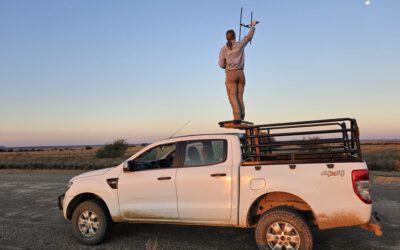
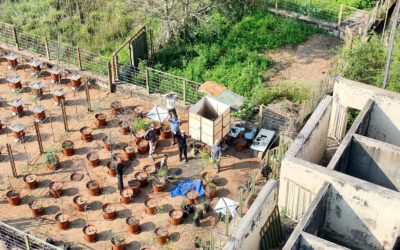
Necessary is the ability to undertake independent field work and to communicate and collaborate with different stakeholders. Proficiency in the English language, communication skills, and the capability to write research reports and peer-reviewed publications are further required.
Working environment: We offer a stimulating research environment within an interdisciplinary, dynamic research team at the Remote Sensing Department of the Institute of Geography and Geology at the University of Würzburg in close collaboration with the German Remote Sensing Data Center of DLR. The position covers 3 years and is expected to start in 2020, with salary according to TVöD (50%).
The University of Würzburg is an equal opportunity employer, determined to increase the proportion of women in successful scientific careers, and particularly encourages them to apply. Preference will be given to disabled applicants with the same qualifications. Inquiries or questions should be directed to:
Contact: Dr. Martin Wegmann, Department Manager l-geofernerkundung@uni-wuerzburg.de