
When Snow Disappears Too Early

When Snow Disappears Too Early

m

May 7, 2026

Fieldwork during the winter season in Svalbard usually comes with a built-in advantage: snow. It acts as a natural transport layer, making it possible to move efficiently across large distances with snowmobiles and sleds. You plan your campaign around that mobility: how far you can go, how much you can bring, how many sites you can visit in a day.

Most years, that assumption holds. But this year turned out to be an exception.

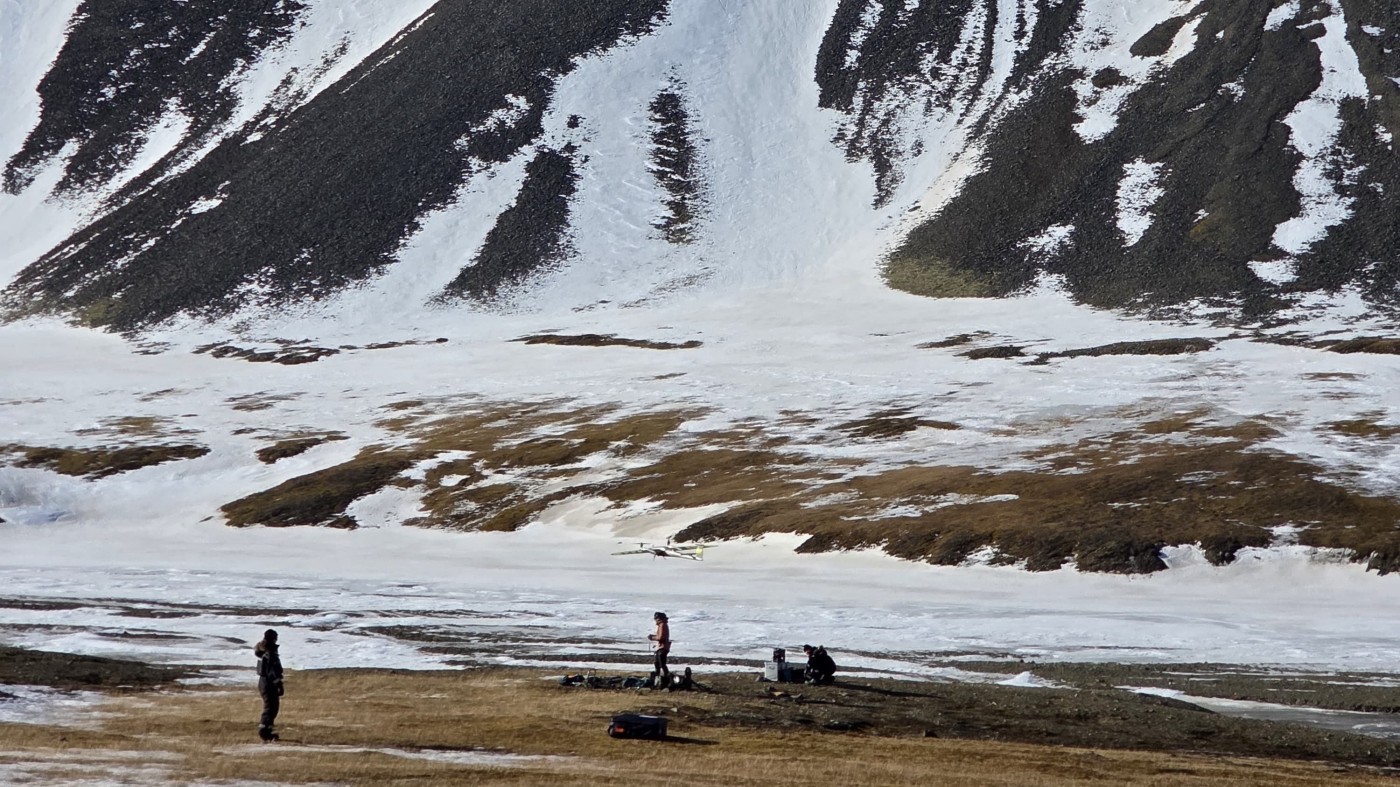
When Dr. Jakob Schwalb-Willmann and Dr. Mirjana Bevanda outlined the winter field campaigns for 2026 in Svalbard they accounted for the typical challenges of working under Arctic winter conditions. However, when snowmelt starts much earlier than expected, things change quickly.

At first, it doesn’t seem like a major issue. A bit less snow, some exposed ground. But very soon, the consequences become practical. Snowmobiles can no longer be used reliably. Routes that were straightforward only days before become patchy and unpredictable.

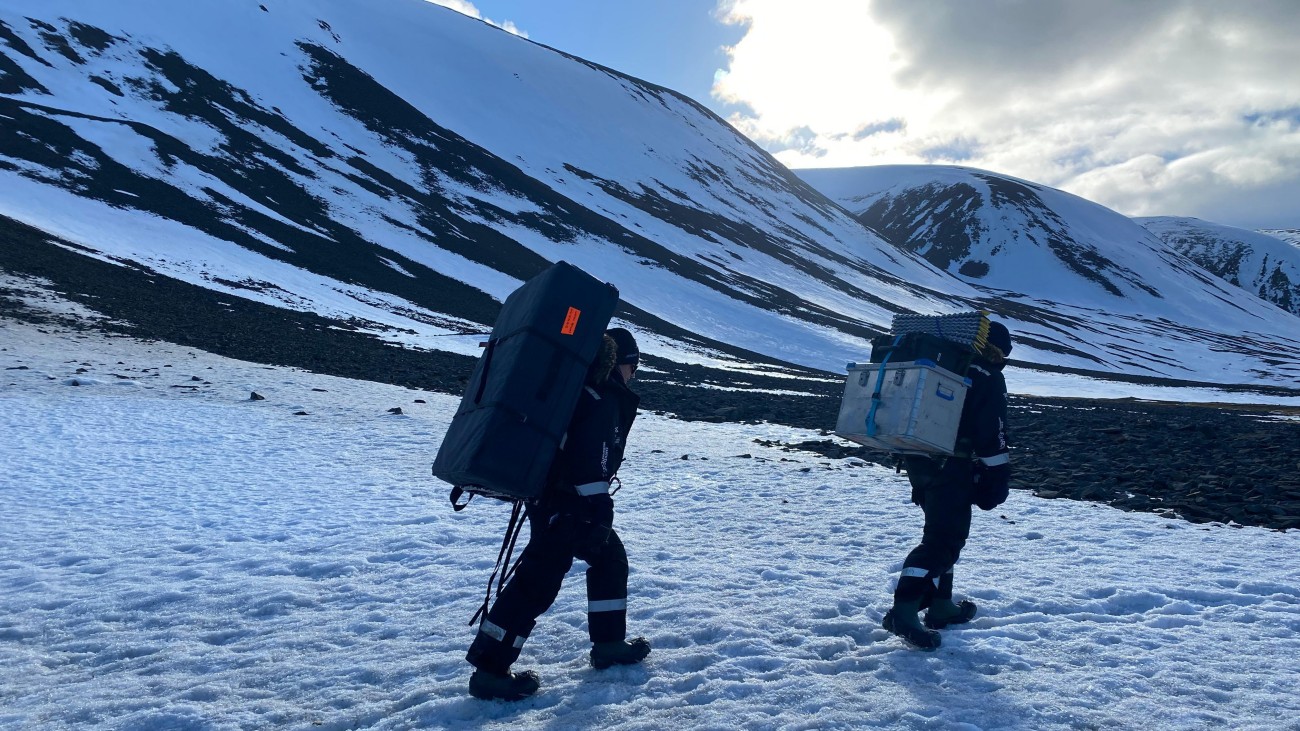
Still, it is nothing that can stop us. Equipment, safety gear, food. Everything that would normally be distributed across snow scooters and sleds ends up on your back.

Together with our dedicated interns Marlene Sehrbrock and Aoibhin Murphy as well as our former Msc student Ronja Seitz, the equipment is redistributed, loads are shared, spikes are put on and off we go. It’s slower, but it works.

Early snowmelt is not just a logistical inconvenience. It reflects a broader environmental shift in both the timing and duration of snow cover, as well as growing variability in Arctic seasonal patterns.

follow us and share it on:

you may also like:

The 6 Species of Remote Sensing Researchers

The 6 Species of Remote Sensing Researchers

A fun field guide of earth observation scientists at our EORC, a typology of 6 Species of Remote Sensing Researchers (we could not think of more yet ...) There’s a magical moment in every remote sensing get-together when six completely different personalities somehow...

EORC’s River Research at EGU General Assembly 2026

EORC’s River Research at EGU General Assembly 2026

The European Geosciences Union General Assembly is one of the major annual meetings for the Earth, planetary, and space sciences, bringing together more than 20.000 scientists from around the world to discuss the latest findings in their fields. EGU26 in Vienna...

Polar 6 on Svalbard

Polar 6 on Svalbard

The EORC team, particularly Dr. Jakob Schwalb-Willmann and Dr. Mirjana Bevanda, had the chance to catch up with our former Msc student Luisa Wagner in Longyearbyen, Svalbard. Luisa is pursuing her PhD at the Alfred-Wegener-Institute (AWI), where her research focuses...

EOCap4Africa closing meeting

EOCap4Africa closing meeting

The EOCap4Africa project officially concluded with an online closing meeting bringing together our project partners, lecturers, researchers, and institutional representatives from across Africa and Europe. The meeting was attended by our African partners from...

NetCDA at EGU26

NetCDA at EGU26

At the EGU General Assembly 2026 in Vienna, the NetCDA framework organized the session “ITS4.33/CLO.19: Strengthening African-European Partnerships for Global Change Research: From Scientific Capacity to Practical Solutions” on 4 May 2026. The session was convened by...

Share This