
New Publication on Automated building characterization

New Publication on Automated building characterization

September 15, 2021

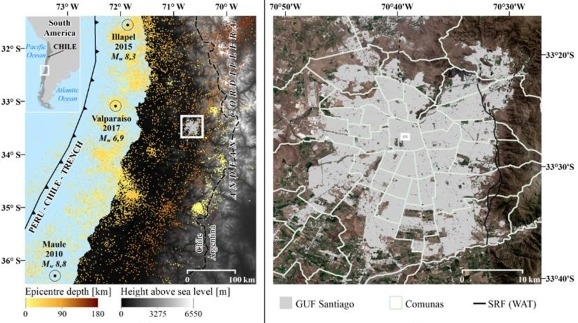
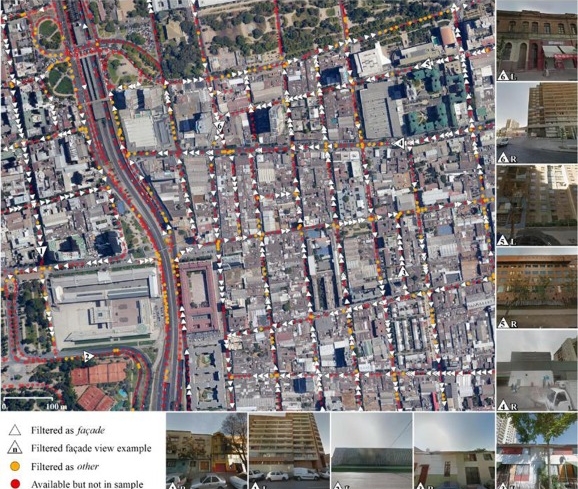
A new publication by Hannes Taubenböck and colleagues is online about “Automated building characterization for seismic risk assessment using street-level imagery and deep learning”. From the abstract: “Accurate seismic risk modeling requires knowledge of key structural characteristics of buildings. However, to date, the collection of such data is highly expensive in terms of labor, time and money and thus prohibitive for a spatially continuous large-area monitoring. This study quantitatively evaluates the potential of an automated and thus more efficient collection of vulnerability-related structural building characteristics based on Deep Convolutional Neural Networks (DCNNs) and street-level imagery such as provided by Google Street View. The proposed approach involves a tailored hierarchical categorization workflow to structure the highly heterogeneous street-level imagery in an application-oriented fashion. Thereupon, we use state-of-the-art DCNNs to explore the automated inference of Seismic Building Structural Types. These reflect the main-load bearing structure of a building, and thus its resistance to seismic forces. Additionally, we assess the independent retrieval of two key building structural parameters, i.e., the material of the lateral-load-resisting system and building height to investigate the applicability for a more generic structural characterization of buildings. Experimental results obtained for the earthquake-prone Chilean capital Santiago show accuracies beyond κ = 0.81 for all addressed classification tasks. This underlines the potential of the proposed methodology for an efficient in-situ data collection on large spatial scales with the purpose of risk assessments related to earthquakes, but also other natural hazards (e.g., tsunamis, or floods).”

read full article here:
P. Aravena Pelizari, C. Geiß, P. Aguirre, H. Santa María, Y. Merino Peña, and H. Taubenböck (2021) Automated building characterization for seismic risk assessment using street-level imagery and deep learning. ISPRS Journal of Photogrammetry and Remote Sensing

follow us and share it on:

you may also like:

New publication on Invisible Diversity in Forests

New publication on Invisible Diversity in Forests

We are excited to share our latest collaborative publication with our colleagues from the biological sciences lead by Lena Carlson, now published in Landscape Ecology. This interdisciplinary effort highlights how combining ecological expertise with advanced...

EAGLE M.Sc. Students doing Arctic Internship

EAGLE M.Sc. Students doing Arctic Internship

This spring, Marlene and Aoibhin, two students from our EAGLE M.Sc. program have started their research internship in the high Arctic on Svalbard. Hosted by Prof. Larissa Beumer at the University Centre in Svalbard (UNIS), the students are gaining hands-on experience...

EORC at the Smart Forest Conference: Research meets Practive

EORC at the Smart Forest Conference: Research meets Practive

This week, our EO4CAM staff Sonja and Julian attended the Smart Forest Conference in Freising, a meeting that brings together researchers, forestry practitioners, and technology developers working at the interface of forest science and digital innovation. Over two...

EO4CAM Data Portal Launched to Support Climate Adaptation in Bavaria

EO4CAM Data Portal Launched to Support Climate Adaptation in Bavaria

New Earth observation platform provides satellite-based information for public authorities and planners A new Earth observation data portal is bringing satellite-derived environmental information closer to climate adaptation planning. On 9 March 2026, the EO4CAM data...

Demography Meets Spatial Analysis: Insights from today’s EORC Talk

Demography Meets Spatial Analysis: Insights from today’s EORC Talk

A recent EORC Talk at the Earth Observation Research Cluster (EORC) at the University of Würzburg brought together perspectives from demography, geography, and spatial analysis. Sebastian Klüsener and Tamilwai Kolowa from the Federal Institute for Population Research...

A Fresh Look of the Foyer and Seminarroom for our Events

A Fresh Look of the Foyer and Seminarroom for our Events

Over the past weeks, our foyer and seminar rooms have received a thoughtful upgrade that reflects both the spirit and the scope of our research community. The spaces now feature large-scale prints that visually showcase the diverse research topics within our group,...

Share This