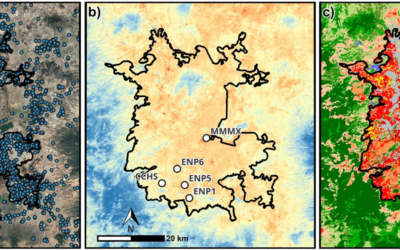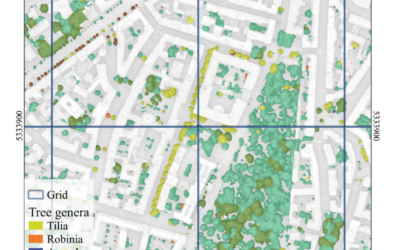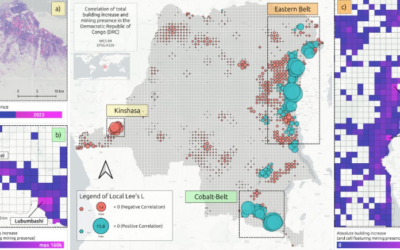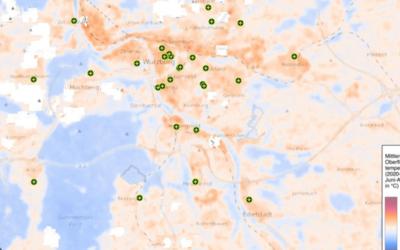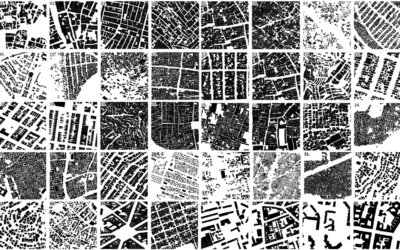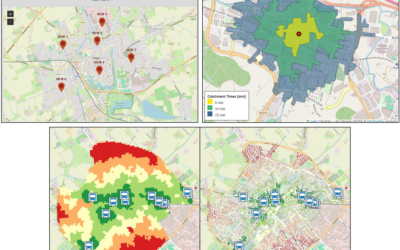


A Special Issue titled “Multimodal Characterization of Built and Natural Environments for Multi-Risk Assessment” was just published in the journal “Natural Hazards”. Christian Geiß, Elisabeth Schoepfer, Torsten Riedlinger and Hannes Taubenböck from the Earth Observation Center (EOC) of the German Aerospace Center (DLR) in Oberpfaffenhofen and our Earth Observation Research Cluster of the University of Würzburg have edited this Special Issue over the last few years.
The Special issue consists of a combination of scientific papers and short communications. The governing idea behind is to document the scientific status quo on “Multimodal Characterization of Built and Natural Environments for Multi-Risk Assessment” which is simultaneously mirrored by contributions from business, policy, and additional relevant stakeholders.
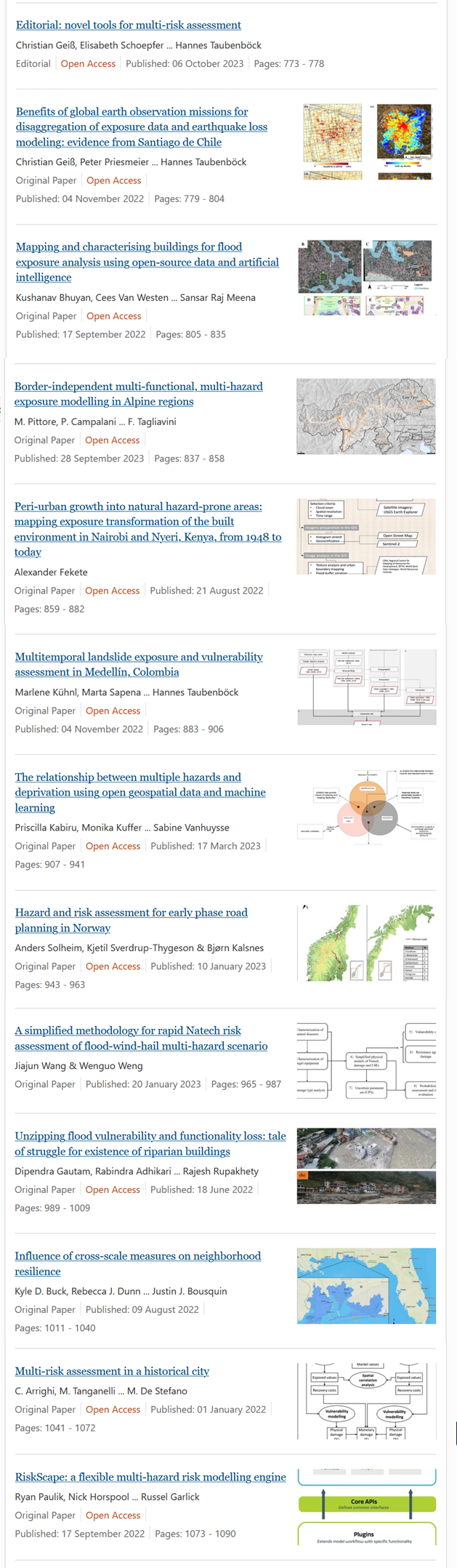
The special issue documents scientific progress regarding the spatial refinement of existing natural hazard-related exposure information based on earth observation data (Geiß et al. 2022), bottom-up modeling of an elements-at-risk database (Bhuyan et al. 2022), and mapping of exposure including static and functional components in a multi-hazard context (Pittore et al. 2023). Moreover, novel epistemological insights regarding the timely evolution of exposure patterns are provided for the cities of Nairobi and Nyeri in Kenya (Fekete 2022) and Medellín in Colombia (Kühnl et al. 2022) concerning floods and landslides, respectively. Moreover, an innovative multi-hazard susceptibility index and a transferrable disaster risk approach are presented (Kabiru et al. 2023). New analytical tools are provided in the context of potential disruptions of the road infrastructure (Solheim et al. 2023), assessment of the vulnerability of atmospheric storage tanks (Wang and Weng 2021), and impact of high-velocity and debris-laden floods in steep terrains on riparian buildings (Gautam et al. 2022). To establish a holistic risk perspective, a Baseline Resilience Indicators for Communities framework is introduced (Buck et al. 2022). Also, a multi-risk assessment workflow is proposed in the context of seismic and flood hazards (Arrighi et al. 2022). Finally, a novel software tool for multi-risk assessment is introduced (Paulik et al. 2022).
See an overview of all scientific full papers here: https://link.springer.com/journal/11069/volumes-and-issues/119-2
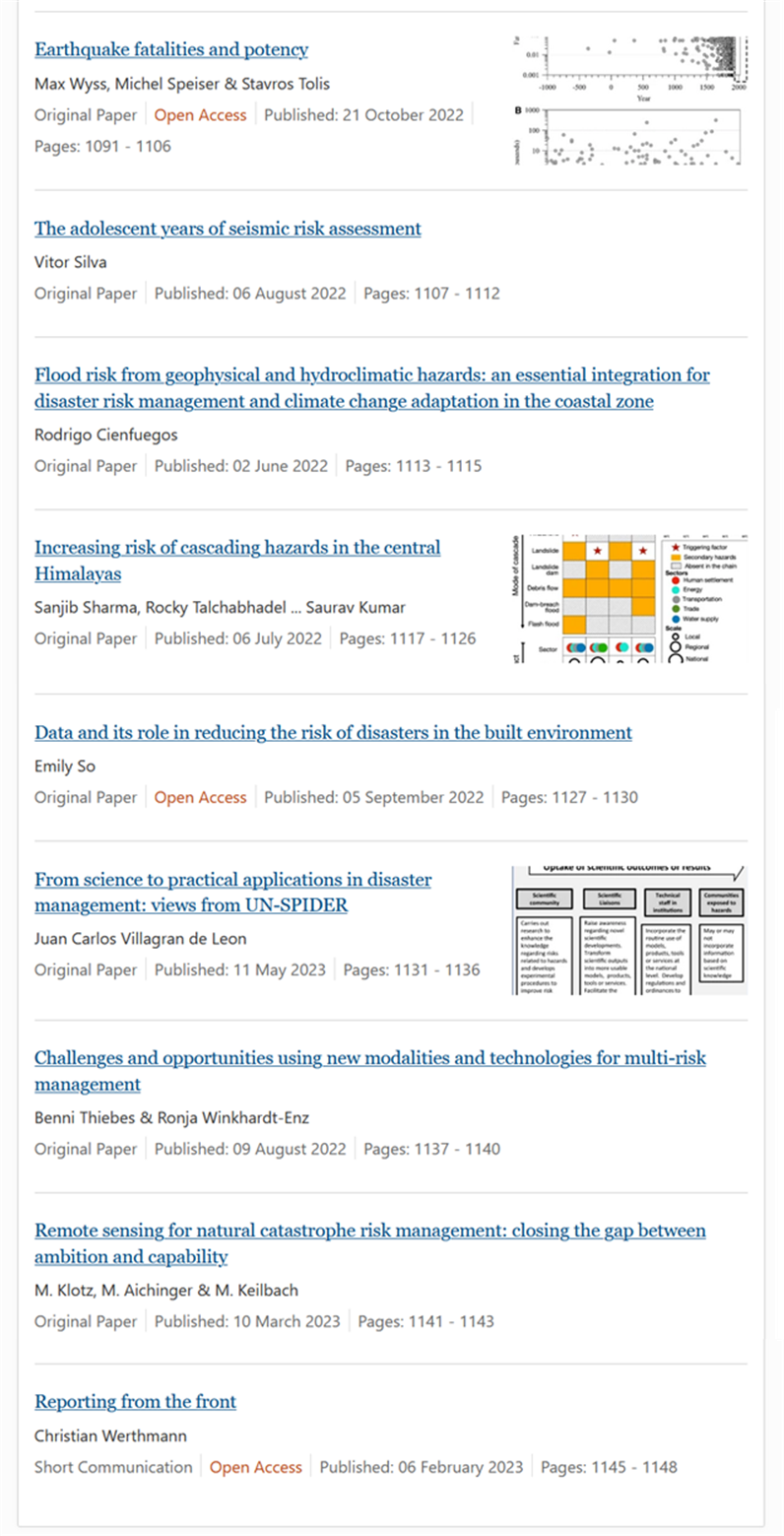
The Special Issue is completed by a section of short communications. There, authors from science, intergovernmental organizations, and the commercial sector give lively examples of past experiences, current best practices, and exigent future challenges and needs, respectively. See an overview of all short communications here: https://link.springer.com/journal/11069/volumes-and-issues/119-2
This current publication is a follow-up to two earlier Special Issues in the journal Natural Hazards:
- Taubenböck & Geiß, 2017 titled “GEOSPATIAL DATA FOR MULTISCALE MAPPING AND CHARACTERIZATION OF ELEMENTS AT RISK” https://link.springer.com/journal/11069/volumes-and-issues/86-1/supplement
- Taubenböck & Strunz, 2013 titled “REMOTE SENSING CONTRIBUTING TO MAPPING EARTHQUAKE VULNERABILITY AND EFFECTS” https://link.springer.com/journal/11069/volumes-and-issues/68-1
With it, the sequence of Special Issues shows scientific, technical, and social advancements in risk assessment and reduction over time in a variety of ways.