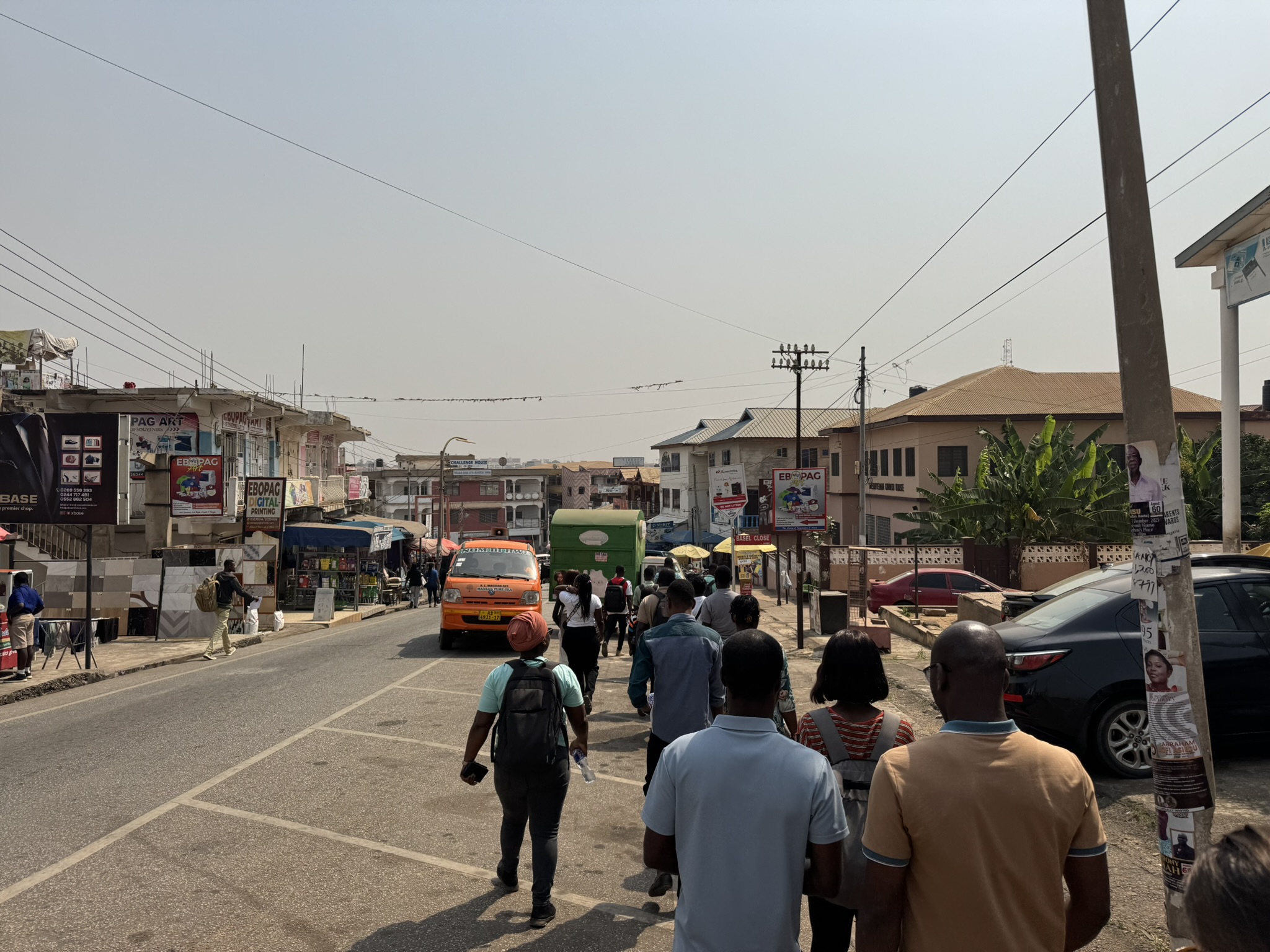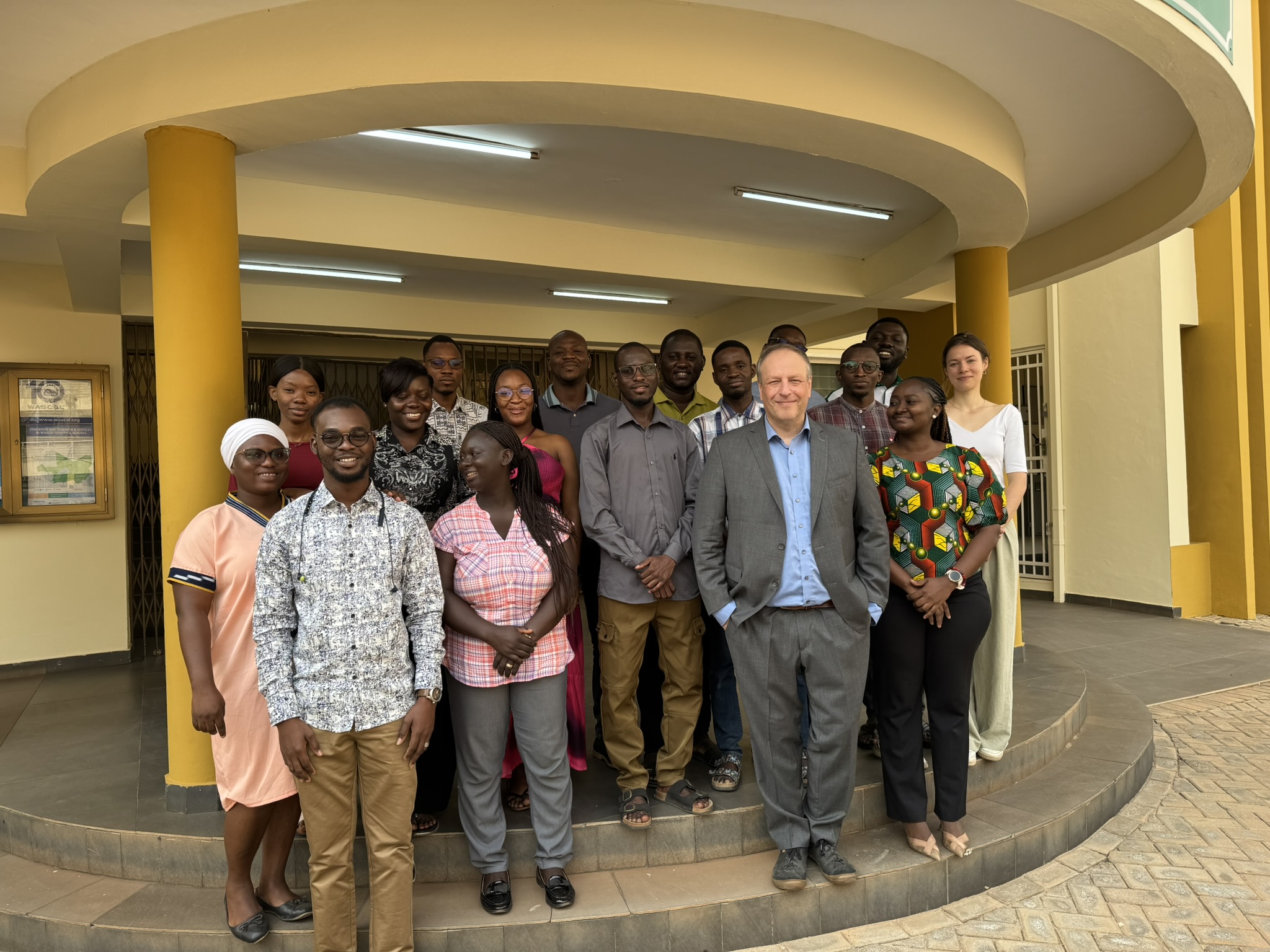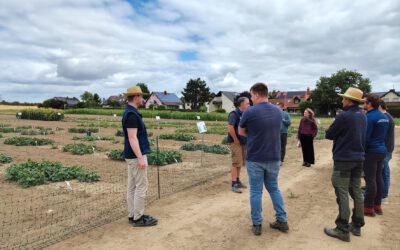
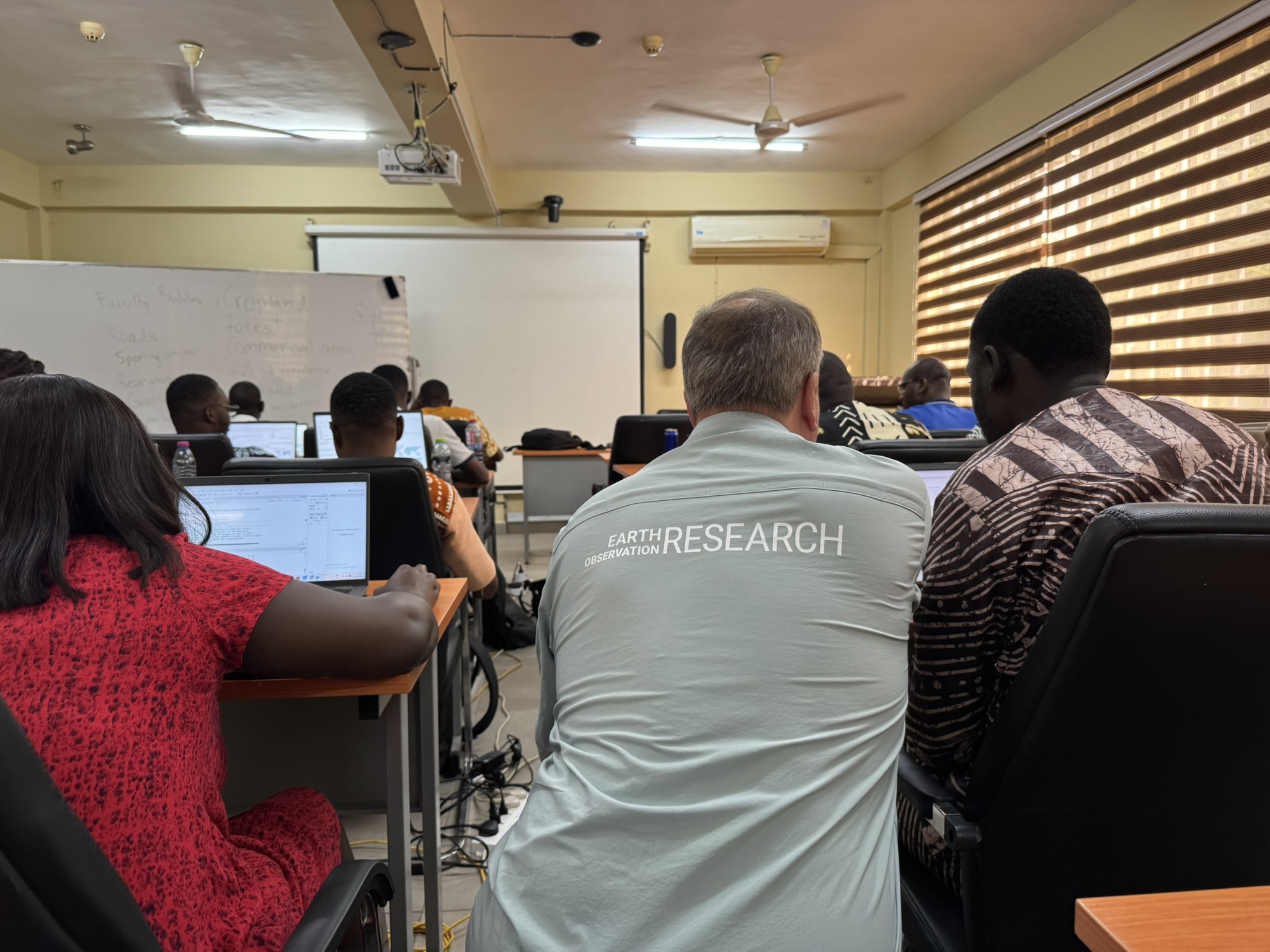

In the second week of our remote sensing training within the WASCAL Climate Change and Land Use program at KNUST in Kumasi (Ghana), our NetCDA team deepens the applied component of the course. The students learn how to use, adapt, and write their own code in R and Google Earth Engine (GEE) to analyze satellite data. We also explore how remote sensing can be applied to the students’ specific research questions. These activities were complemented by a field visit, during which we discussed and practiced various aspects of data collection across different land‑use categories.