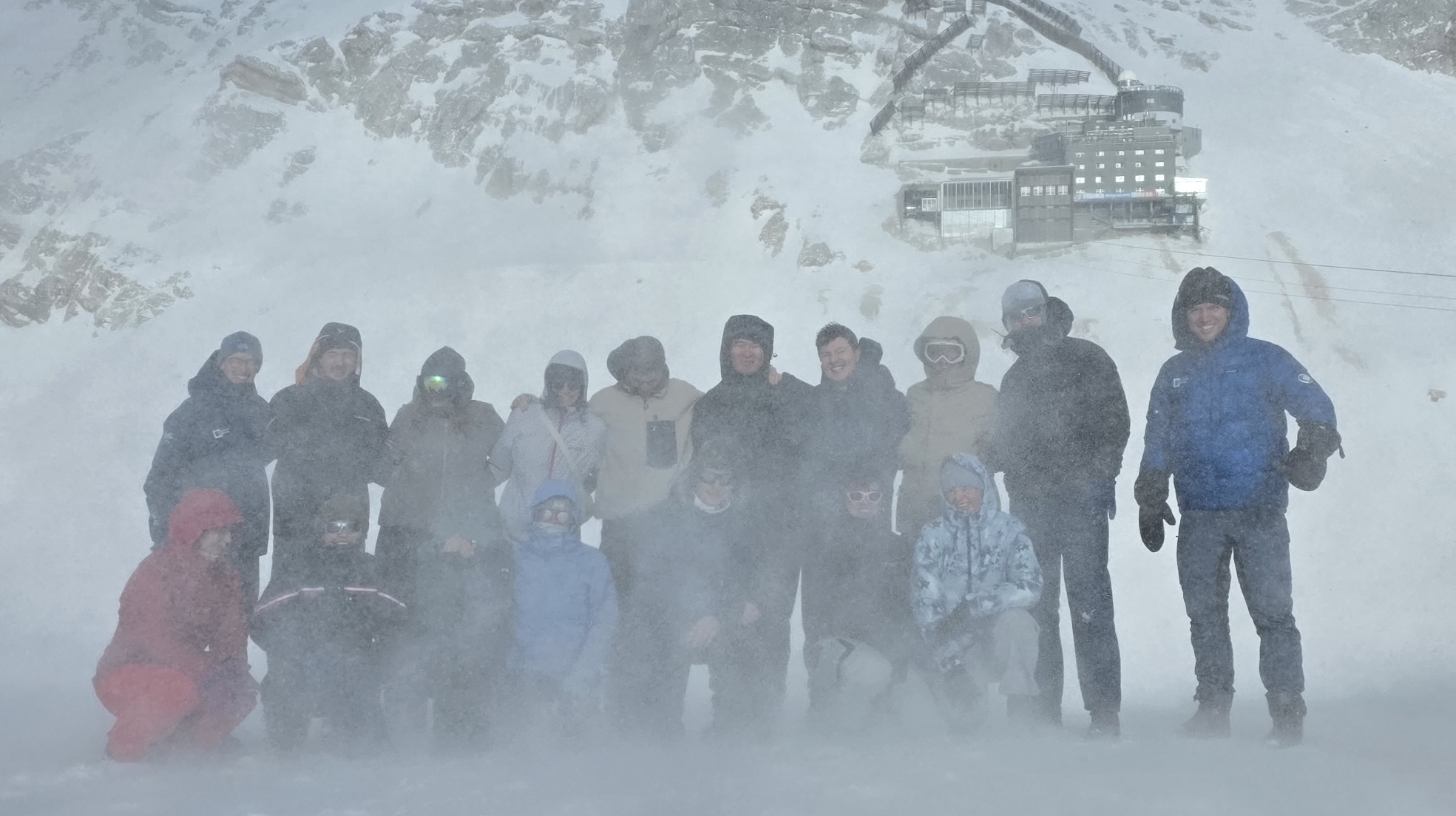
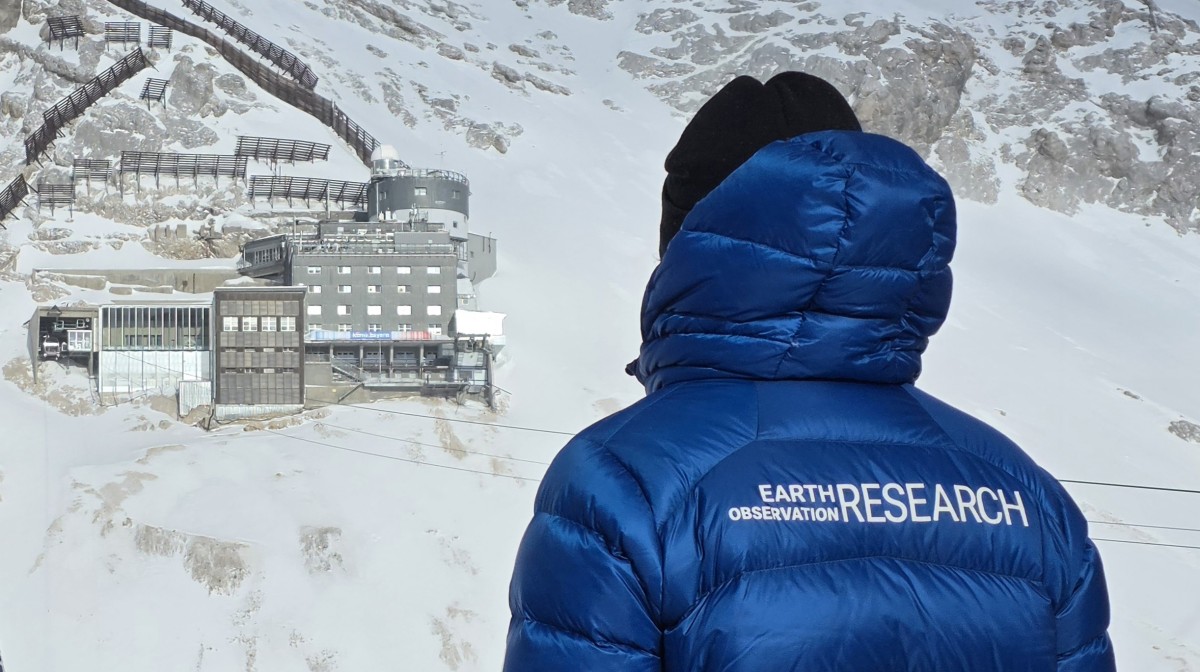

We are grateful for the long-standing and growing opportunity to work with the Schneefernerhaus research station on Zugspitze, Germany’s highest mountain. For our work at the EORC, this collaboration provides an exceptional foundation for research on snow, ice, glaciers, and high-mountain geomorphology, as well as for hands-on education within our EAGLE program.
Schneefernerhaus offers something that is rare in alpine research: the ability to live and work directly within the study area. Being based at high elevation means that launch areas, in-situ measurements, and key observation sites are often just a short hike away. This proximity allows us to make efficient use of weather windows, respond flexibly to changing conditions, and spend more time on science rather than logistics.
Equally important is the infrastructure. Having researchers and students accommodated in one place creates a focused and collaborative environment. The facilities at Schneefernerhaus support both field-based and data-driven work, making it possible to combine Earth observation, ground measurements, and geomorphological mapping in a seamless way. For high-mountain research, where conditions can be demanding and unpredictable, this level of support is invaluable.
Over the years, our teams have already conducted extensive research in and around the Schneefernerhaus area. This work has enabled us to collect important datasets on snow and ice dynamics, glacier change, and periglacial and geomorphological processes. These observations contribute to a better understanding of how high-alpine environments respond to climate variability and change.
Beyond research, Schneefernerhaus plays a central role in our teaching. For EAGLE courses in both winter and summer, the station provides an outstanding learning environment. Students are exposed to real-world Earth observation fieldwork, experiencing firsthand both the opportunities and the challenges of working in complex alpine terrain. From planning measurements and dealing with weather constraints to integrating field data with remote sensing, the experience is as instructive as it is inspiring.
We are thankful for the opportunity to conduct both research and training at the Schneefernerhaus research station. The collaboration continues to strengthen our scientific work and our educational mission, and we look forward to building on this partnership in the years to come.