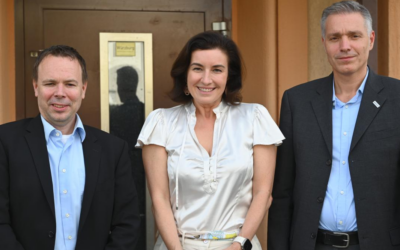

On April 27, 2026, Clara Vydra will present her Master Thesis on “Current Status, Trends, and Future Challenges of the Alpine Cryosphere, Illustrated by an Example from the Hohe Tauern National Park” at 14:00 in seminar room 3, John-Skilton-Str. 4a.
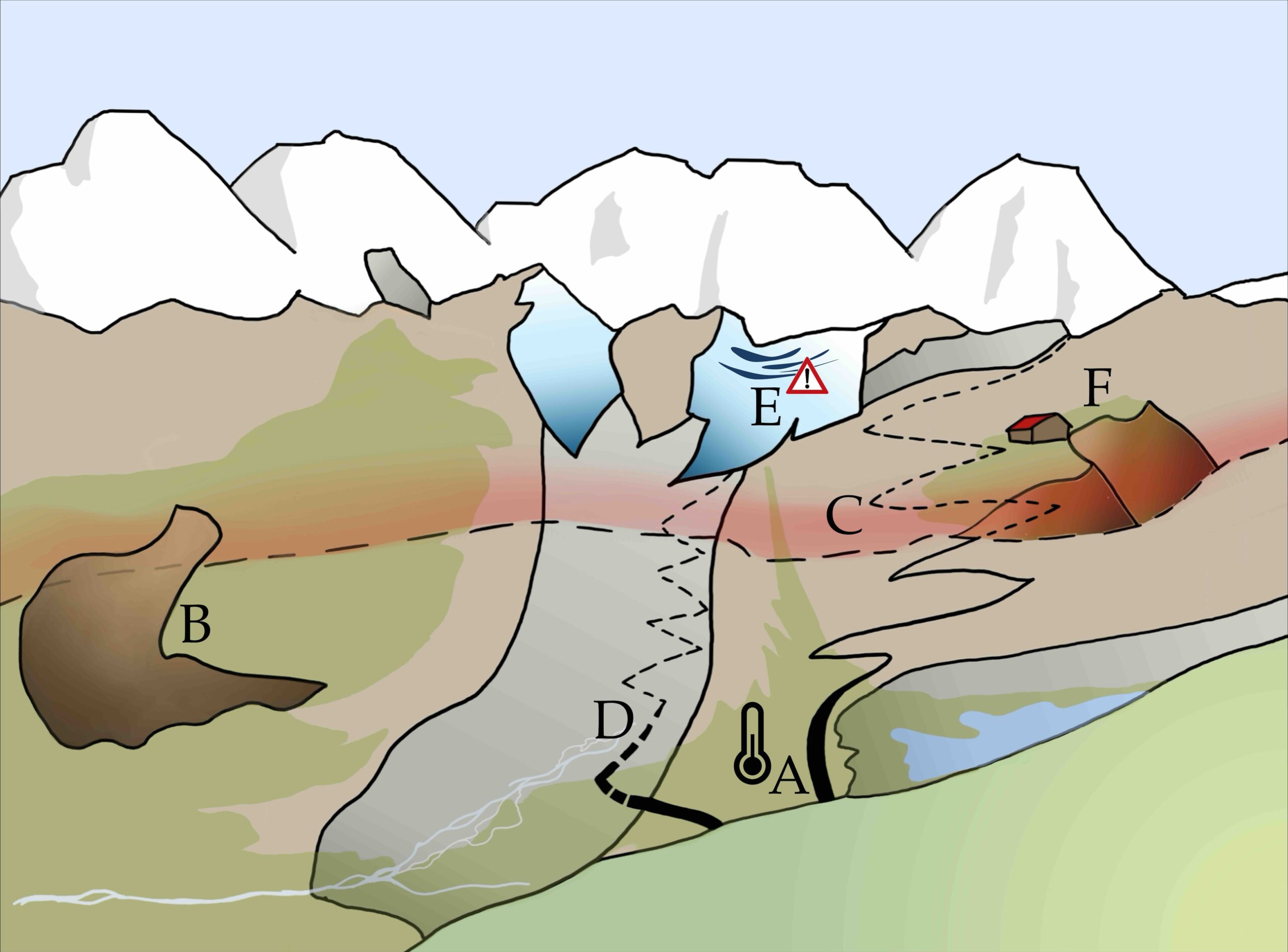
From the abstract: Interwoven into European climate and anthropogenic activity, the Alps are central to the continent in physical and abstracted meaning. They are affected more strongly by global warming than the North- ern Hemisphere on average, while their unique environment, made up of extremes in temperature, precipitation and topography, is especially sensitive to alterations in climate configuration. Within this thesis, climate change effects on temperature, precipitation, glacier, snow, permafrost and further impacts in the Alps are reviewed on a macro level and investigated at a single site. A structured literature review revealed that a warming of about 0.3 °C per decade within the second half of the 20th century, together with longer warm spells and an increased precipitation intensity have contributed to a higher frequency of compounding hazard events. Especially since the 1980s, warming has accelerated, resulting in a reduced snow cover duration, especially in spring, by up to more than 20 days per decade. Remote sensing has become a relevant tool in constructing spatially continuous data archives that aid in analyzing the response of cryosphere elements to climate change. Large ice masses, such as glaciers and permafrost, react with more inertia to sustained warming, so that their continued decline within the next decades and near-total wasting until the end of the century can likely not be halted. Extreme precipitation events and sustained glacier melt paired with high sediment availability can favor mass movement events. Higher evapotranspiration and lower runoff from snow and glacier melt may cause more frequent droughts with risks for alpine infrastructure and alpinism. Results from the literature review were underlined by the case study. The Neue Prager Hütte in the Hohe Tauern National Park of Austria has experienced water shortages in 2022, 2023 and 2024 due to a shorter snow cover duration. With the use of Sentinel-2 imagery and in-situ station data on temperature
1st supervisor: Dr. Celia Baumhoer 2nd supervisor: Prof. Dr. Tobias Ullmann
From the abstract: Interwoven into European climate and anthropogenic activity, the Alps are central to the continent in physical and abstracted meaning. They are affected more strongly by global warming than the North- ern Hemisphere on average, while their unique environment, made up of extremes in temperature, precipitation and topography, is especially sensitive to alterations in climate configuration. Within this thesis, climate change effects on temperature, precipitation, glacier, snow, permafrost and further impacts in the Alps are reviewed on a macro level and investigated at a single site. A structured literature review revealed that a warming of about 0.3 °C per decade within the second half of the 20th century, together with longer warm spells and an increased precipitation intensity have contributed to a higher frequency of compounding hazard events. Especially since the 1980s, warming has accelerated, resulting in a reduced snow cover duration, especially in spring, by up to more than 20 days per decade. Remote sensing has become a relevant tool in constructing spatially continuous data archives that aid in analyzing the response of cryosphere elements to climate change. Large ice masses, such as glaciers and permafrost, react with more inertia to sustained warming, so that their continued decline within the next decades and near-total wasting until the end of the century can likely not be halted. Extreme precipitation events and sustained glacier melt paired with high sediment availability can favor mass movement events. Higher evapotranspiration and lower runoff from snow and glacier melt may cause more frequent droughts with risks for alpine infrastructure and alpinism. Results from the literature review were underlined by the case study. The Neue Prager Hütte in the Hohe Tauern National Park of Austria has experienced water shortages in 2022, 2023 and 2024 due to a shorter snow cover duration. With the use of Sentinel-2 imagery and in-situ station data on temperature
1st supervisor: Dr. Celia Baumhoer 2nd supervisor: Prof. Dr. Tobias Ullmann