
When Snow Disappears Too Early

When Snow Disappears Too Early

m

May 7, 2026

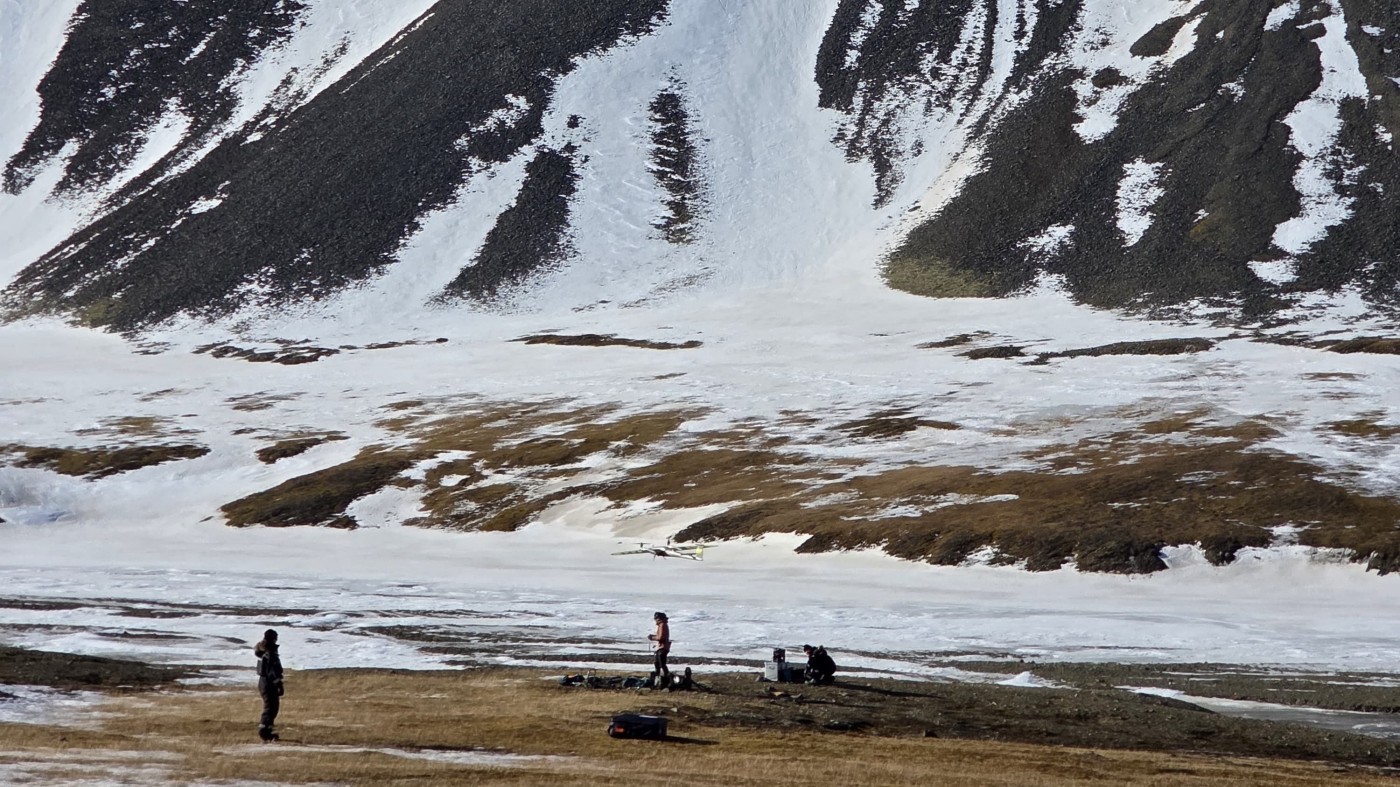
Fieldwork during the winter season on Svalbard usually comes with a built-in advantage: snow. It acts as a natural transport layer, making it possible to move efficiently across large distances with snowmobiles and sleds. Entire field campaigns are planned around that mobility: how far teams can travel, how much equipment they can bring, and how many sites can realistically be visited in a single day.

Most years, that assumption holds. This year, however, turned out to be an exception.

When Jakob Schwalb-Willmann and Mirjana Bevanda outlined the winter field campaigns for 2026 in Svalbard, they accounted for the usual challenges of Arctic winter conditions. But when snowmelt begins much earlier than expected, conditions can change rapidly.

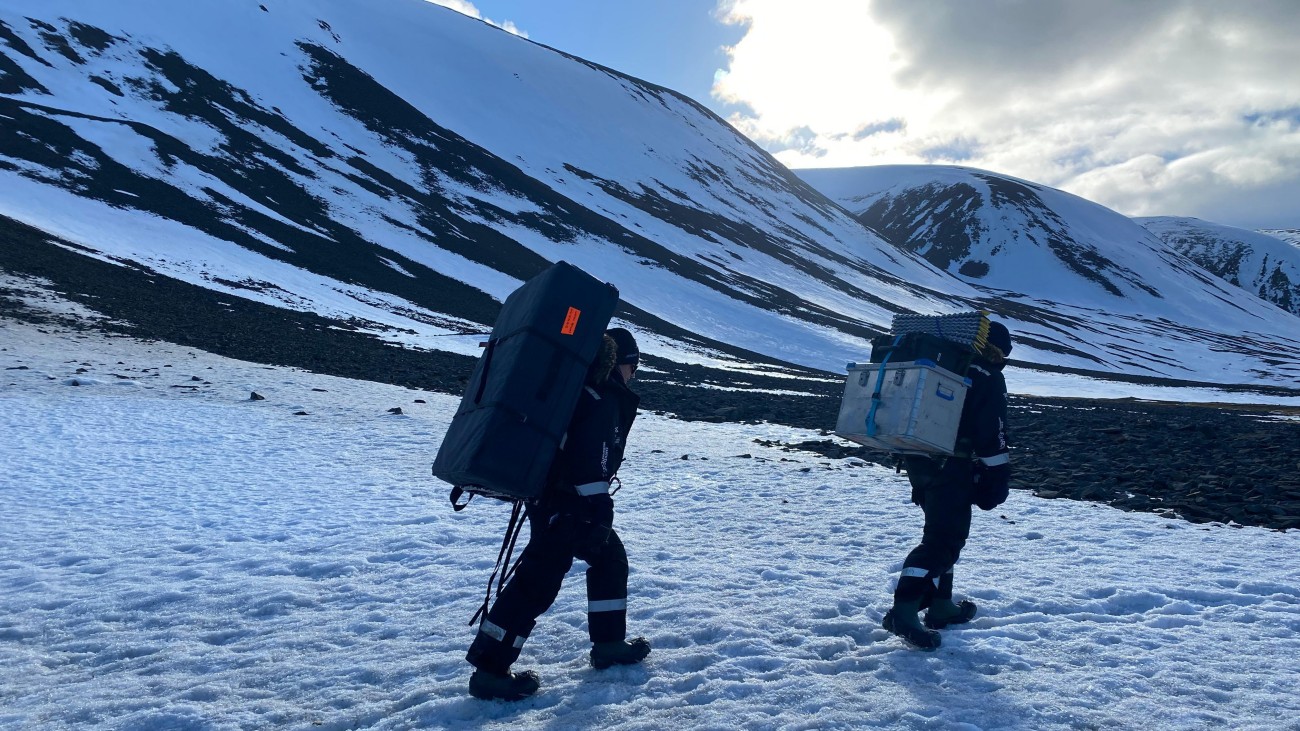
At first, it does not seem dramatic, a little less snow, some exposed ground. But within days, the practical consequences become unavoidable. Snowmobiles can no longer be used reliably, and routes that had been straightforward suddenly turn patchy, unstable, and unpredictable.

Still, fieldwork continues.

Together with interns Marlene Sehrbrock and Aoibhin Murphy, as well as former MSc student Ronja Seitz, the team adapted quickly. Equipment, safety gear, food supplies, everything that would normally be distributed across snow scooters and sleds, had to be carried by hand. Loads were redistributed, spikes repeatedly put on and taken off, and progress became slower but still possible.

What initially appears to be a logistical inconvenience reflects something much larger. Earlier snowmelt changes not only how field campaigns operate, but also highlights broader environmental shifts in the timing, duration, and variability of Arctic snow cover.

In places like Svalbard, these changes are becoming increasingly difficult to ignore.


follow us and share it on:

you may also like:

Advancing Agriculture with UAS Multi-Sensor Research

Advancing Agriculture with UAS Multi-Sensor Research

Understanding how agriculture can adapt to a changing climate is one of the key challenges of our time. At EORC, we are pleased to share that our researchers are currently collaborating with the Bavarian State Research Center for Agriculture (LfL) on an innovative...

New roll-up shows Urban Collaboration and Research

New roll-up shows Urban Collaboration and Research

Remote sensing thrives on collaboration as shown (by a few selected ones) on our most recent roll-up. Many of today’s most pressing urban and environmental challenges—rapid urbanization, climate change, landcover change, migration, inequality, and economic...

Hackathon within the Super-Test-Site Project

Hackathon within the Super-Test-Site Project

What happens when researchers and developers sit down together to explore a multidisciplinary urban dataset? Our researchers from the EORC joined a hackathon that took place within the Super-Test-Site Project, organised by Prof. Dr. Gunther Gust from the Chair of...

Field Days in the Oberpfalz: Exploring FSME Hotspots

Field Days in the Oberpfalz: Exploring FSME Hotspots

On April 17th and 29th our researchers Sofía and Ariane had two field days in the areas around Amberg and Schwandorf, one of Germany's most well-known TBE (tick-borne encephalitis) risk regions. They joined Prof. Dr. Gerhard Dobler and Dr. Lidia Chitimia-Dobler from...

Johannes Mast has successfully defended his PhD Thesis

Johannes Mast has successfully defended his PhD Thesis

Johannes Mast defended his PhD Thesis titled "Geographical Migration Research using Remote Sensing and Social Media Data" at the Julius-Maximilians-University Würzburg successfully on the 29th of April 2026. We congratulate him very much for his...

Share This