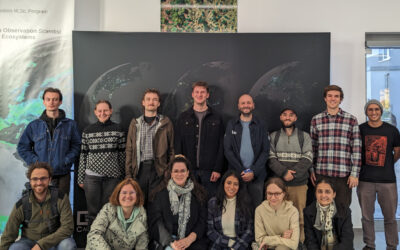
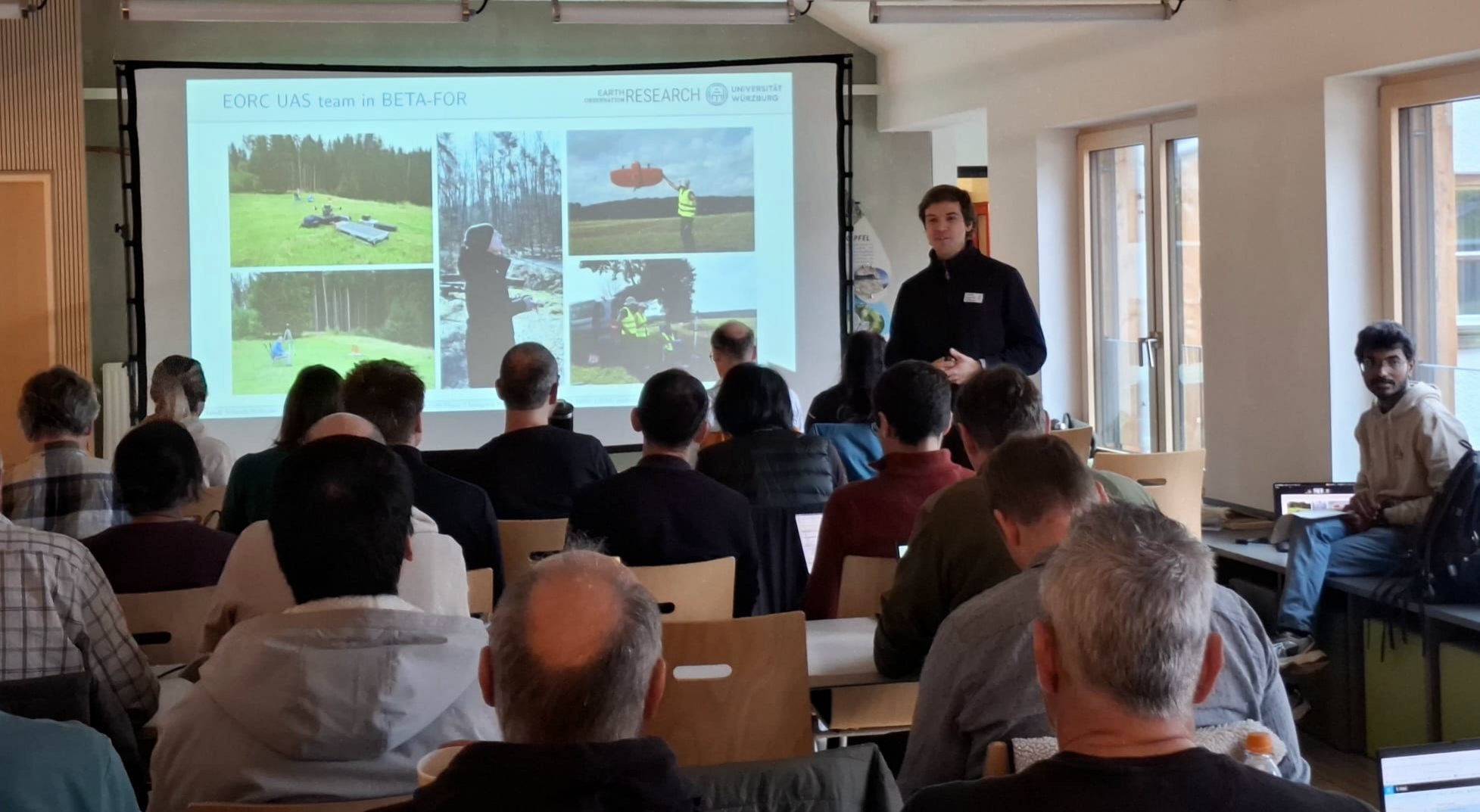

Jakob Schwalb-Willmann represented our team at the DFG BETAFOR workshop in the Bavarian Forest National Park. The room was full of biologists, which is the whole point of an interdisciplinary project, and our UAS multisensor time series drew a lot of interest from the project partners.
The earth observation dataset he presented is not a dataset you can just download. We built it up over the last years, with a lot of tedious fieldwork and even more effort to develop processing chains that turn raw flights into information ecologists can actually use. That effort is now paying off with an actual position for this kind of research in the DFG project, and we can now derive a range of valuable ecological parameters from it.
Jakob presented what we already have and what we’re planning. The upscaling analysis from UAS to space-borne data is finished. Lidar-based vegetation time series come next, followed by the ecological implementations of our data. And much more that has and is already been discussed with the project partners, more details coming soon.
We’re also happy to be officially involved in the project with our own staff member, Jakob, within the professorship of Tobias Ullmann. That’s thanks to the UAS multisensor time series of the University research forest, plus UAS multisensor acquisitions of forest plots across Germany, all collected over the last years.
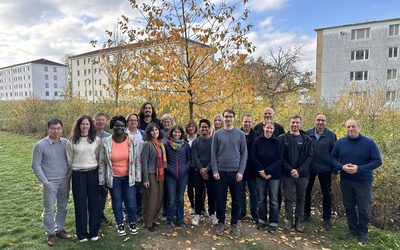
None of this happened by accident. The scientific idea was developed years ago by Jörg Müller and Mirjana Bevanda, and it was the team with Antonio Jose Castaneda-Gomez, Jakob Schwalb-Willmann and her and their stamina over the past years, squeezing this work in on top of the usual workload that succeeded in this impressive and ecological relevant data set – based on lots of fieldwork and data processing, with help from several others along the way.
It’s a great example of what a motivated team with complementary skills can achieve, and of how that can lead into further research projects.