
This fall, the new Master Ecological Forecasting (MEF) in the Elite Network of Bavaria (ENB) has welcomed its first generation of students. The unique programme, a joint interdisciplinary initiative between University of Bayreuth and University of Würzburg, integrates knowledge and skills from ecology, computational science, statistics, remote sensing, adaptive management, and the science of decision-making. Its goal is to equip graduates with the skills needed to produce quantitative insights into ecological systems, allowing the next generation of researchers and decision makers to generate knowledge that improves our understanding of ecosystem functioning and supports the adaptive management of ecosystems and their biodiversity.
Respectively, Ecological Forecasting is build on an interdisciplinary collaboration between various research departments at both University of Bayreuth and University of Würzburg. Lead and coordinated by Prof. Dr. Steven Higgins, head of the Chair of Plant Ecology, the progamme is based at University of Bayreuth, where the first generation of students has joined the Master with the beginning of the current winter term.
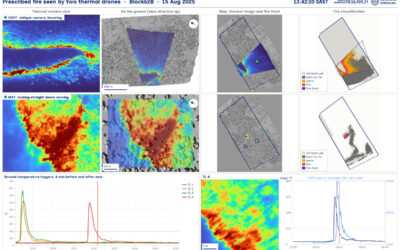
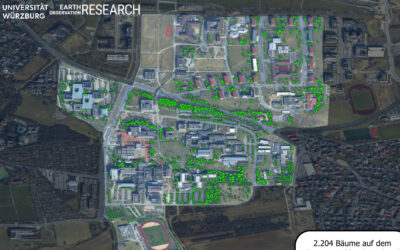
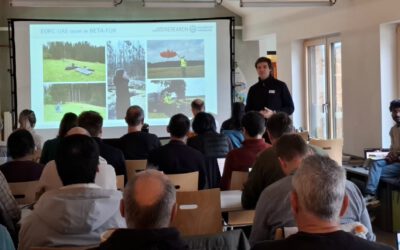
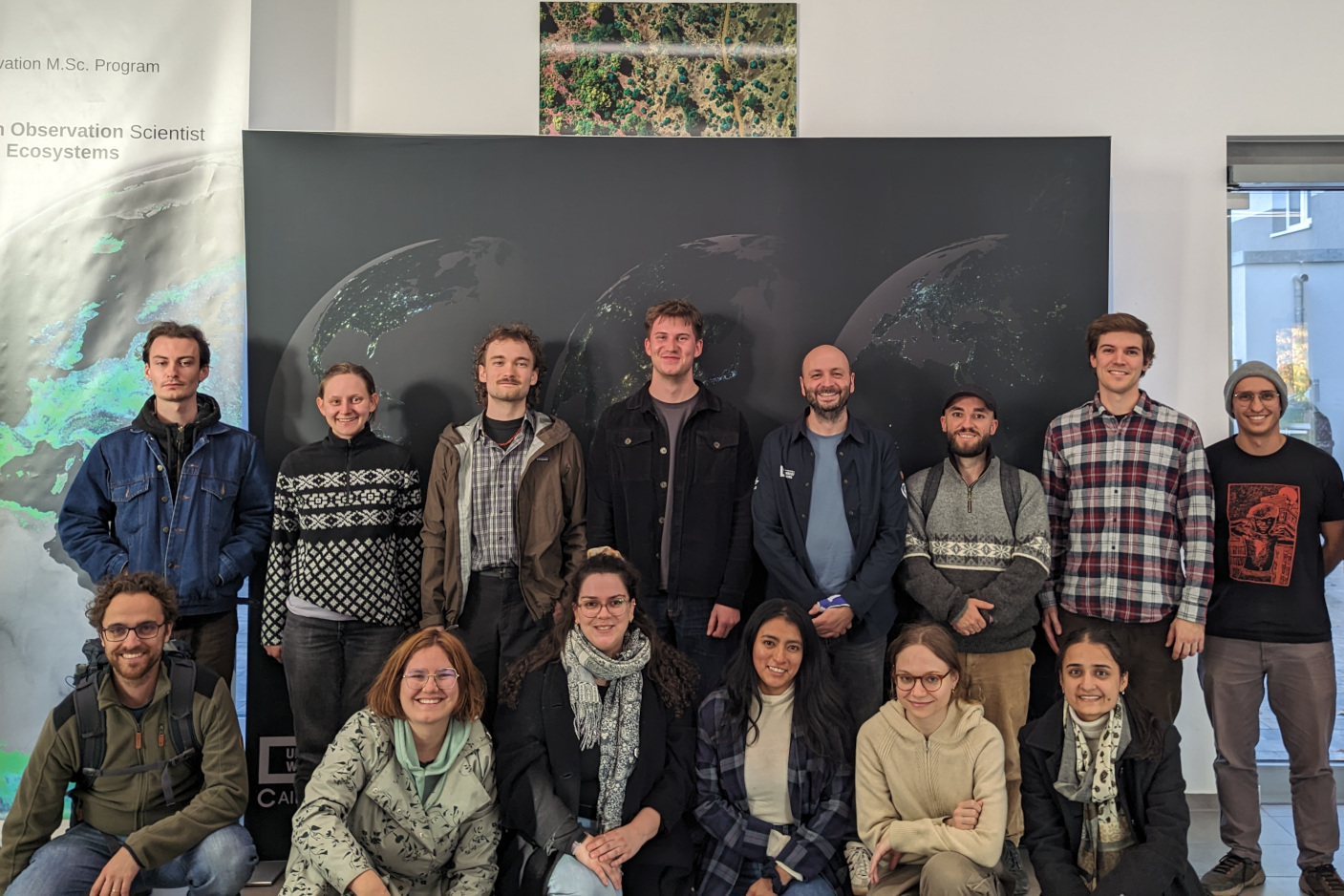
Last week, the EORC invited the new MEF students to Würzburg to show them their “second home” during their Master studies. Prof. Dr. Tobias Ullmann, Dr. Jakob Schwalb-Willmann and Antonio José Castañeda-Gómez gave the group a tour through the EORC, its drone and computer labs and student spaces.
The EORC has been deeply involved in the genesis of the new Master progamme: Tobias Ullmann, professor for geographic remote sensing at the EORC, has been co-leading the initiative and is coordinating University of Würzburg’s contributions to the Master. He and Jakob Schwalb-Willmann, postdoc researcher and MEF lecturer, will teach students on how drone and satellite remote sensing research provides critical data for ecology research in general and ecological modelling, including forecasting, in particular. Possible due to the hands-on design of the new programme, students will get the opportunity to join EORC’s research projects at the interface to ecology, geo-spatial modelling, and artificial intelligence – a mix of high relevance for Ecological Forecasting.
In addition to the EORC, the Center for Artificial Intelligence and Data Science (CAIDAS) and the Bio centre at University of Würzburg are involved in MEF. At the CAIDAS chair of data science, Prof. Dr. Andreas Hotho and Daniel Weggenmann enrich the programme through modules on Scientific Programming and Deep Learning. From the Bio centre’s department of animal ecology and tropical biology, Prof. Dr. Ingolf Steffan-Dewenter, Dr. Kim Holzman and Dr. Christina Ganuza contribute with modules such as “A Primer in Ecology“, introducing students to ecological concepts and terminology.
The EORC wishes students and lecturers of the new Elite Master Ecological Forecasting a great start into the programme! We are grateful for the opportunity to become member of the Elite Network of Bavaria and the funding provided by the Bavarian State Ministry of Science and Art for this unique programme.