At the Earth Observation Research Cluster (EORC) at the University of Würzburg, our mission is to leverage remote sensing to solve real-world challenges across diverse environments – from Arctic landscapes to African savannahs. Recently, our latest interdisciplinary effort, MONID-HABITRACK, has been featured by the University of Würzburg press, drawing attention to how we are using drone-based imaging and machine learning to tackle the growing threat of tick-borne diseases.
Tackling Vector-Borne Diseases with Precision
As climate patterns shift, diseases like Tick-Borne Encephalitis (TBE) and Lyme borreliosis are becoming an increasing concern in Germany. Traditional models for pandemic preparedness often focus on human-to-human transmission, leaving a critical gap in how we track and predict diseases spread by environmental vectors like ticks.
MONID-HABITRACK (Habitat Prediction and Surveillance of Tick-borne Diseases using Modelling and Imaging Technology) is designed to bridge this gap. By integrating high-resolution drone-based remote sensing, epidemiological data, and AI-driven predictive modelling, we are creating a pipeline to identify high-risk infection hotspots with unprecedented precision.
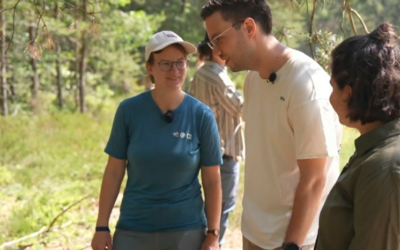
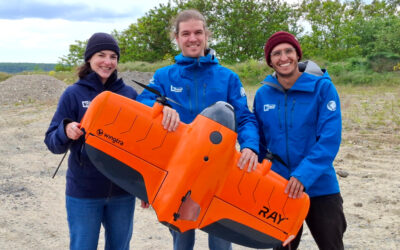
We are using UAVs (drones) to map potential tick habitats at a micro-level, capturing environmental variables that satellites might miss.
This project brings together expertise from entomology, virology, epidemiology, and geography. Our EORC team, led by Dr. Ariane Droin and Prof. Hannes Taubenböck, is working closely with the Institute of Infectious Diseases and Tropical Medicine at the LMU University Hospital Munich and other partners.
Data-Driven Prevention:
By combining these aerial observations with weather data and serological studies, we aim to build a robust early-warning system that supports public health decision-making.
Read the Full Coverage
We are proud to see this work recognized for its potential to improve pandemic preparedness and local disease dynamics. You can read the official press release from the University of Würzburg here:
This project underscores the vital role of Earth observation in modern society, not just in environmental conservation, but as a proactive tool for human health and safety. We look forward to sharing more updates as the project progresses in our focus regions in Bavaria.
For more information on our ongoing research and partnerships, please explore our Projects section.