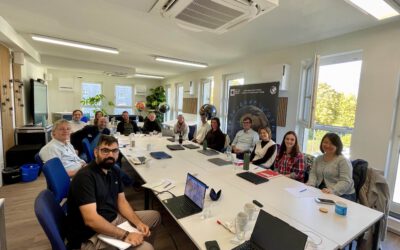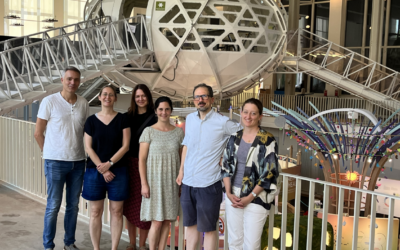
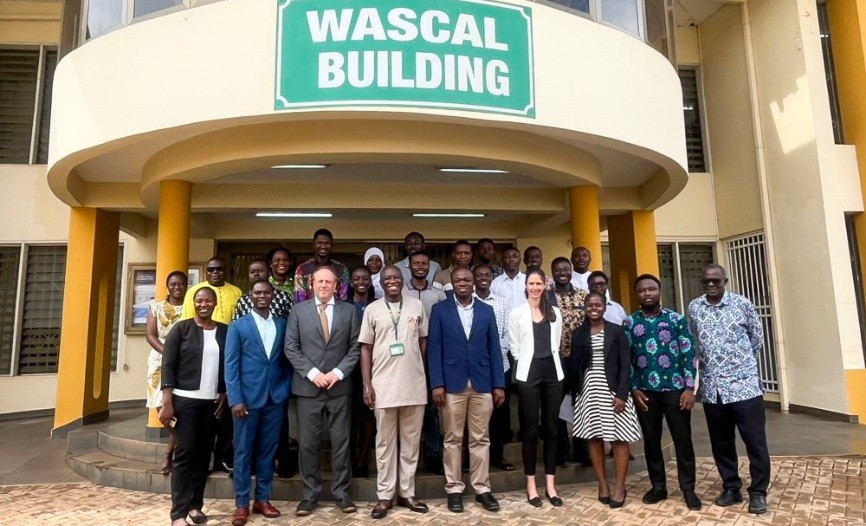

The EOCap4Africa project officially concluded with an online closing meeting bringing together our project partners, lecturers, researchers, and institutional representatives from across Africa and Europe. The meeting was attended by our African partners from University of Kinshasa (Prof. Jean-Paul Kibambe, Pacifique Madibi, Espérance Kandjale), KNUST (Prof. Wilson Agyei Agyare, Da-Costa Asare), INES (Dr. Ange Féli Nsanziyera, Fraterne Rugira), our colleagues from EORC (Dr. Insa Otte, Dr. Michael Thiel) and the donors from BfN (Simone Wulf, Lena Fey, Dr. Kim Gruetzmacher) and BMUKN (DR. Alban Kisife). The meeting provided an opportunity to reflect on the achievements of the project and to discuss future perspectives for Earth Observation–based capacity development in biodiversity conservation.
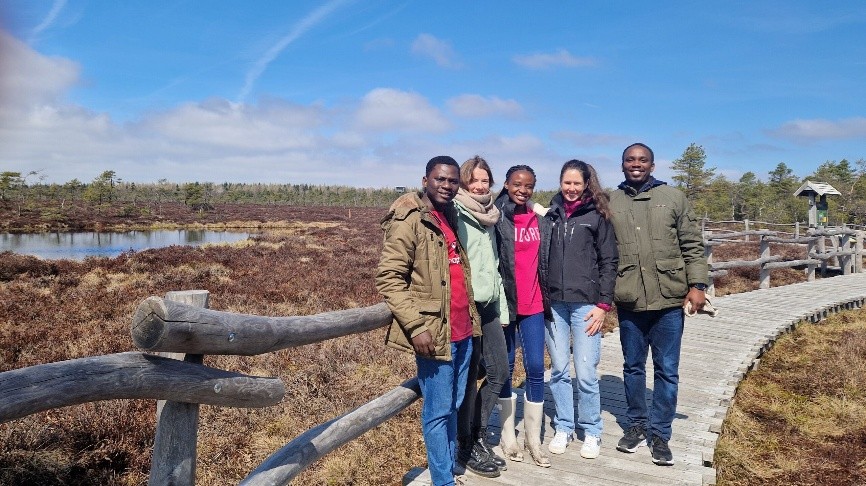
Funded by the German Federal Agency for Nature Conservation (BfN) and the German Federal Ministry for the Environment, Climate Action, Nature Conservation and Nuclear Safety (BMUKN), EOCap4Africa focused on strengthening expertise in remote sensing and Earth Observation applications for biodiversity monitoring and conservation at African universities and partner institutions.
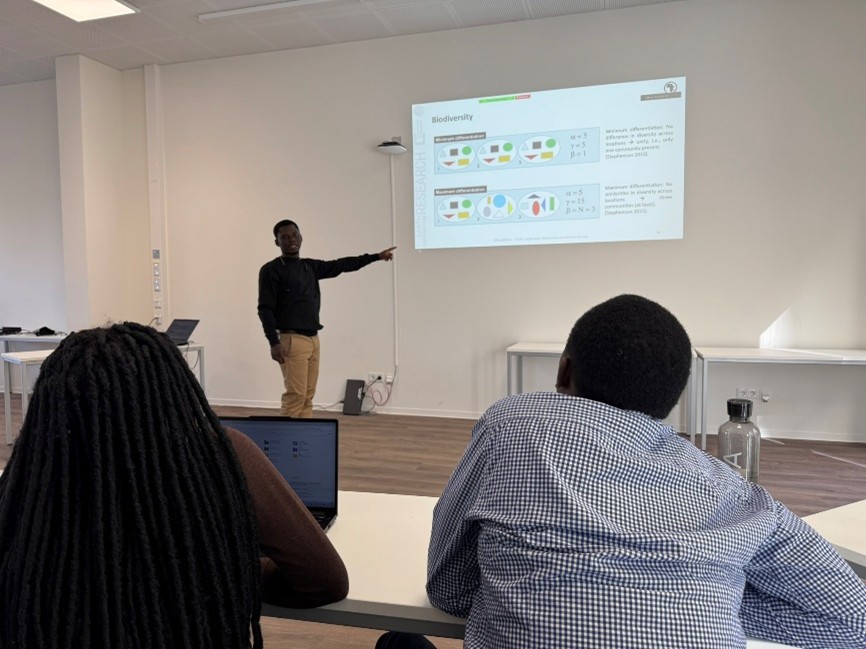
Over the course of the project, a masters teaching module on Remote Sensing for Nature Conservation, incl. training materials, and practical exercises were developed and implemented in collaboration with partner universities, including institutions in Ghana (KNUST), Rwanda (INES), Botswana (ORI) and the DRC (University of Kinshasa). The project emphasized applied learning approaches, enabling students and early-career researchers to work directly with satellite data and geospatial methods relevant to regional conservation challenges. All training materials of the EOCap4Africa project and more information can be accessed on the website https://eocap4africa.org.
During the closing meeting, project partners highlighted the importance of long-term academic collaboration and local capacity building in the field of biodiversity monitoring. Several presentations demonstrated how Earth Observation technologies can support ecosystem assessment, land-use monitoring, wildlife conservation, and climate adaptation strategies.
Particular emphasis was placed on the role of African universities as emerging centers of expertise in geospatial technologies and environmental research. The project partners stressed that sustainable conservation efforts depend not only on technological access, but also on locally embedded scientific knowledge and interdisciplinary cooperation.
Although the project has formally ended, the meeting made clear that the networks and collaborations established through EOCap4Africa will continue beyond the project duration. Partners expressed strong interest in further joint activities, future teaching initiatives, and expanded research cooperation in the field of remote sensing for biodiversity conservation.
The closing meeting marked not only the conclusion of a successful international project, but also an important step toward continued collaboration between African partner instututions and EORC.